

Description
- Brand: ABB
- Full Model Number: 1SVR011718R2500
- System/Series Family: ABB CC-E Interface / Signal Converter Range
- Core Function: Single-function analog signal converter and isolator for 4–20 mA process signals
- ABB Product Type: CC-E I/I
- Input: 4–20 mA
- Output: 4–20 mA
- Control Supply: 24 VDC
- Isolation: 3-way electrical isolation
- Mounting: DIN rail
- Protection: IP20
- Dimensions: 22.5 × 75 × 107 mm
- Net Weight: 0.085 kg
- Stock Status: New Surplus / Fully Tested Refurbished — verify exact condition before shipment
ABB product documentation identifies 1SVR011718R2500 as the CC-E I/I Signal Converter, a single-function standard analog converter providing 4–20 mA input, 4–20 mA output, 24 VDC supply, and 3-way electrical isolation. ABB documentation also lists the product under its Signal Converters family.
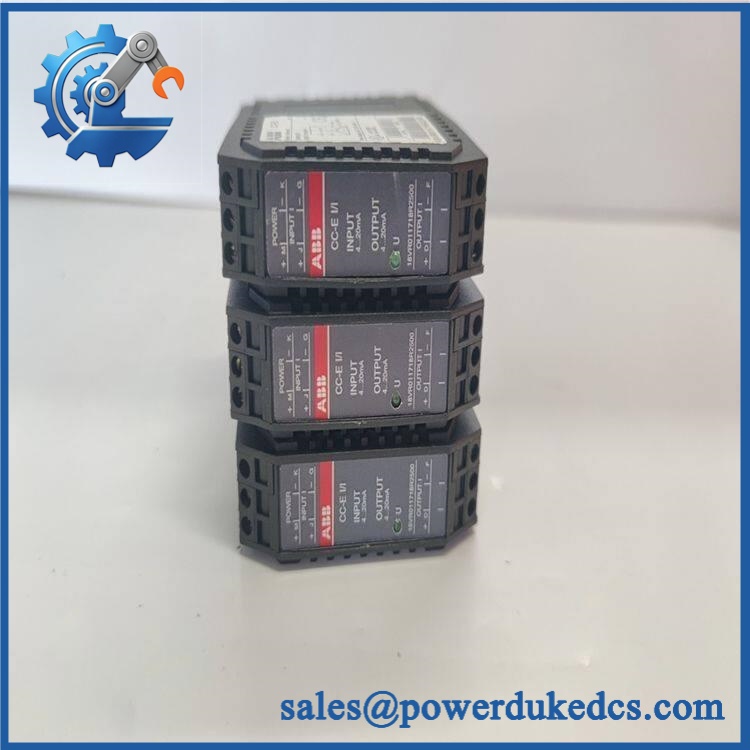
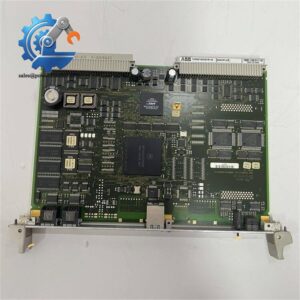
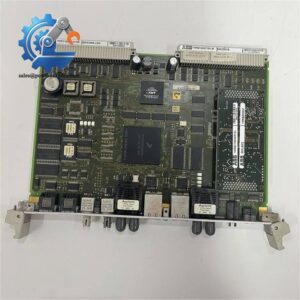
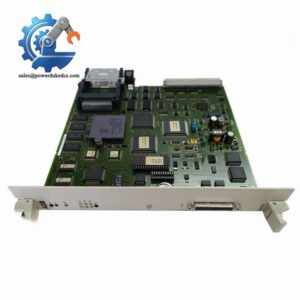
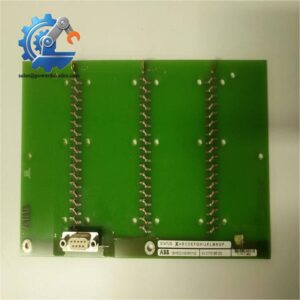
ABB 1SVR011718R2500
Module 3: Commercial-Technical Deep Dive
When a process transmitter signal must cross a control-panel boundary without allowing ground-potential differences to corrupt the measurement, the ABB 1SVR011718R2500 provides a very specific solution. This CC-E I/I module converts a standard 4–20 mA input directly to a 4–20 mA output while providing three-way electrical isolation. It is designed for DIN-rail installation, uses a 24 VDC control supply, and occupies only 22.5 mm of panel width. The application is straightforward: maintain the existing current-loop architecture while separating the input, output, and supply circuits electrically.
The hard ROI is mainly signal integrity and panel-space efficiency. A 4–20 mA loop can remain a conventional analog-current signal on both sides of the converter, so downstream PLC or DCS scaling usually does not need to be reinvented. The 3-way isolation is the key engineering benefit when different equipment grounds or supply domains create unwanted current paths. Its published dimensions of 22.5 × 75 × 107 mm also make it practical for dense DIN-rail cabinets. One important sourcing point: ABB lists this product as withdrawn from offer, so exact-part inventory is valuable for legacy panels that were designed around the CC-E I/I specification.
Module 4: Compatibility & Installation Traps
Migration/Compatibility
For an existing panel specified for ABB 1SVR011718R2500, the appropriate replacement strategy is a like-for-like CC-E I/I signal converter exchange. The unit is a dedicated analog converter, not a programmable controller, so a PLC logic rewrite is normally unnecessary when the replacement retains the same 4–20 mA input/output function and isolation arrangement.
The more important checks are loop type, power supply, terminal assignment, mounting arrangement, and signal direction. ABB documentation defines this unit as 4–20 mA input → 4–20 mA output, supplied from 24 VDC. A replacement with voltage output or a different current range is not electrically equivalent even when the housing appears similar.
⚠️ Field Traps (Watch Out)
- Signal-direction mistake: This unit is specifically I/I: 4–20 mA input and 4–20 mA output. Do not substitute a V/I, I/V, or other CC-E variant simply because the part shares the same family name. ABB’s catalog lists separate CC-E variants with different signal functions.
- Isolation assumptions: The benefit of this module is its 3-way electrical isolation. Bypassing the converter or incorrectly commoning terminals can defeat the isolation scheme and reintroduce ground-loop problems.
- 24 VDC polarity: Verify the control-supply terminals before energizing. The module is designed around a 24 VDC supply, not an arbitrary control voltage.
- Loop calibration: A 4–20 mA loop should be checked at representative values such as 4 mA, 12 mA, and 20 mA after replacement. A module that merely powers up has not necessarily been proven accurate.
Module 5: Quality Assurance SOP
For surplus ABB CC-E signal converters, the pre-shipment QA sequence should focus on identity, isolation integrity, and analog transfer accuracy:
- OEM anti-counterfeit visual inspection — verify ABB markings, CC-E I/I designation, complete part number, terminal layout, DIN-rail housing, label quality, and evidence of unauthorized modification.
- Part-number reconciliation — photograph 1SVR011718R2500, EAN/secondary identification where present, and all visible revision information.
- Mechanical inspection — verify the approximately 22.5 × 75 × 107 mm enclosure dimensions, terminal condition, DIN-rail latch, and housing integrity.
- Power-on self-test (POST) — apply a controlled 24 VDC supply and verify the expected green power indication. ABB documentation states that applied supply voltage is displayed by a green LED.
- Input-loop verification — apply calibrated 4–20 mA test signals across representative points in the operating range.
- Output-loop verification — measure the converted output and document the relationship between input and output current.
- Isolation verification — perform the applicable controlled insulation/isolation test between the signal and supply circuits using an approved procedure.
- Linearity check — verify representative 4 mA, mid-scale, and 20 mA points against the specified test tolerance.
- Load verification — test the output with an appropriate representative load and confirm stable 4–20 mA transmission.
- Thermal/stability observation — operate the unit under controlled conditions and monitor for output drift, unexpected heating, or intermittent behavior.
- Final QC release — retain identification photographs, measured input/output values, isolation-test results, and packaging inspection records.
For an analog signal converter, the useful QA evidence is measurable signal transfer. “Green LED on” is only the first test.
Module 6: CRO-Driven Buyer FAQ
1. What exactly is ABB 1SVR011718R2500?
It is the ABB CC-E I/I Signal Converter, a single-function analog converter designed for 4–20 mA input and 4–20 mA output, powered by 24 VDC and providing 3-way electrical isolation.
2. Is 1SVR011718R2500 still available from ABB?
Current distributor data identifies the product as withdrawn from offer, while ABB’s published lifecycle documentation lists the part within the discontinued CC-E product group. For legacy installations, verified surplus or replacement inventory can therefore be more practical than assuming continued new production.
3. Is it a direct replacement for other ABB CC-E converters?
No. The exact signal function must match. 1SVR011718R2500 is I/I, meaning 4–20 mA in and 4–20 mA out. Other CC-E variants use different input/output combinations and are not automatically interchangeable.
4. Can the 1SVR011718R2500 be hot-swapped?
Do not assume hot-swap capability. The converter is connected to an active 24 VDC supply and live analog loops. Follow the cabinet’s isolation procedure before removing or rewiring the module unless the specific installation documentation explicitly permits energized servicing.
5. Does this converter require firmware or software programming?
No conventional firmware or PLC programming is required. It is a fixed-function signal converter. Correct terminal wiring, 24 VDC supply, 4–20 mA loop configuration, and verification of signal transfer are the important commissioning checks.
6. What warranty and technical support should I expect?
The quotation should state whether the unit is new surplus, unused, or tested refurbished and specify the warranty period. Technical support should cover exact-part verification, signal-range confirmation, wiring guidance, and documented 4–20 mA test results. Process-loop tuning, PLC/DCS scaling changes, and site commissioning should remain separate engineering activities.


 Start Chat