

Description
- Brand: ABB Robotics
- Full Model Number: 3HNA025019-001
- System/Series Family: ABB S4 / S4C / S4C+ Robot Controller
- One-Sentence Core Function: APIP-05A process I/O board used to interface robot-controller signals with external process equipment
- Top 3 Hardcore Specs: APIP-05A process I/O; ABB Robotics electronic board; S4/S4C/S4C+ controller family
- Stock Status: New Surplus / Fully Tested Refurbished — exact part number and hardware condition verified before shipment
Module 3: Commercial-Technical Deep Dive
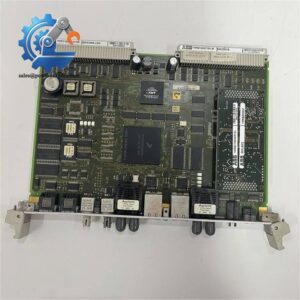
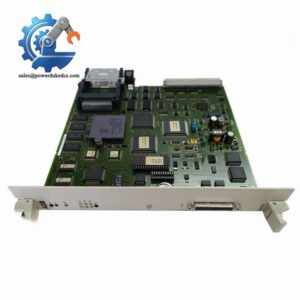
A failed process-I/O board can leave an ABB robot controller running while the connected tooling, sensors, valves, or interlocks stop exchanging the required signals. ABB identifies 3HNA025019-001 with the catalog description PROSESS IO APIP-05A, while independent technical references place it in the S4-S4C-S4C+ robot-controller family. In other words, this is a robot-process interface board, not a generic PLC I/O card. Its role is to connect application-specific process signals with the robot control environment.
The strongest procurement point is exact configuration matching. ABB’s public product record confirms the product ID 3HNA025019-001, while ABB-specific spare-part references identify the module as APIP-05A Process I/O. Public aftermarket descriptions disagree on detailed electrical characteristics, including claimed voltage, interface, and channel counts, so those values should not be treated as engineering specifications without checking the physical board and applicable ABB documentation. For a robot cell already in production, preserving the original I/O architecture avoids unnecessary controller changes and reduces the risk of remapping every process signal during an outage.
Module 4: Compatibility & Installation Traps
Migration/Compatibility
- Replacement status: Configuration-specific replacement for ABB Robotics process-I/O hardware.
- Catalog designation: APIP-05A Process I/O; ABB’s official product record confirms product ID 3HNA025019-001.
- Controller family: Associated references identify the board with the S4, S4C, and S4C+ robot-controller range.
- Firmware requirement: A like-for-like board replacement does not inherently require a firmware flash. Preserve the robot-controller revision and application configuration before removing the original board.
- Logic rewrite: Normally unnecessary for a confirmed like-for-like replacement, but process I/O assignments, signal polarity, interlocks, and cell configuration must be validated after installation.
- Engineering caveat: Do not substitute another APIP or process-I/O board solely because the connector layout appears similar.
⚠️ Field Traps (Watch Out)
- I/O mapping: Photograph every terminal, connector, and jumper position before removal. A physically compatible board with a different signal assignment can cause tool or interlock faults that are difficult to diagnose.
- Unsupported electrical assumptions: Several aftermarket listings publish conflicting voltage and channel specifications for this exact part. Use the original board label, robot electrical drawings, and ABB documentation as the final authority.
- Robot-cell interlocks: Validate E-stop, gate, permissive, clamp, valve, and tool-feedback signals before returning automatic operation. One inverted or misaddressed process signal can create an unsafe machine state.
- ESD exposure: Handle the PCB only with grounded ESD controls and retain antistatic packaging until installation.
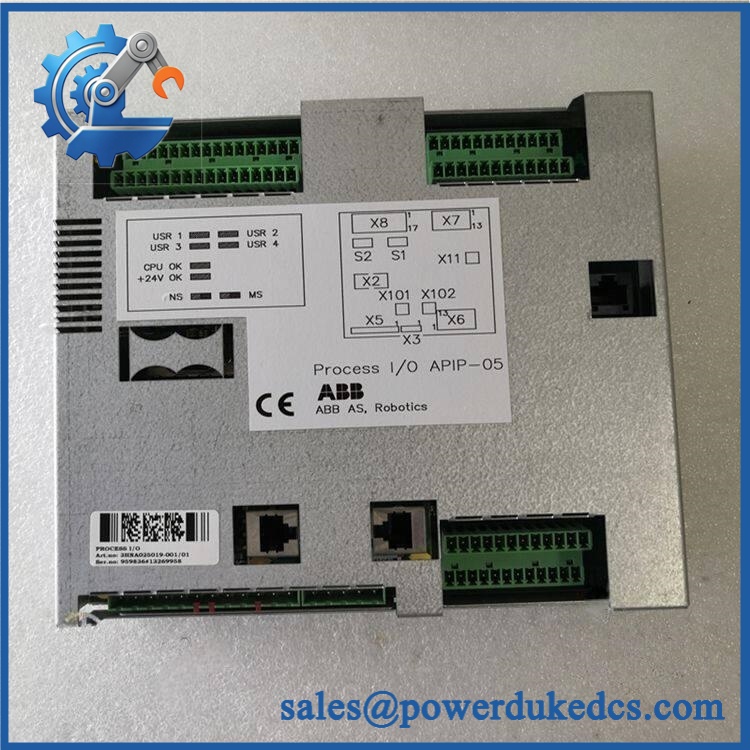
ABB 3HNA025019-001
Module 5: Quality Assurance SOP
Our pre-shipment inspection for an ABB 3HNA025019-001 APIP-05A focuses on exact board identity and process-I/O functionality:
- OEM anti-counterfeit visual inspection — verify ABB markings, complete 3HNA025019-001 part number, revision identifiers, PCB artwork, connector population, labels, and manufacturing marks.
- Part-number capture — photograph the front and rear of the board plus every readable secondary label.
- Revision verification — compare hardware revision and physical layout against the customer’s removed board where photographs are available.
- PCB condition inspection — check for corrosion, damaged connectors, cracked solder joints, contamination, lifted components, and thermal discoloration.
- Connector and terminal inspection — verify pins, sockets, card-edge contacts, and mechanical locking features.
- Power-on self-test (POST) — in a compatible ABB robot-controller test environment, apply the documented supply conditions and monitor startup behavior and diagnostic indications.
- Digital process-I/O test — stimulate representative discrete inputs and verify corresponding controller-side state changes.
- Output verification — command representative process outputs and verify correct electrical switching at the board interface under controlled test conditions.
- I/O mapping verification — compare observed channel behavior with the documented or customer-supplied I/O assignment.
- Communication handshake verification — confirm stable exchange between the I/O board and compatible ABB robot-control hardware where the test environment permits.
- Interlock-path check — verify representative process permissive and status signals without connecting the test fixture to live production equipment.
- Extended observation — monitor board behavior for abnormal temperature rise, intermittent signals, or communication instability during controlled operation.
- Final QC record — retain part number, revision, serial information, test results, photographs, and release status.
- ESD packaging — use antistatic protection, connector guards, mechanical cushioning, and moisture protection before shipment.
ABB’s official product record establishes the exact product ID and catalog identity, while secondary ABB references identify the unit as . Detailed acceptance limits should be taken from the applicable robot electrical documentation rather than from conflicting aftermarket listings.
Module 6: CRO-Driven Buyer FAQ
1. Is ABB 3HNA025019-001 obsolete, and how do I verify authenticity?
The 3HNA025019-001 is an ABB Robotics spare part identified as . ABB’s official product record confirms the product ID, while specialist references associate it with the S4/S4C/S4C+ controller family. Verify the complete ABB number, PCB revision, labels, connector layout, and physical board construction before purchase.
2. Can 3HNA025019-001 be hot-swapped?
Do not treat the as a routine hot-swappable I/O module. Unless the applicable ABB robot-controller documentation explicitly authorizes energized removal, place the robot cell into the approved maintenance state, isolate the relevant power sources, and follow the site’s LOTO procedure.
3. Is 3HNA025019-001 a PLC analog I/O module?
No. ABB identifies it as , associated with ABB Robotics controller hardware. Its role is process-I/O interfacing within the robot-control architecture, so its channel assignment and electrical behavior should be validated from the applicable ABB robot documentation rather than assumed from generic PLC terminology.
4. How many I/O channels does the have?
Public aftermarket listings provide inconsistent channel descriptions for this exact part number. Because those claims conflict, a precise channel count should not be published as a guaranteed specification without verifying the specific board revision and ABB documentation. This is especially important when replacing a production robot-cell interface board.
5. What warranty and technical support should I expect?
Warranty duration should be stated on the quotation for the exact physical unit supplied. Technical support should cover part-number verification, revision matching, S4/S4C/S4C+ compatibility review, I/O assignment checks, installation guidance, and documented pre-shipment test results. It should not substitute for robot-cell safety validation, process engineering, or final commissioning.


 Start Chat