

Description
- ABB 500MBA02 | DCS Cabinet Replacement Unit
Unboxing & Physical Snapshot
- Brand & Model: ABB 500MBA02
- Product Type: ABB S800 I/O system module used for industrial automation signal processing and field interface applications. The S800 family is a modular distributed I/O platform designed for integration with ABB control systems.
- Physical Dimensions (Approximate W × H × D):
- Width: approximately 45 mm
- Height: approximately 119 mm
- Depth: approximately 102 mm including connector interface
- Standard S800 module form factor.
- Estimated Shipping Weight: Approximately 0.3–0.5 kg including protective packaging.
- What’s in the Box:
- ABB 500MBA02 module
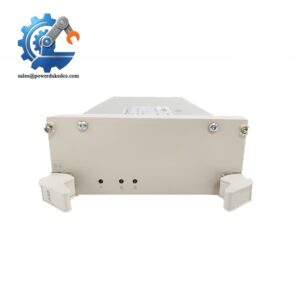
- Front faceplate with diagnostic indicators
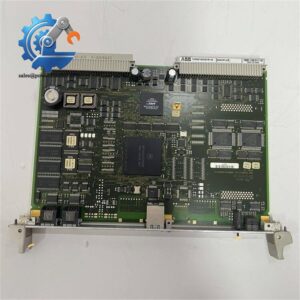
- Module connector interface
- Identification label
- Anti-static ESD shielding bag
- OEM documentation when supplied
Product Introduction
Structure B — Architecture Hook
The ABB 500MBA02 installs within the ABB S800 I/O architecture, where modular field interface hardware connects process signals to the automation controller layer. Correct slot placement, terminal compatibility, and module revision control are essential because S800 assemblies depend on matched hardware combinations for reliable operation.
This module is managed as a controlled automation spare inside many industrial facilities. It belongs in protected inventory, not general electrical stock. Inspect the front connector, retaining mechanism, housing, and diagnostic indicators before installation (—especially for cabinets exposed to vibration, dust, or frequent temperature cycling). ABB S800 modules support centralized and distributed I/O arrangements across industrial control applications.
Core Technical Specifications
| Parameter | Value |
|---|---|
| Manufacturer | ABB |
| Model Number | 500MBA02 |
| Product Family | ABB I/O |
| Module Type | I/O Interface / Automation Module |
| Application | Distributed process control and field signal handling |
| Mounting Method | I/O station mounting |
| Communication Interface | internal I/O bus |
| Supply Voltage | System supplied DC power |
| Power Consumption | Configuration dependent |
| Heat Dissipation | Load and operating condition dependent |
| Diagnostics | Front LED status indication |
| Housing Material | Industrial polymer enclosure |
| Cooling Method | Natural convection |
| Memory | No user-accessible application memory |
| Installation Environment | Industrial control cabinet |
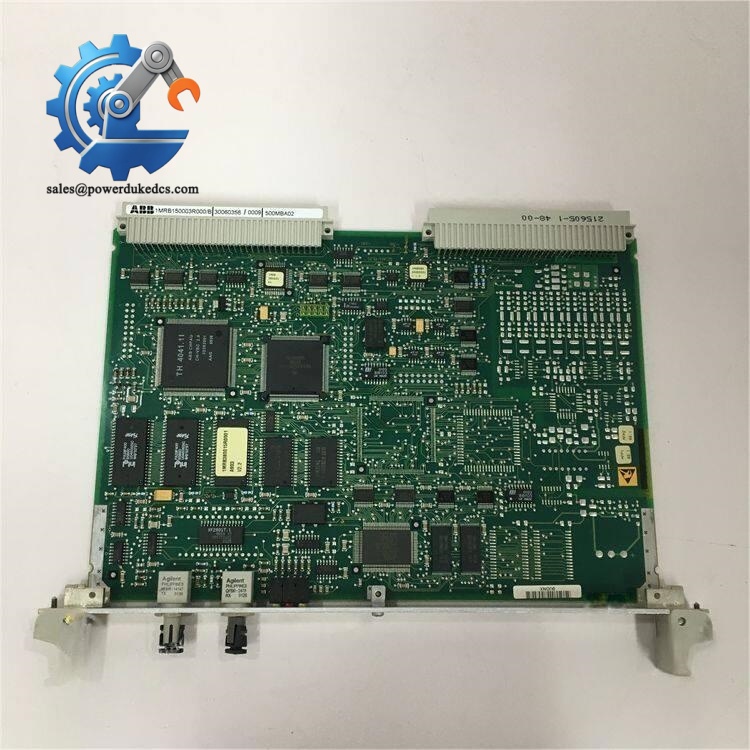
ABB 500MBA02
Technical details should be confirmed against the installed ABB hardware manual and exact module revision before replacement. I/O modules are available in multiple signal and interface configurations, so part-number verification is required.
? Global Compliance & Industry Certifications
Expected regulatory approvals and compliance considerations for the ABB 500MBA02 include:
- CE Mark — applicable for approved ABB system installations meeting EMC and electrical safety requirements.
- UL/cUL Recognition — may apply depending on the complete ABB control system certification.
- RoHS Compliance — dependent on manufacturing revision and production date.
- IEC EMC Compliance — relevant for industrial automation environments.
- ATEX/IECEx Compatibility — dependent on the complete hazardous-area system design, enclosure, and approved accessories.
- Marine approvals (DNV GL) — applicable only when installed within certified marine automation systems.
EMC compliance matters because I/O modules operate near switching devices, motor drives, and long field cables. Proper certification helps demonstrate that electrical interference and safety requirements have been evaluated.
Verify specific lot certifications with OEM.
? Long-Term Storage & Asset Preservation Guide
Keep the ABB 500MBA02 inside its original anti-static (ESD) shielding bag during storage. Protect the connector contacts and plastic housing from dust, moisture, and accidental impact.
Maintain warehouse humidity below 60% RH. Long-term exposure to moisture can affect connector surfaces and create intermittent communication faults after installation.
Inspect stored modules every 12–24 months. Check the enclosure, retaining clips, LED window, connector pins, and identification label before release. Allow cold-stored modules to reach room temperature before opening sealed packaging to prevent condensation damage.
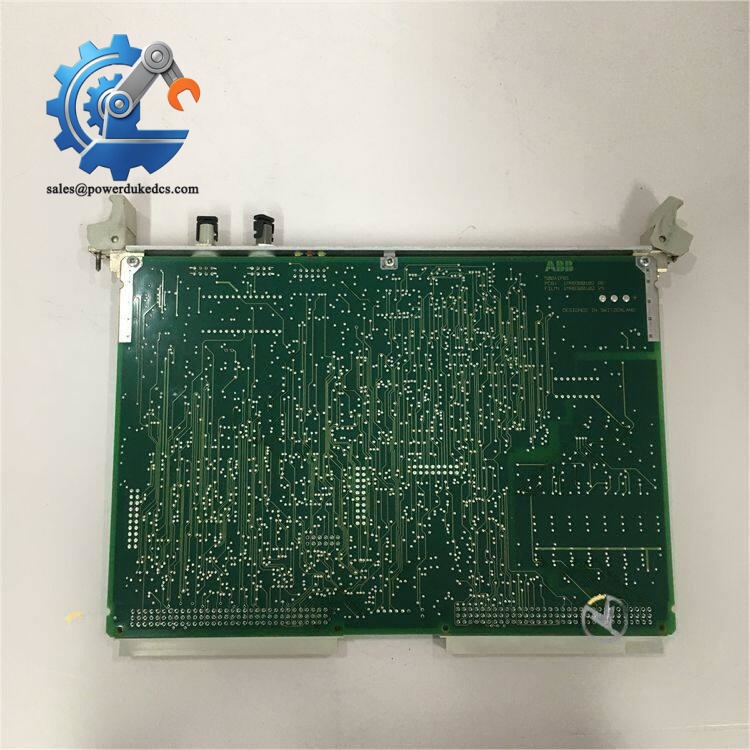
ABB 500MBA02
Physical Installation Prerequisites
- Install only in a compatible ABB I/O assembly.
- Verify module position and keying before insertion.
- Maintain approximately 50 mm clearance above and below the rack assembly for convection cooling.
- Confirm cabinet grounding and protective earth continuity.
- Verify connector alignment before applying insertion pressure.
- Check terminal and backplane connections before energizing.
- Secure mounting hardware against vibration.
Do not force the module into the rack. Damaged backplane contacts can create intermittent faults that are difficult to diagnose.
Buyer’s FAQ (Logistics & Compliance Focus)
Q1. What HS Tariff Code is commonly used for the ABB 500MBA02?
A: The final Harmonized System classification depends on the importing country’s customs interpretation and the declared function of the module. Industrial automation modules are commonly reviewed under electrical control or signal-processing equipment categories. Confirm the final HS code with your customs broker before export.
Q2. Does Country of Origin affect ABB 500MBA02 import approval?
A: Yes. COO information can influence customs clearance, duty assessment, and customer audit documentation. Maintain the original ABB label, supplier declaration, serial records, and receiving inspection reports.
Q3. Should shipping insurance be purchased for this module?
A: Recommended. The module contains electronic circuitry and precision connector interfaces that may be affected by impact, vibration, or electrostatic discharge. Use ESD packaging and replacement-value freight insurance.
Q4. Does the ABB 500MBA02 include the latest firmware pre-loaded?
A: This depends on the module type and revision. Before installation, verify the hardware revision, ABB system configuration, and approved engineering database records. modules are integrated as part of a larger automation architecture rather than configured as standalone devices.



 Start Chat


