

Description
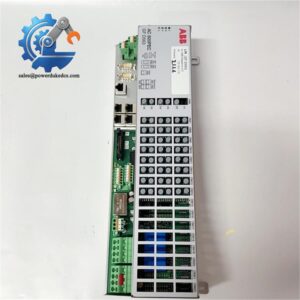
- Model: ABB 90.21
- Brand: ABB
- ABB Part Number: 3BHL001376P0001
- Series: ABB relay socket / industrial drive spare part
- Core Function: Provides socket connection for compatible plug-in relays
- Product Type: Relay socket with screw terminals
- Key Specs: 11-pin | 10 A | 250 V
- Mounting: DIN rail or panel mount
- Condition: New surplus status should be confirmed against the physical stock
ABB documentation identifies 3BHL001376P0001 as a “Socket Type 90.21” spare part. The published ABB data lists a net weight of 0.05 kg and dimensions of approximately 67 × 38 × 25.5 mm.
Key Technical Specifications
| Parameter | Specification |
|---|---|
| Manufacturer | ABB |
| Model | 90.21 |
| ABB Part Number | 3BHL001376P0001 |
| Product Type | Relay socket |
| Terminal Type | Screw box-clamp terminals |
| Number of Pins | 11 |
| Rated Current | 10 A |
| Rated Voltage | 250 V |
| Dielectric Strength | 2 kV AC |
| Mounting | DIN rail or panel |
| Dimensions | 67 × 38 × 25.5 mm |
| Net Weight | 0.05 kg |
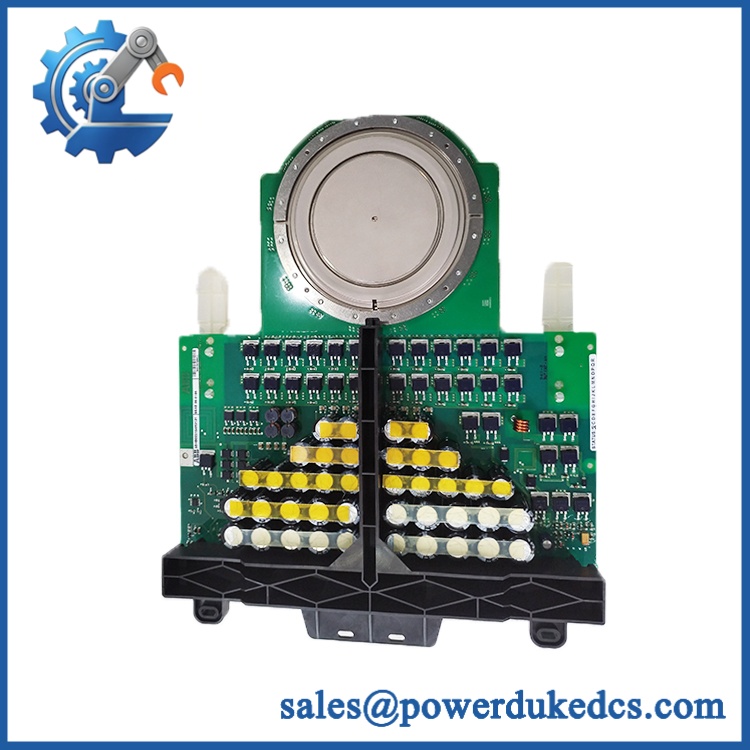
ABB 90.21 3BHL001376P0001
The 10 A / 250 V rating and 11-pin configuration are independently listed for the ABB part by an industrial automation distributor; ABB’s own product data confirms the part number, Type 90.21 designation, dimensions, and 0.05 kg net weight.
Product Introduction
ABB 90.21, part number 3BHL001376P0001, is an industrial relay socket with screw clamp terminals. It provides the physical and electrical interface for compatible plug-in relays and is specified for DIN-rail or panel mounting.
This is a connection component rather than a PLC, CPU, or I/O module. That distinction matters when preparing a replacement BOM. Verify the relay body, pin arrangement, terminal configuration, and mounting method before ordering.
Application Scenarios & Pain Points
I have seen relay-socket problems create surprisingly long maintenance jobs. The relay itself may be perfectly healthy, while a loose terminal, damaged socket, or incorrect pin arrangement causes intermittent control signals. The socket is a small component, but it sits directly in the signal path.
Typical Applications
- Industrial control panels — relay interfaces
Used to mount compatible plug-in relays where field signals need electrical isolation or switching. - Drive and motor-control systems — auxiliary control circuits
ABB identifies this component within its drive spare-parts ecosystem. The published product record places it under Drives → Services → Spares and Consumables → Parts. - MCC and machine-control cabinets — DIN-rail installation
The DIN-rail/panel mounting arrangement is useful where relay interfaces must remain accessible for maintenance. - MRO spare-parts inventory — emergency replacement
Keeping the correct socket alongside the matching relay can avoid a situation where the relay is available but the damaged socket prevents commissioning.
Engineering Case
A realistic maintenance scenario is straightforward: a relay continues to test correctly on the bench, but the machine still shows an intermittent control fault after replacement. The engineer initially suspects the PLC output. Later, the socket terminal is found loose.
The lesson is simple: do not validate only the relay. Check the relay socket, terminal torque, pin assignment, and wiring before blaming the controller.
Compatibility & Replacement Matrix
| Existing / Alternative Part | Compatibility | Engineering Note |
|---|---|---|
| ABB 3BHL001376P0001 / 90.21 → Same ABB 90.21 | Direct | Verify the complete ABB part number before installation. |
| ABB 90.21 → Finder 90.21 series socket | Not automatically interchangeable | Similar numbering does not establish identical pinout, mechanical geometry, or electrical ratings. Verify the exact relay and socket combination. |
| ABB 90.21 → Finder 90.21.0.SMA | Requires verification | Finder identifies 90.21.0.SMA as a socket for its 60/88 series relays; do not treat it as an ABB drop-in replacement without checking dimensions and pin assignment. |
| ABB 90.21 → Different 11-pin relay socket | Requires adaptation | Check pin numbering, contact arrangement, terminal spacing, mounting method, and insulation requirements. |
Important: “90.21” is not sufficient identification by itself. For procurement, use ABB 3BHL001376P0001 and confirm the marking on the physical component. ABB’s current product data specifically associates this part number with Socket Type 90.21.
Quality Inspection & Test SOP
1. Incoming Inspection
- Verify source documentation and traceability.
- Check the ABB part number and physical marking.
- Inspect the housing for cracks, corrosion, deformation, or signs of repair.
- Check screw terminals and pin contacts.
- Confirm dimensions and mounting geometry against the specification.
2. Functional / Mechanical Test
This is a passive socket, so a conventional PLC “live test” is not the same as testing a CPU or I/O module.
- Verify all socket positions mechanically.
- Check terminal clamping.
- Verify continuity against the applicable pinout.
- Test the socket with the specified compatible relay where practical.
- Record results in the Test Report.
3. Electrical Inspection
- Continuity test using a calibrated multimeter.
- Check for unintended shorts between adjacent terminals.
- Verify insulation condition where the applicable test procedure requires it.
- Do not apply a hipot test blindly; use the applicable ABB specification and site test procedure.
4. Configuration Verification
There is normally no firmware or software configuration in a passive relay socket.
Instead, record:
- Relay type installed.
- Relay coil voltage.
- Contact arrangement.
- Socket pin numbering.
- Wiring configuration.
5. Final QC & Packaging
- QC inspection sign-off.
- Protect contacts against mechanical damage.
- Use anti-static protection where required by the complete assembly.
- Bubble wrap plus rigid carton packaging.
- Attach QC Passed label and inspection date.
Test photographs and continuity-test records can be provided when required for procurement or incoming-quality documentation.
Technical Pitfalls to Avoid
1. Confusing the Socket With the Relay
❗ ABB 90.21 is a relay socket, not the relay itself.
A socket replacement does not automatically mean the relay specification is correct. Check coil voltage and contact configuration separately.
2. Assuming Similar Part Numbers Are Interchangeable
This is a classic MRO mistake.
Finder also uses 90.21 terminology for relay sockets, but that does not make a Finder socket an ABB replacement. Finder’s 90.21.0.SMA, for example, is specified for its 60/88 series relays.
Check the manufacturer, complete part number, pinout, and mechanical interface.
3. Ignoring Terminal Configuration
Before removing an old socket, photograph the wiring.
Then verify:
- Terminal numbers
- Relay contact mapping
- Wire destinations
- Terminal condition
- Tightening requirements
A five-minute wiring record can save hours of cabinet troubleshooting.
4. Replacing the Socket Without Checking the Relay
If the relay has overheated, the socket may also show heat damage.
Look for:
- Discolored plastic
- Loose terminals
- Carbonization
- Deformed contact areas
- Excessive terminal temperature
Replacing only the visibly damaged component can leave the underlying fault untouched.
5. Treating a Passive Component Like a PLC Module
There is no firmware revision to match here. The important compatibility variables are mechanical fit, pin assignment, relay compatibility, insulation rating, and electrical load.
For this part, those checks matter more than software-version verification.



 Start Chat