

Description
- Brand: ABB
- Full Model Number: CSA464AE / HIEE400106R0001
- Lifecycle Status: Legacy / EOL; limited replacement inventory
- Core Function in System: 8-channel isolated analog output for ABB S100 I/O systems
- Top 3 Hardcore Specs: 8 isolated AO channels; 4–20 mA signal; single-slot backplane installation
- System Association: ABB Advant AC410 / AC450 S100 I/O architecture
- Physical Format: Plug-in rack card
- Condition & Lead Time: New OEM or tested replacement stock; dispatch subject to confirmed inventory
Current secondary documentation identifies CSA464AE / HIEE400106R0001 as an ABB S100 analog output card associated with Advant AC410/AC450 systems, with 8 isolated analog outputs using 4–20 mA signaling.
Module 3: Technical Intro & Downtime Impact
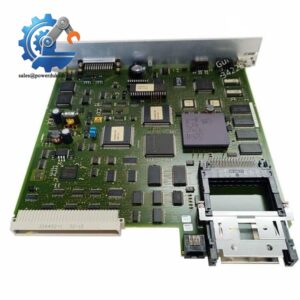
A failed analog output card can leave valves, dampers, actuators, or other final-control equipment without the commanded 4–20 mA signal. The result may be an immediate process upset—or a forced maintenance intervention when one output channel fails and multiple control loops depend on the same rack. The ABB CSA464AE, identified with HIEE400106R0001, is documented as an S100 rack-mounted analog output card for the Advant AC410/AC450 control environment, providing eight isolated analog output channels.
For MTTR reduction, the advantage is primarily architectural: this is a plug-in rack card rather than a field transmitter or standalone signal converter. Eight output channels are handled on one card, with the standard 4–20 mA process signal presented to downstream control devices. No user application memory is the primary concern here; correct rack position, wiring, channel assignment, and hardware identification are. (For an aging AC450 cabinet, connector condition and backplane contamination can matter as much as the replacement card itself.) Secondary listings also associate the HIEE400106R0001 identification with a legacy Advant/S100 installation, so the exact hardware revision should be checked before a shutdown-window replacement.
Module 4: Dynamic Emergency Swap & Configuration Guide
1. Pre-Swap Prep — Isolate the I/O Rack
Apply the approved lockout/tagout procedure and remove control power from the affected S100 rack unless the exact site documentation explicitly permits live replacement. Photograph the existing card, terminal assignment, rack slot, channel labels, and any associated field wiring. Have an ESD wrist strap, suitable screwdriver, insulated tools, and the cabinet drawing available.
2. Removal — Release the Plug-In Card From Its Rack Position
Mark the installed slot before touching the hardware. Disconnect the field-side interface associated with the card, release the card’s retaining mechanism, and withdraw it straight from the rack without twisting the PCB. Keep the original card available for side-by-side comparison; connector arrangement and revision markings should be checked before disposal.
3. Installation & Configuration — Match Slot and Channel Assignment
Insert the CSA464AE / HIEE400106R0001 into the same rack position and secure it mechanically. Reconnect the field interface exactly as documented. Preserve the existing channel-to-loop assignment rather than assuming channel 1 is wired to the first terminal encountered. Because secondary documentation is inconsistent about detailed electrical attributes for this part, use the installed cabinet schematic and the card’s actual markings for final wiring verification.
4. Power-On Self-Test (POST) — Verify Outputs Before Process Release
Restore control power and check the rack’s normal diagnostic status. Confirm that the card is recognized without a hardware fault, then test each required analog output independently. A practical commissioning check is to verify the expected 4–20 mA range with a calibrated meter or loop test equipment before reconnecting the loop to the process device. Do not return the plant loop to automatic control until all required channels respond correctly.
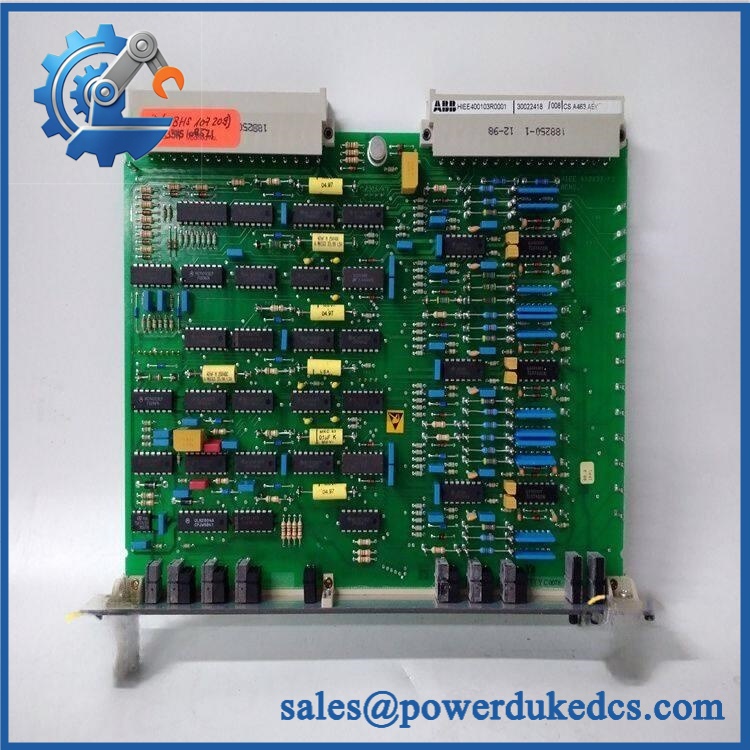
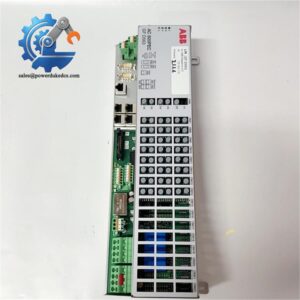
ABB CSA464AE HIEE400106R0001
Module 5: Quality Assurance & Testing SOP
Every CSA464AE / HIEE400106R0001 supplied for a critical-spares application should be treated as a controlled industrial electronics item.
- Identity verification: Record ABB identification, full part number, hardware revision, serial marking, and visible manufacturing codes.
- OEM anti-counterfeit visual inspection: Compare PCB markings, connector geometry, labels, fasteners, board construction, and identification plates against established ABB references.
- Mechanical inspection: Check PCB condition, connector integrity, retaining points, edge contacts, contamination, corrosion, and evidence of previous overheating.
- Rack-interface inspection: Verify that the card mates correctly with the intended rack interface and that no connector pin is bent, recessed, or damaged.
- Power-on self-test (POST): Energize the card on an approved test rack and verify expected status indications and the absence of hardware fault conditions.
- I/O full-range simulation: Exercise all eight analog output channels through the specified operating range and verify controlled response using calibrated test equipment.
- 4–20 mA verification: Confirm representative low-, mid-, and high-range output points rather than checking only one nominal value.
- Channel isolation check: Verify that output behavior remains independent across the required channels under the approved test configuration.
- Thermal observation: Monitor the card during an extended powered test for abnormal heating, intermittent behavior, or connector instability.
- Final QC record: Store identification photographs, measurement results, test date, technician sign-off, and pass/fail status with the shipment record.
The documented core configuration for is eight isolated analog outputs with 4–20 mA signaling for an ABB Advant/ installation.
Module 6: Maintenance & Reliability FAQ
1. Is ABB CSA464AE a direct drop-in replacement, or does it require a firmware flash?
Do not assume that every revision is interchangeable solely because the front label is similar. Verify , , hardware revision, rack position, and the installed configuration before installation. This is an I/O card, not a CPU carrying the plant application program, so a routine application firmware transfer should not be assumed.
2. Is it safe to hot-swap the while the system is running?
Do not treat it as hot-swappable unless the exact ABB system documentation and site procedure explicitly authorize live removal. For an Advant/ rack, a controlled shutdown of the affected rack is the safer maintenance assumption because removing a live card can expose the backplane and connected circuitry to electrical and ESD risks.
3. Will replacing this card cause my current program to be lost?
The replacement of an analog output card does not normally erase the controller’s user application because the is an I/O card rather than the primary application processor. Still, record the existing I/O configuration, channel assignments, controller status, alarms, and engineering database before the maintenance window. A backup of the complete control-system configuration remains the correct practice.
4. How should I verify that all output loops are working after replacement?
Do not rely on the card’s basic power-up status alone. Test every required channel, verify the commanded value against the measured 4–20 mA signal, and confirm that the associated valve, damper, actuator, or receiving instrument responds correctly. For critical loops, perform the test first in manual mode before returning the process to automatic control.
5. What are the warranty terms if the unit fails after installation?
For supplied replacement stock, use a 12-month warranty tied to the shipped unit and its documented pre-shipment test record. Keep the serial number, incoming inspection photos, installation date, commissioning measurements, and any post-installation fault codes. Those records make a failure investigation substantially easier and help distinguish a defective card from a field-wiring, rack-backplane, or loop-device fault.



 Start Chat