

Description
- Brand: ABB
- Full Model Number: DATX131 / 3ASC25H215
- System/Series Family: ASTAT Digital Drives
- One-Sentence Core Function: Voltage divider board used for voltage signal conditioning and measurement within ABB ASTAT digital-drive hardware
- Top 3 Hardcore Specs: Voltage divider function; ASTAT Digital Drives platform; ABB Type Designation DATX 131
- Stock Status: New Surplus / Fully Tested Refurbished — exact board identity and physical condition verified before shipment
Module 3: Commercial-Technical Deep Dive
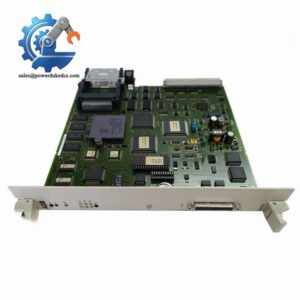
A failed voltage-sensing board can make a drive appear to have a controller problem when the actual fault is in the measurement path. ABB identifies 3ASC25H215 as the DATX 131 voltage divider board, and current ABB-related spare-parts references place DATX 131 within the ASTAT Digital Drives family. The board’s role is therefore measurement-oriented rather than general-purpose I/O: it conditions voltage signals so the drive control system can work with the required feedback levels. This distinction matters when troubleshooting an ASTAT cabinet because replacing a controller or I/O module will not correct a defective voltage-divider path.
The practical value is accurate voltage feedback without redesigning the existing drive architecture. ABB’s catalog identification establishes the board type, but publicly accessible sources do not provide a sufficiently reliable engineering specification for the exact divider ratio, maximum input voltage, isolation category, or connector-level pinout of this revision. Those values should therefore be confirmed from the installed schematic, board markings, and applicable ABB service documentation rather than copied from generic DATX-family listings. — For an existing ASTAT installation, preserving the exact PCB revision and wiring arrangement is often more important than a broad family-level compatibility statement.
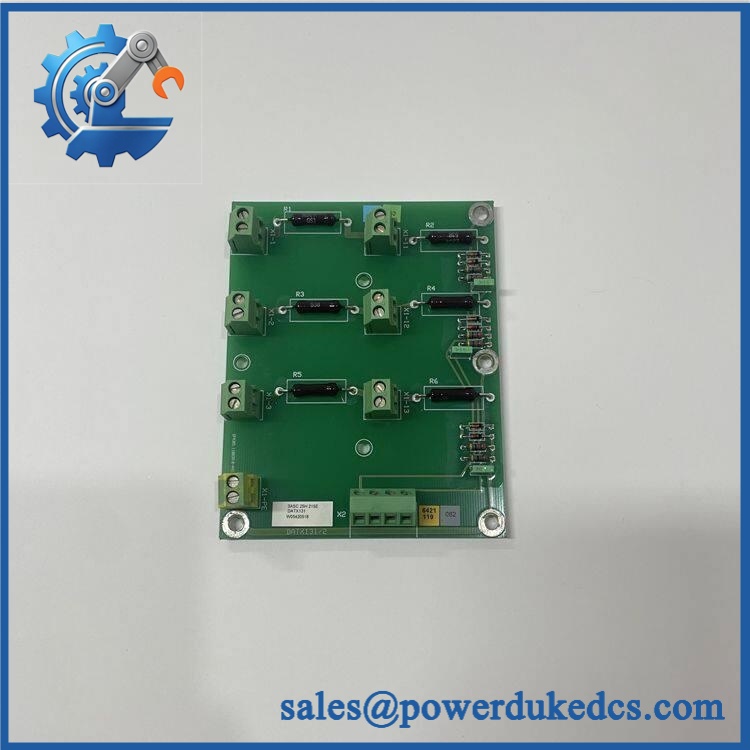
ABB DATX131 3ASC25H215
Module 4: Compatibility & Installation Traps
Migration/Compatibility
- Replacement status: Configuration-specific replacement for ABB ASTAT Digital Drives applications. Match the complete DATX131 / 3ASC25H215 identification.
- Functional category: ABB identifies the unit as a voltage divider board, not a general analog I/O module.
- Firmware requirement: No firmware update is inherently associated with the board itself. Firmware and drive parameters reside in the associated control architecture.
- Logic rewrite: A verified like-for-like PCB replacement should not normally require drive application logic changes. Validate the drive’s measured-voltage scaling after replacement.
- Electrical configuration: Do not approve a substitution until the original schematic, connector arrangement, and voltage-measurement circuit have been compared with the replacement.
⚠️ Field Traps (Watch Out)
- Divider-ratio assumption: Do not infer the voltage-divider ratio from another DATX family member. The exact electrical scaling for 3ASC25H215 should be taken from ABB documentation or the installed cabinet drawings.
- High-voltage exposure: A voltage-divider board can be connected directly to hazardous drive-side measurement circuits. De-energize, isolate, discharge, and verify absence of voltage before removing the PCB.
- Connector mapping: Photograph every connector and terminal position before removal. A board can fit mechanically while incorrect measurement wiring creates an invalid feedback signal.
- Calibration/scaling: After installation, compare the drive’s reported voltage against a properly rated external measurement method. A controller that starts without alarms is not proof that the voltage feedback is correctly scaled.
Module 5: Quality Assurance SOP
Our pre-shipment inspection for an ABB DATX131 3ASC25H215 centers on board identity, physical integrity, and the voltage-signal path:
- OEM anti-counterfeit visual inspection — verify ABB markings, DATX 131 designation, full 3ASC25H215 part number, PCB artwork, revision identifiers, component population, and manufacturing labels.
- Part-number capture — photograph both sides of the PCB and every readable identification label before testing.
- Revision verification — confirm that the supplied board is the exact DATX131 revision requested rather than another DATX-series voltage or interface board.
- PCB condition inspection — check solder joints, terminals, connectors, transformers or sensing components where fitted, signs of overheating, corrosion, contamination, and mechanical damage.
- Fuse/protection inspection — where applicable to the physical revision, inspect protective components and record their condition before energization.
- Power-on self-test (POST) — only within an approved ABB-compatible test arrangement, apply the documented operating conditions and monitor abnormal current draw, heating, and controller diagnostics.
- Voltage-signal path verification — use an electrically isolated and appropriately rated test setup to verify the expected scaled response of the divider circuit.
- Test-point verification — where factory or service test points are available, measure expected continuity and signal behavior against the applicable documentation.
- Drive-interface verification — install in a compatible ASTAT test environment where available and confirm that the associated control system receives stable voltage-feedback information.
- Communication handshake verification — where supported by the complete drive assembly, verify controller-side status and data exchange after the voltage-feedback path is restored.
- Extended observation — monitor signal stability and abnormal temperature rise during a controlled operating period.
- Final QC record — retain part number, revision, inspection photographs, measured values, test conditions, and release status.
- ESD packaging — use antistatic protection, connector guards, cushioning, and moisture protection before shipment.
ABB’s catalog identification directly supports the DATX 131 = voltage divider board designation and its 3ASC25H215 product ID. Because public references do not establish a complete electrical test specification for this exact revision, the final QA limits should be taken from the applicable ABB documentation or customer-approved test procedure.
Module 6: CRO-Driven Buyer FAQ
1. Is ABB DATX131 3ASC25H215 obsolete, and how do I verify authenticity?
The board belongs to the legacy ASTAT Digital Drives hardware family. ABB-related catalogs identify 3ASC25H215 specifically as DATX 131, Voltage divider board. Authenticity should be confirmed from the ABB PCB marking, full part number, revision code, component population, and physical board layout.
2. Is DATX131 3ASC25H215 a direct replacement for another DATX board?
Not automatically. ABB’s ASTAT family contains multiple DATX boards with different functions, including DATX 130 for rotor feedback, DATX 132 for torque observation, and DATX 131 for voltage division. Similar mechanical format does not establish electrical equivalence.
3. Can the be hot-swapped?
Do not treat it as a routine hot-swappable I/O module. Its function is associated with voltage measurement within an industrial drive, so hazardous electrical energy may remain present even after a controller stops operating. Follow the applicable ABB maintenance procedure, plant LOTO procedure, and discharge/verification requirements before board removal.
4. What is the exact voltage-divider ratio of 3ASC25H215?
A reliable public source was not found that establishes the exact divider ratio and maximum input voltage for this specific revision. Those values should be taken from the customer’s ASTAT schematic, the original board documentation, or an ABB service document. Using a ratio copied from another DATX board would create an unnecessary commissioning risk.
5. What warranty and technical support should I expect?
Warranty duration should be stated on the quotation for the exact physical unit supplied. Technical support should cover part-number verification, revision matching, board identification, connector guidance, and documented pre-shipment test results. It should not substitute for high-voltage drive commissioning, insulation testing, protection engineering, or site electrical-safety procedures.


 Start Chat