Description
-
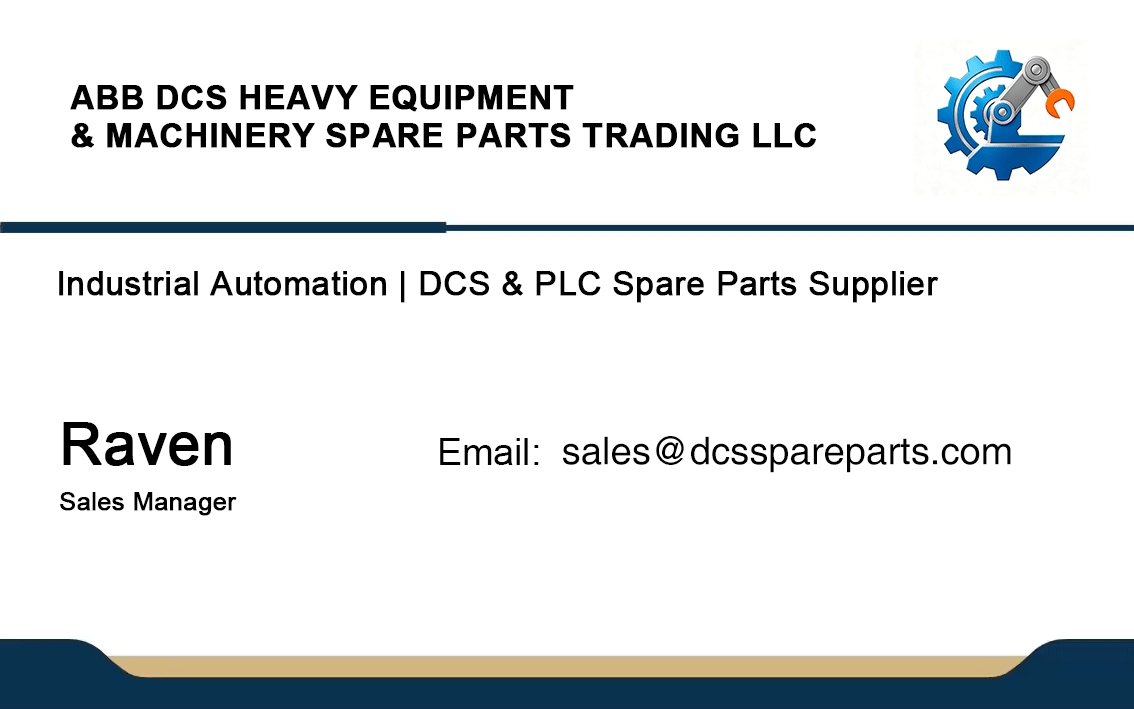
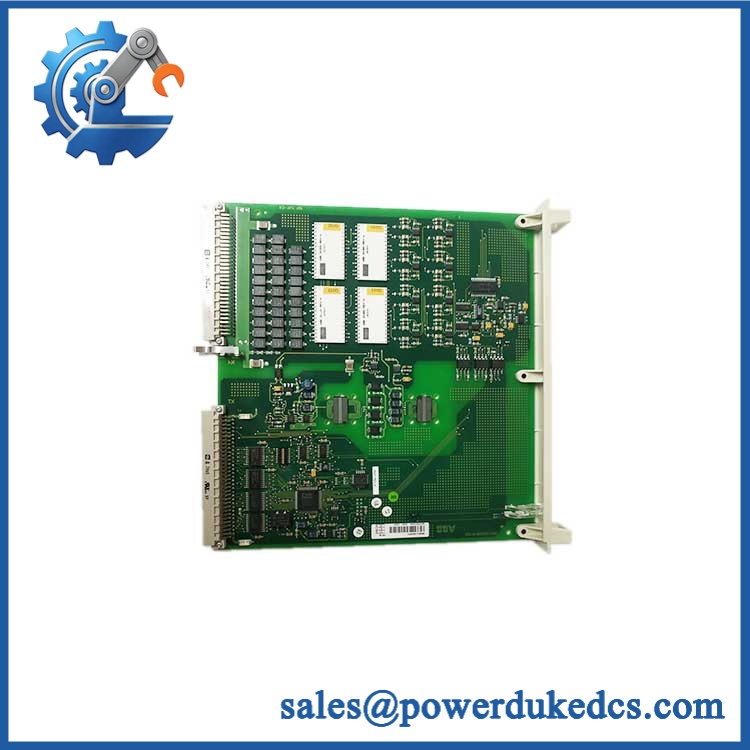
ABB Advant Master -S100 I_O System PDF
Brand: ABB
- Full Model Number: DSAO120A
- ABB Part Number: 3BSE018293R1
- Lifecycle Status: Requires confirmation with ABB
- Core Function: Analog output module; verify exact function and system assignment against OEM documentation
- Top 3 Technical Specs: Output channel count, signal range, and output resolution require OEM datasheet verification
- Stock and Condition: Confirm current inventory, condition, serial/label details, and dispatch lead time before ordering
- Warranty: Confirm coverage and terms in the written quotation
Migration, Compatibility and Field Traps
Replacement Matrix
| Evaluation Item | Procurement and Engineering Guidance |
|---|---|
| Replacement classification | Exact-part replacement candidate; verify hardware revision and system configuration |
| Hardware modification | Not established as necessary for an identical, correctly configured replacement; confirm terminal unit and mounting arrangement |
| Software compatibility | Confirm controller configuration, I/O definitions, and applicable system software |
| Terminal unit | Verify the installed terminal unit and wiring arrangement against the approved ABB documentation |
| Firmware requirements | Confirm the applicable controller and I/O firmware requirements before installation |
| Obsolescence status | Verify current lifecycle and replacement options with ABB |
| Commissioning | Perform output-loop checks and validate field-device response before returning the process to service |
Field Traps: Watch Out
- Terminal Unit and Wiring Mismatch: Matching the board part number alone does not establish that the installed terminal unit, connector arrangement, and field wiring are correct. Compare the existing assembly with the approved system drawings before insertion.
- Output Scaling and Loop Verification: A replacement board does not eliminate the need to verify engineering units, controller scaling, output limits, and the receiving device’s signal requirements. Test each affected loop under an approved maintenance procedure before resuming automatic control.
Use the OEM documentation for the installed configuration as the final authority. Do not assume that a related DSAO model is interchangeable solely because it has a similar designation.
- ABB Advant Master -S100 I_O System
Quality Assurance and Testing SOP
Each unit should undergo documented inspection and testing appropriate to its supplied condition. The following procedure defines the checks to request or record before dispatch; actual completion and results must be confirmed for the specific serial-numbered unit.
- Incoming Identification: Check the ABB nameplate, complete part number, product identification, revision markings, and available traceability records.
- OEM Anti-Counterfeit Visual Inspection: Examine labels, connectors, PCB condition, solder joints, component markings, corrosion, contamination, and evidence of unauthorized rework.
- Physical Condition Assessment: Inspect the board and connector interfaces for cracks, bent contacts, damaged components, and signs of overheating.
- Power-On Functional Test: Where the approved test setup permits, apply the specified supply conditions and record available status indicators and diagnostic results. Do not assume that a particular ERR/RUN LED sequence applies to this board.
- Analog Output Testing: Use a calibrated meter or suitable test equipment to verify supported output channels, signal behavior, and readings against the applicable OEM acceptance limits.
- I/O Load Testing: Test representative or all accessible output channels using suitable loads, where the approved fixture and test procedure support this. Record the channel-by-channel results.
- Final Inspection and Packaging: Confirm the order number, model, condition, accessories, and inspection records. Use appropriate electrostatic-discharge protection and protective packaging.
Acceptance requirement: Release the unit only after the required checks have passed and the results are documented. If a complete powered functional test cannot be performed, disclose that limitation before shipment rather than describing the unit as fully tested.
Overview
S100 I/O process interface modules together with connection units are designed for Advant Controller 400 series process controllers. They simplify cable termination, suppress noise and destructive voltage spikes, and protect core electronic components.
The S100 I/O serves as the primary process interface for the Advant Controller 400 series. Equipped with integrated cable management, it communicates in parallel with the main controller, making it ideal for centralized I/O systems and high-speed control applications.
A complete portfolio of process I/O modules is available, including general digital and analog input/output modules, plus dedicated interface modules for special operating conditions. These modules support pulse counting, frequency measurement, positioning control and DC motor speed regulation, and enable communication with other controllers. All I/O modules feature simple interfaces, delivering high precision and fast control response. Independent control loops can be easily integrated into plant-wide monitoring and control systems.
Field devices connect via screw terminals on the connection units, which are normally mounted at the rear of control cabinets. This physical layout isolates interference and high voltage surges away from main electronic boards, resulting in neat wiring and convenient maintenance.
Pre-manufactured cables interconnect I/O modules and connection units, with multiple length options available. Signal termination and cable routing can be arranged inside the same controller cabinet, extended to adjacent cabinets, or routed to remote cabinets to support various layout schemes.
Connection units support two field wiring strategies for maximum installation flexibility:
- Signal-oriented wiring: Group field cables with identical electrical characteristics (e.g. all 24 V DC input signals) for termination.
- Device-oriented wiring: Bundle all incoming and outgoing cables belonging to one single field device for termination.
Key System Features
1. On-board Local Processing
I/O modules are intelligent units. Signal and data processing is executed locally on the module board, without consuming CPU resources of the main controller. Time stamping of events, signal filtering and gain adjustment are all performed on-board.
This distributed architecture improves real-time performance and reliability of the whole system. System expansion will not occupy the main controller’s computing capacity.
2. Comprehensive Self-Diagnostics
The system continuously monitors the status of all modules:
- Module front-panel LEDs and operator station alarm messages report faults synchronously.
- Faulty input channels can be manually masked and signals simulated; faulty output channels will automatically cut off or switch to predefined safe states.
- All I/O modules support hot-swap replacement. Selected modules support transparent dual redundancy configuration to further boost system availability.
3. High Noise Immunity
All modules comply with high-level EMC standards, meeting EU directives 2014/30/EU (Electromagnetic Compatibility) and 2014/35/EU (Low Voltage). They enable reliable signal exchange between controllers and field equipment.
Figure note: RE500 control cabinet with S100 I/O installation example, including I/O subrack, connection units and sensor power supply. Process cables enter from the bottom of the cabinet, and field wires are terminated to terminals on connection units.