

Description
- Brand: ABB
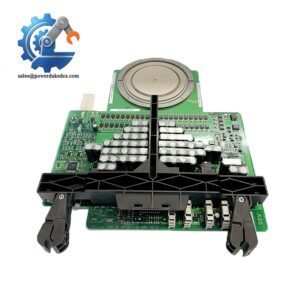
- Model: GFD563A101
- ABB Ordering Number: 3BHE046836R0101
- Product identification: Sources identify the part as an LCI converter interface (LIN); other reseller records associate it with ABB excitation-system hardware. The exact application should therefore be confirmed against the equipment BOM or OEM documentation before installation.
- Physical Dimensions: Not reliably published in the sources reviewed. Do not use an unverified dimensional figure for cabinet planning.
- Estimated Shipping Weight: Approximately 1.63 kg based on one supplier’s listed unit weight; treat this as a logistics estimate rather than an ABB-certified net weight.
- What’s in the Box: Module assembly; any mating connectors, mounting hardware, documentation, or accessories should be verified against the supplied packing list. Do not assume terminal blocks or manuals are included.
- Condition Check: Record the nameplate, complete ABB ordering number, revision/date code, and seal condition before removing the ESD packaging.
Product Introduction
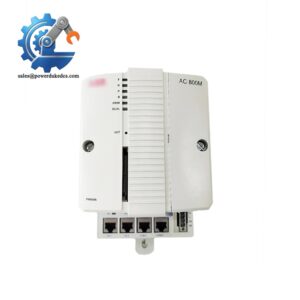
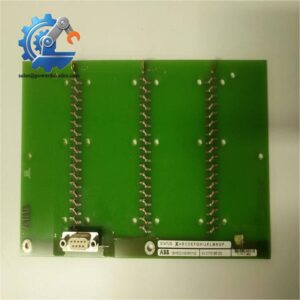
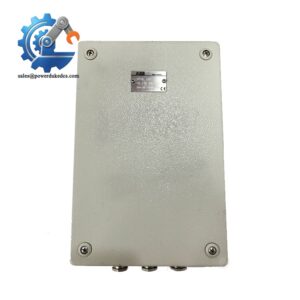
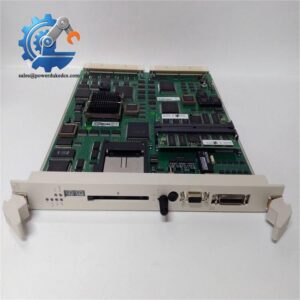
Inside an ABB excitation or converter-control installation, the GFD563A101 / 3BHE046836R0101 is identified by available product records as an interface-related electronic assembly. One catalog record specifically describes it as “GF D563 A101: LCI Conv. Interface (LIN)”.
That identification matters. Several third-party listings describe the same ordering number differently, including excitation-control and communication functions (which makes casual cross-referencing risky). For a plant spare, the complete ordering number—not merely “GFD563A101”—should be matched against the installed assembly, engineering drawing, and approved spare-parts list before replacement.
Core Technical Specifications
| Parameter | Value |
|---|---|
| Manufacturer | ABB |
| Model / Type Designation | GFD563A101 |
| ABB Ordering Number | 3BHE046836R0101 |
| Identified Catalog Description | GF D563 A101: LCI Converter Interface (LIN) |
| Application Family | ABB excitation / converter-control equipment |
| Listed Unit Weight | Approx. 1.63 kg |
| Control Architecture | ABB AC 800PEC-compatible architecture |
| Programming Environment | ABB Control Builder M / AC 800PEC engineering environment where applicable |
| Industrial Protocol Support | System-dependent; verify installed AC 800PEC configuration |
| Rated Supply Voltage | System-specific; verify against the applicable ABB hardware manual |
| Mounting Arrangement | Verify against the applicable ABB cabinet/electronic-tray assembly |
| Country of Origin | Supplier records conflict; verify against the actual nameplate and COO documentation |
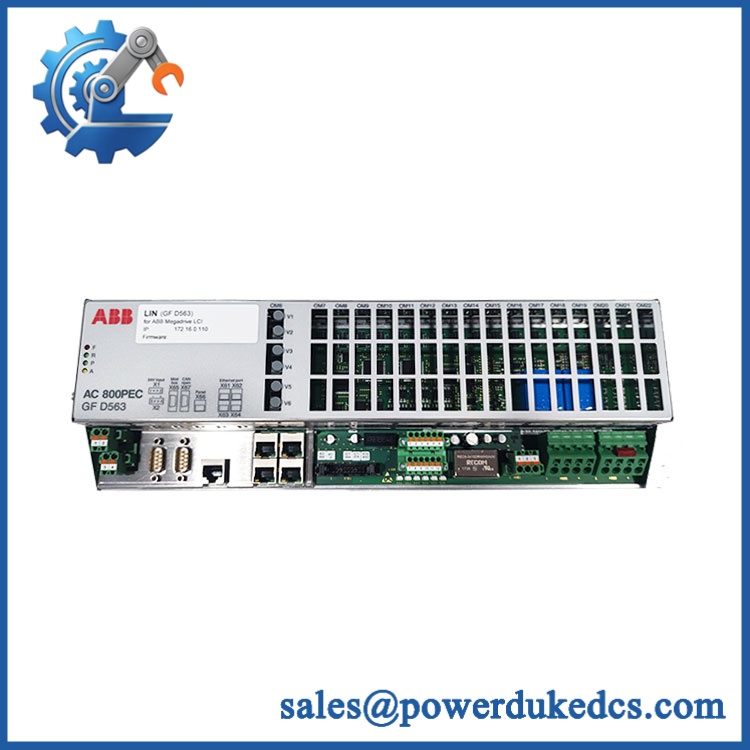
ABB GFD563A101 3BHE046836R0101
The available evidence is insufficient to assign trustworthy values for power draw, heat dissipation, or memory capacity. Do not substitute specifications from similarly numbered ABB boards.
? Global Compliance & Industry Certifications
For international shipment, this should be treated as industrial control-system electronic hardware until its exact system classification is confirmed.
- CE Mark: Verify the CE status of the complete assembly and applicable ABB system documentation.
- UL/cUL: Verify whether the particular hardware revision carries UL/cUL recognition or whether certification applies only at the system level.
- ATEX / IECEx: Do not assume hazardous-area approval merely because the module is used in an industrial plant. The complete installed assembly must have the appropriate hazardous-location certification.
- Marine approvals: DNV GL/DNV approval should only be claimed when the exact product/system documentation confirms it.
- Export / customs classification: The HS tariff code depends on the actual technical function and import-country rules. The part number alone is not sufficient for a legally defensible classification.
A hazardous-area certification is significant because the certification defines the conditions under which electrical equipment can be installed without creating an unacceptable ignition risk. Verify specific lot certifications with OEM.
? Long-Term Storage & Asset Preservation Guide
- Keep the electronic assembly in its original ESD shielding packaging. Do not store the exposed PCB on ordinary cardboard, plastic film, or an ungrounded work surface. Static discharge can damage semiconductor devices without leaving visible evidence.
- Control humidity and condensation. A controlled indoor storage environment below approximately 60% RH is a sensible warehouse target for long-term electronic-spare storage. Avoid rapid temperature changes that can produce condensation on the PCB and connector contacts.
- Preserve the connectors and identification labels. Keep mating connectors capped or protected from dust and oxidation. The nameplate must remain legible (especially the ABB ordering number, revision, and date/serial information) because those details establish interchangeability during an audit.
Before energization after extended storage, inspect for corrosion, contamination, capacitor deterioration, connector oxidation, and evidence of moisture ingress. Follow the applicable ABB storage and recommissioning procedure if available.
Physical Installation Prerequisites
- Confirm the exact mounting hardware and electronic-tray/backplane arrangement from the applicable ABB system documentation before installation.
- Do not drill cabinetwork or fabricate mounting points based on reseller dimensions.
- Maintain unobstructed airflow around heat-producing electronic assemblies. Where the cabinet design does not specify a different clearance, preserve practical free space around the assembly and never block designated ventilation paths.
- Verify cabinet protective earth and module grounding arrangements before energization.
- Inspect retaining hardware and connector locking mechanisms; a partially engaged connector can produce intermittent control faults that are difficult to distinguish from an electronic failure.
- Confirm that the replacement revision is approved for the installed system. GFD563A101 and a visually similar ABB board are not automatically interchangeable.
Buyer’s FAQ
Q: What HS tariff code should be used for GFD563A101?
A: There is no universally safe HS code based solely on the part number. The customs classification should reflect the module’s actual function and the importing country’s tariff schedule. Have the broker validate the classification before commercial shipment.
Q: Does the Country of Origin affect the shipment?
A: Yes. COO can affect customs duty, preferential trade treatment, import documentation, and origin declarations. Available reseller information is inconsistent, so do not copy an origin from an old PI or third-party listing. Use the actual manufacturer documentation or applicable COO certificate.
Q: Should shipping insurance be purchased?
A: For a high-value industrial control spare, yes. Protect the shipment against physical loss or transit damage, particularly when the module has a high replacement cost and the plant depends on it as a critical spare. Photograph the packaging and nameplate before dispatch.
Q: Does the module arrive with the latest firmware pre-loaded?
A: Do not assume that it does. Firmware can be revision-specific and tied to the installed control-system architecture. Verify the firmware/software revision against the plant’s approved configuration before installation; a newer revision is not automatically an approved replacement.
Asset-control note: The strongest identification currently available for this item is ABB , ABB ordering number 3BHE046836R0101. ABB-specific public documentation for the exact part was not located in the sources reviewed, while third-party descriptions conflict on its precise function. Therefore, dimensions, electrical ratings, certification status, firmware revision, and interchangeability should be treated as verification-required fields, not assumed specifications.


 Start Chat