

Description
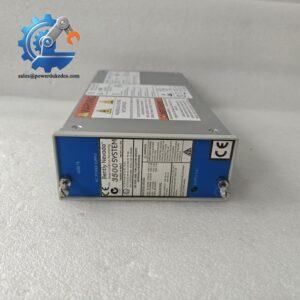
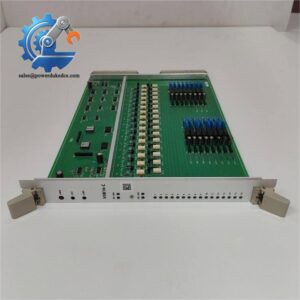
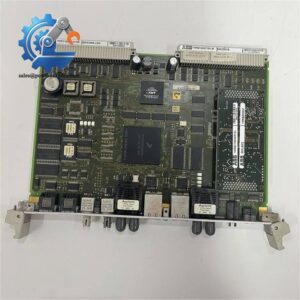
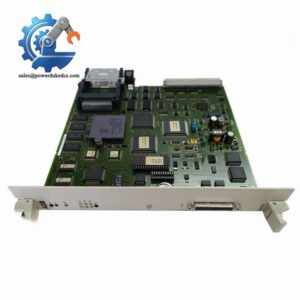
- ABB PFCL201C 3BSE023409R20 | ABB Force Measurement Module for Industrial Automation
At-a-Glance Executive Brief
- Model: PFCL201C
- ABB Product ID: 3BSE023409R20
- Brand: ABB
- Series: Pressductor / Force Measurement
- Part Type: Force Measurement Controller / Load Cell Interface
- Core Function: Processes signals from ABB Pressductor force transducers and provides force measurement for industrial web and process applications.
- Key Specs: 24 VDC supply, dual-channel force measurement architecture, configurable measurement range, and analog output capabilities.
- Primary Application: Web tension, strip processing, rolling mills, paper machines, converting equipment, and other continuous-process applications.
Product Introduction
When web tension drifts during a continuous process, the effect can appear downstream as wrinkles, tracking errors, dimensional variation, or inconsistent product quality. Accurate force measurement at the machine interface is therefore a key part of the control loop.
The ABB PFCL201C 3BSE023409R20 belongs to ABB’s Pressductor force-measurement product family. The PFCL201 series is designed to interface with ABB Pressductor force sensors and convert their measurement signals into usable force information for automation and process-control systems.
With its compact controller architecture and dedicated force-measurement function, PFCL201C is suited to applications where accurate measurement of web tension, strip force, or process load is required. In field deployments, keeping the controller and associated Pressductor transducers matched is important because calibration and signal characteristics directly affect the resulting force measurement.
Core Technical Specifications
| Parameter | Value |
|---|---|
| Manufacturer | ABB |
| Model | PFCL201C |
| Product ID | 3BSE023409R20 |
| Product Family | Pressductor Force Measurement |
| Product Type | Force Measurement Controller |
| Application | Force / Tension Measurement |
| Sensor Technology | ABB Pressductor |
| Measurement Channels | 2 channels |
| Supply Voltage | 24 VDC |
| Measurement Range | Configurable according to application |
| Analog Output | Configurable analog force signal |
| Control Interface | Industrial automation interface |
| Mounting | Control cabinet / industrial installation |
| Typical Applications | Web tension, strip processing, rolling, paper, converting |
| System Function | Force signal conditioning and measurement |
| Part Classification | ABB Automation Spare Part |
| Replacement Use | Maintenance / System Repair |
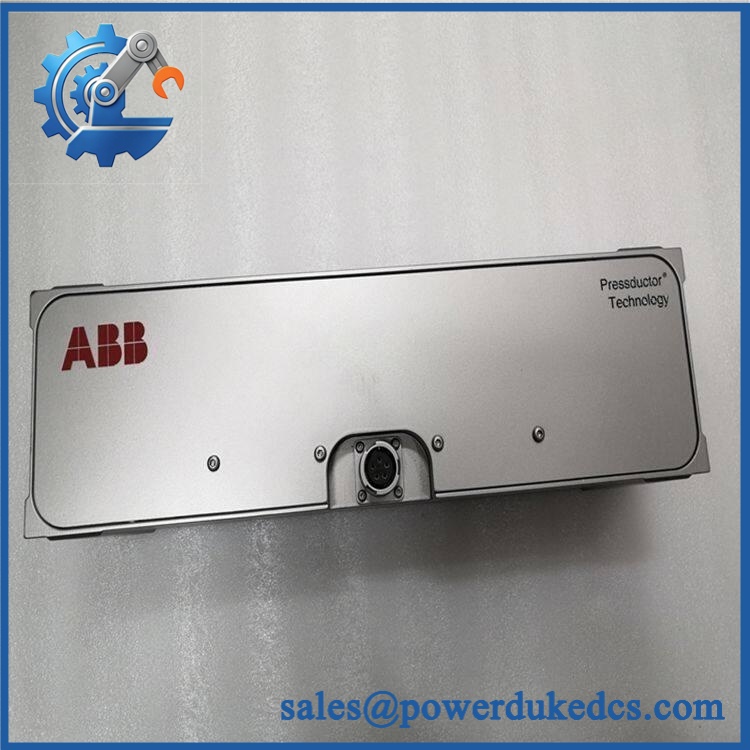
ABB PFCL201C 3BSE023409R20
Application Scenarios & Pain Points
In a paper machine operating at high line speed, PFCL201C can serve as part of the force-measurement chain used to monitor web tension. Stable measurement helps the control system respond to changing process conditions before tension variations become visible product defects.
For steel strip processing, force measurement is important when controlling strip tension and mechanical loading. The Pressductor measurement system is suited to industrial environments where continuous force monitoring is required.
A converting line running above 50°C cabinet ambient temperature places additional demands on electronic equipment. Proper cabinet ventilation, stable 24 VDC power, and clean signal wiring should be maintained to prevent measurement drift and intermittent behavior.
During commissioning of a new tension-control section, technicians can use the together with compatible Pressductor transducers to establish the force-measurement signal required by the machine control system.
In legacy production equipment, replacing a failed controller with the correct variant can be considerably simpler than redesigning the entire measurement chain. The sensor type, calibration data, wiring, and controller configuration should remain consistent across the replacement.
Common Error Codes & Diagnostic Symptoms
Symptom/Code: Force signal remains at zero
→ Diagnosis: Check the 24 VDC supply, Pressductor sensor wiring, input connections, and controller configuration. An open sensor circuit or missing excitation can prevent a valid force signal from being generated.
→ Action: Verify the complete sensor-to-controller circuit and replace the if the controller is confirmed defective.
Symptom/Code: Force reading unstable or fluctuating
→ Diagnosis: Inspect sensor cabling, grounding, shielding, power quality, and mechanical mounting. Electrical noise or an unstable sensor connection can appear as force fluctuation.
→ Action: Correct the signal path and replace the controller when the instability follows the .
Symptom/Code: Output does not correspond to applied force
→ Diagnosis: Check calibration parameters, sensor configuration, zero setting, and scaling. Incorrect configuration can produce a consistent but inaccurate force reading.
→ Action: Restore the correct parameters and recalibrate the measurement chain where required.
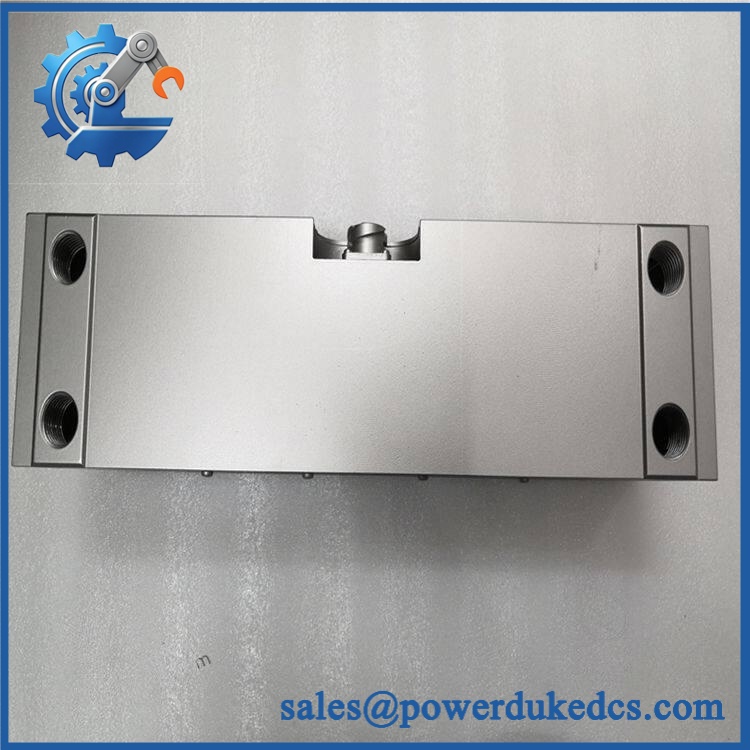
ABB PFCL201C 3BSE023409R20
Cross-Reference & Lifecycle Migration
Product Identification
The primary ordering reference is:
- ABB Model:
- ABB Product ID: 3BSE023409R20
- Product Family: Pressductor
- Function: Force measurement / signal processing
- Application: Industrial tension and force measurement
The 3BSE023409R20 identifier should remain attached to the procurement request. PFCL201-series products are available in different configurations, so replacing the complete product number with only “PFCL201” can create a configuration mismatch.
Related Variants
The PFCL201 family includes different ordering variants for particular force-measurement applications. A replacement should therefore be matched by:
- Complete ABB product number
- PFCL201 variant
- Sensor type
- Input configuration
- Output configuration
- Supply arrangement
- Existing calibration parameters
Lifecycle & Buffer Stock
For installations using the PFCL201 platform, maintaining a tested spare is practical because a controller failure can interrupt the force-measurement loop even when the associated mechanical equipment remains operational.
A useful buffer-stock record should include the controller part number, Pressductor sensor model, calibration information, machine location, and existing configuration parameters. This reduces commissioning time when an emergency replacement is required.
Field Engineer’s Tech Notes
Tech Note 1 — Check the sensor before condemning the controller.
A missing or unstable force signal does not automatically mean the has failed. Check the Pressductor transducer, cable continuity, shielding, connector condition, and 24 VDC supply first. A damaged sensor cable can produce symptoms that look like controller failure.
Tech Note 2 — Preserve calibration data.
Before removing a working , record its configuration and calibration settings. The controller is part of a measurement chain, so replacing the electronics without preserving the relevant scaling and zero information can result in incorrect force readings (even when the replacement hardware is functioning normally).
Strict QA & Testing SOP
- Part Number Verification
Confirm / 3BSE023409R20 against the purchase order and product label. - Visual Inspection
Inspect the housing, PCB, terminals, connectors, labels, and mounting hardware. - Nameplate Documentation
Photograph the model, product number, serial number, and revision information. - Connector Inspection
Check sensor and control terminals for oxidation, contamination, looseness, or mechanical damage. - Power Supply Test
Apply the specified 24 VDC supply using a controlled test setup. - Startup Check
Verify normal startup behavior and available status indications. - Sensor-Signal Test
Connect a compatible Pressductor signal source or approved test equipment and verify the measurement input. - Zero-Point Verification
Confirm the zero condition and verify that the measurement output remains stable. - Force-Signal Simulation
Apply controlled simulated measurement levels and confirm proportional output response. - Analog Output Verification
Measure the configured analog output and compare it with the expected test values. - Extended Operation Test
Run the controller for an appropriate period while monitoring supply stability, output behavior, and thermal condition. - Final QA Record
Document electrical readings, test results, product identification, and test date. - ESD-Safe Packaging
Protect the electronic assembly with anti-static packaging and impact-resistant outer packaging.
Test videos can be provided when available, together with product photographs and inspection records.
Buyer’s FAQ
Q1. Can be hot-swapped?
Do not assume hot-swapping capability. Place the applicable measurement and control circuit into a safe maintenance condition and follow the ABB installation procedure before removing the controller. This is particularly important when the force signal is part of an active machine-control loop.
Q2. Is the same as every model?
No. identifies the product family, while the complete suffix and ABB product number identify the specific configuration. For procurement, use 3BSE023409R20 exactly as specified.
Q3. What sensor is used with ?
is designed for ABB’s Pressductor force-measurement system. The installed Pressductor transducer model should be checked before replacing the controller because sensor characteristics and controller configuration are part of the complete measurement system.
Q4. Does the module require calibration after replacement?
The measurement chain should be checked and calibrated according to the machine’s commissioning procedure after controller replacement. Record the original zero, scaling, sensor information, and application parameters before removing the existing unit.
Q5. How should I specify a new original unit?
Use the complete identification: ABB , 3BSE023409R20. For a critical application, request actual product-label photographs, product condition, test documentation, warranty terms, and return conditions with the quotation.
Q6. What should I provide when requesting a replacement?
Provide the 3BSE023409R20 part number, quantity, existing Pressductor sensor model, application, and photographs of the installed controller. Including the machine or control-system information can also help match the replacement configuration.


 Start Chat