

Description
- Model: PFTL101B-10KN / PFTL 101B-10.0
- ABB Part Number: 3BSE004197R1
- Brand: ABB
- Series: Pressductor PFTL 101
- Part Type: PillowBlock load cell / horizontal force measurement sensor
- Core Function: Measures horizontal web tension or mechanical force in industrial converting and process machinery using ABB Pressductor magnetoelastic sensing technology.
- Key Specs: 10.0 kN nominal measuring range; horizontal measuring configuration; PFTL 101B construction; part of ABB’s Pressductor PillowBlock load-cell family. ABB’s current manual explicitly maps PFTL 101B 10.0 to 3BSE004197R1.
Product Introduction
A web-processing machine can remain mechanically intact while producing unacceptable material because the web tension is wrong. Excessive tension can stretch or damage the product; insufficient tension can cause wrinkles, tracking problems, or unstable winding. The ABB PFTL101B-10KN 3BSE004197R1 is designed for this type of force-monitoring duty.
This unit belongs to ABB’s Pressductor PFTL 101 PillowBlock Load Cell family and is the 10.0 kN version of the PFTL 101B horizontal-measuring load cell. ABB’s current user manual lists the 2.0, 5.0, 10.0, and 20.0 kN PFTL 101B variants and assigns 3BSE004197R1 specifically to the 10.0 kN model.
Unlike a conventional strain-gauge load cell, the Pressductor principle is based on magnetoelastic behavior. Mechanical force changes the magnetic properties of the sensing element, allowing the electronics to derive the applied force. This makes the PFTL 101 family particularly relevant to continuous web-tension measurement in machinery where stable force feedback is required.
Core Technical Specifications
| Parameter | Value |
|---|---|
| Manufacturer | ABB |
| Product Family | Pressductor |
| Series | PFTL 101 |
| Model | PFTL101B-10KN / PFTL 101B-10.0 |
| ABB Part Number | 3BSE004197R1 |
| Product Type | PillowBlock load cell |
| Measurement Orientation | Horizontal |
| Nominal Measuring Range | 10.0 kN |
| Measurement Principle | Pressductor / magnetoelastic force measurement |
| Primary Measurement | Web tension / horizontal force |
| Typical Applications | Paper, printing, converting, film, foil, textile and web-processing machinery |
| Installation Concept | PillowBlock-style mechanical installation |
| Related PFTL 101B Ratings | 2.0, 5.0, 10.0 and 20.0 kN |
| Related 5.0 kN Part Number | 3BSE004191R1 |
| Related 20.0 kN Part Number | 3BSE004203R1 |
| Environmental Suitability | Industrial machinery / continuous-process environments |
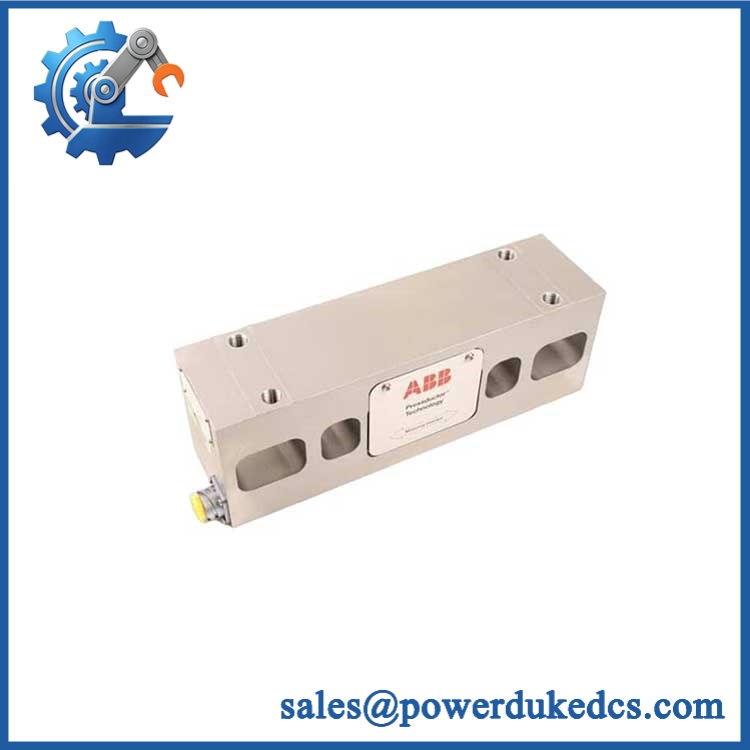
ABB PFTL101B-10KN 3BSE004197R1
ABB’s official Pressductor manual confirms the exact part-number mapping: PFTL 101B, 10.0 kN = 3BSE004197R1. The same documentation identifies the PFTL 101 family as horizontal-measuring PillowBlock load cells.
Application Scenarios & Pain Points
On a paper machine running at several hundred meters per minute, small tension errors can become visible as wrinkles, breaks, or poor winding quality. A PFTL 101B load cell provides the force feedback needed by the machine’s tension-control system.
Paper and board production: The PFTL 101 family is suited to web-tension measurement around rollers and similar mechanical arrangements. The 10.0 kN rating provides a higher-force option within the PFTL 101B range.
Printing and converting: During printing, laminating, slitting, and rewinding, stable web tension is essential for registration and material handling. A horizontal force sensor can feed measured tension back to the machine control loop.
Film and foil processing: Thin films and foils can be damaged by excessive tension while also becoming difficult to control at low tension. Correctly sizing the sensor around the actual mechanical load is therefore important.
Textile and continuous-web machinery: Web handling equipment may operate continuously for long periods, making sensor stability and mechanical mounting just as important as the nominal 10.0 kN rating.
Common Error Codes & Diagnostic Symptoms
The PFTL101B is a force sensor rather than a PLC/DCS processor, so it does not have a standard ABB PLC-style numeric fault-code table. Troubleshooting should focus on measurement behavior, mechanical loading, wiring, and the connected force-measurement electronics.
- Symptom/Code: Tension signal remains near zero under known mechanical load → Diagnosis: Possible sensor wiring failure, open circuit, incorrect installation, mechanical load bypass, or failed measuring element → Action: Verify the mechanical load path and electrical circuit before replacing the load cell.
- Symptom/Code: Tension value fluctuates rapidly while web speed is stable → Diagnosis: Inspect mechanical vibration, roller alignment, mounting condition, cable routing, grounding, and signal-conditioning electronics. Do not immediately assume the PFTL101B itself has failed → Action: Isolate mechanical and electrical sources, then replace the sensor if the fault follows the load cell.
- Symptom/Code: Persistent offset after machine unloading → Diagnosis: Possible mechanical preload, mounting distortion, sensor damage, or zero/reference issue in the connected measurement electronics → Action: Remove unintended mechanical loading, verify installation geometry, and perform the applicable zero/calibration procedure.
Cross-Reference & Lifecycle Migration
The 3BSE004197R1 designation is important because ABB offers multiple PFTL 101 variants with different force ratings.
- Exact configuration: PFTL 101B 10.0 kN = 3BSE004197R1.
- Lower-rated sibling: PFTL 101B 5.0 kN uses 3BSE004191R1.
- Higher-rated sibling: PFTL 101B 20.0 kN uses 3BSE004203R1.
- Related variant: PFTL 101BE-10.0 is listed separately as 3BSE004216R1. Do not substitute the BE version solely because its nominal capacity is also 10.0 kN.
- PFTL 201BER: ABB also lists a separate PFTL 201BER family, including a 10.0 kN version with part number 3BSE023160R1. This is a different product family and should not automatically be considered a drop-in replacement.
- Firmware: Not applicable to the passive force-sensing element itself. Any calibration or signal-conditioning parameters reside in the associated measurement electronics/control system.
- Lifecycle: ABB’s current Pressductor documentation continues to list PFTL 101B variants, including the 10.0 kN / 3BSE004197R1 configuration.
- Buffer stock: When an installed machine depends on an exact PFTL 101B configuration, stock the 10.0 kN / 3BSE004197R1 version rather than relying on another PFTL variant with a different capacity.
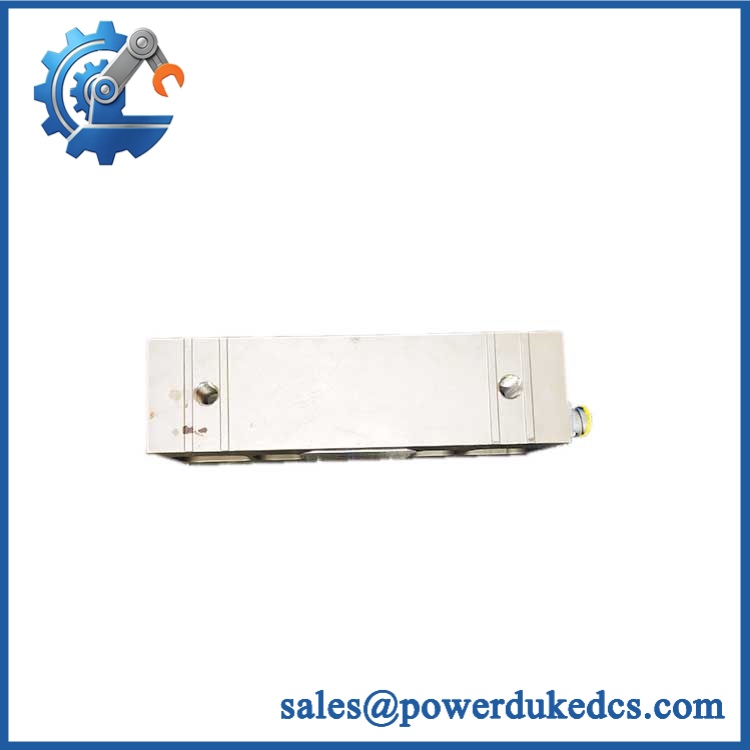
ABB PFTL101B-10KN 3BSE004197R1
Field Engineer’s Tech Notes
Warning 1 — Don’t select the replacement by kN rating alone. ABB has multiple 10.0 kN PFTL variants, including PFTL 101B, PFTL 101BE, and PFTL 201BER configurations with different part numbers. The mechanical form, electrical characteristics, and machine installation must all match.
Warning 2 — Check the load path before condemning the sensor. If the roller or bearing arrangement is misaligned, or mechanical force is bypassing the intended sensing path, the transmitter may report an apparently incorrect value even though the load cell is electrically healthy. (This is a common maintenance trap with force-measurement systems.)
Strict QA & Testing SOP
- Part-number verification — Confirm ABB PFTL101B-10KN / 3BSE004197R1 against the purchase order and machine documentation.
- Nameplate inspection — Record the complete model, rating, part number, and serial information where available.
- Mechanical inspection — Check the load-cell body, mounting surfaces, threaded interfaces, and protective components for deformation or impact damage.
- Variant verification — Confirm that the unit is PFTL 101B rather than PFTL 101BE or PFTL 201BER.
- 10.0 kN rating confirmation — Verify that the installed machine’s mechanical design corresponds to the 10.0 kN version.
- Cable inspection — Check the sensor cable and connection points for cuts, crushing, moisture ingress, or damaged insulation.
- Electrical continuity check — Verify the applicable sensor circuit according to ABB’s service documentation.
- Zero-load test — With the mechanical installation unloaded and correctly mounted, check the resulting measurement signal.
- Known-load test — Apply a controlled reference force where the test fixture permits and verify the measurement response.
- Linearity check — Test multiple reference points rather than relying on a single load value.
- Repeatability check — Apply and remove the reference load repeatedly and compare the resulting readings.
- Machine integration test — Connect the sensor to the installed tension-measurement/control system and verify the feedback signal.
- Final mechanical check — Confirm correct mounting, alignment, fastener condition, and absence of unintended preload.
- Documentation — Record test measurements, photographs, serial information, and calibration evidence.
- Packaging — Use suitable protective packaging to prevent mechanical shock to the sensing element during transportation.
- Test evidence — Test videos can be provided when available, particularly for controlled-load verification.
Buyer’s FAQ
Q: Is PFTL101B-10KN a load cell or a transmitter?
A: It is a Pressductor PillowBlock load cell / force sensor. The ABB manual identifies PFTL 101B as a horizontal-measuring load-cell family.
Q: What does the 10KN designation mean?
A: It identifies the 10.0 kN nominal measuring range. ABB’s documentation maps this exact rating to part number 3BSE004197R1.
Q: Can I replace it with a PFTL101B-5KN?
A: No—not as a direct substitution simply because the physical family is the same. The 5.0 kN version is 3BSE004191R1, while the required 10.0 kN version is 3BSE004197R1.
Q: What about PFTL101BE-10KN?
A: It is a different ABB variant. ABB lists PFTL 101BE-10.0 as 3BSE004216R1, so confirm the machine’s original part number before substitution.
Q: Can this sensor be hot-swapped?
A: Do not treat it as a hot-swappable electronic module. Mechanical force must be safely removed or controlled, and the associated machine must be placed in the appropriate maintenance state before removing the load cell.
Q: How do I verify a New Original unit?
A: Request photographs of the ABB identification label showing PFTL 101B, 10.0 kN, and 3BSE004197R1, together with serial information and packaging labels where available. A documented load test provides additional confidence.
Q: What warranty should I request?
A: Confirm the warranty period and condition in writing, including whether the unit is New Original, New Surplus, refurbished, or previously installed and whether calibration or functional testing is included.


 Start Chat