

Description
- Model: PFTL301E-1
- Brand: ABB
- Series: PFTL301E Horizontal Mini Series
- Part Type: Horizontal tension load cell / PillowBlock load cell
- Measuring Direction: Horizontal force component of web tension
- Rated Load Range: 0.1 to 1.0 kN
- Technology: ABB Pressductor magnetoelastic force measurement
Product Introduction
The ABB PFTL301E-1 is a horizontal PillowBlock load cell for web-tension measurement. Unlike a conventional vertical load cell, this design measures the horizontal component of the web tension rather than carrying the roll weight as part of the measurement. ABB specifies the PFTL301E family for web-processing applications and offers rated capacities from 0.1 to 1.0 kN.
ABB’s Pressductor technology uses a magnetoelastic measurement principle: applied mechanical force changes the magnetic properties of the sensing material and generates the measurement signal. The transducer produces a high-power, low-impedance AC signal, which is well suited to industrial tension-measurement systems.
Core Technical Specifications
| Parameter | Value |
|---|---|
| Manufacturer | ABB |
| Model | PFTL301E-1 |
| Product Family | PFTL301E |
| Product Type | Horizontal tension load cell |
| Mechanical Style | PillowBlock / miniature beam type |
| Measuring Direction | Horizontal |
| Nominal Load Range | 0.1, 0.2, 0.5, or 1.0 kN |
| Equivalent Rated Load | 22, 45, 112, or 225 lb |
| Overload Capacity | 300% of nominal load |
| Accuracy Class | ±1.0% |
| Repeatability Error | < ±0.1% |
| Deflection | 0.05 to 0.13 mm |
| Technology | ABB Pressductor magnetoelastic force measurement |
| Typical Application | Web tension measurement |
| Compatible Electronics | ABB PFEA tension-electronics systems, depending on configuration |
| Assembly Weight | Approximately 5 kg for the documented assembly without cable |
| Assembly Dimensions | Approximately 203 × 178 mm footprint; verify drawing for complete mounting dimensions |
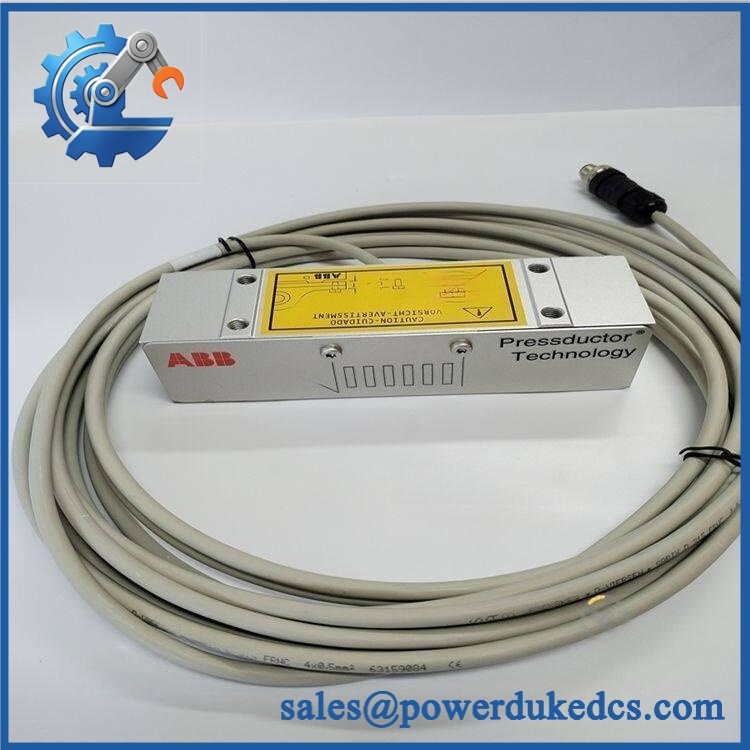
ABB PFTL301E-1
ABB’s official product page specifies the nominal-load options, overload capacity, accuracy, repeatability, and deflection. ABB’s engineering drawings separately document the assembly and give an approximate mass of 5 kg without cable; this figure applies to the documented assembly drawing and should not be confused with the mass of an individual sensing element.
Application Scenarios & Pain Points
A paper, film, foil, or converting line can show unstable web tension even when the drive and speed loop appear normal. In that situation, the load-cell feedback path deserves inspection before changing the motion controller.
- Paper and pulp: Horizontal force measurement helps isolate web tension from the gravitational load of a heavy roll.
- Film and foil processing: The family is suited to continuous web tension measurement where force fluctuations directly affect product quality.
- Printing and converting: Accurate tension feedback supports controlled unwinding, winding, and web transport.
- Legacy web-tension systems: Existing ABB PFEA111/PFEA112/PFEA122 installations can require an exact replacement sensor rather than a generic strain-gauge load cell. ABB manuals document within these tension-electronics systems.
Technical conclusion: Matching the nominal load range and mechanical installation is as important as matching the part reference. A 0.1 kN sensor and a 1.0 kN version belong to the same family but are not interchangeable for a given calibrated system.
? Common Error Symptoms & Diagnostic Symptoms
Symptom: Web-tension reading drifts or becomes unstable → Diagnosis: Check mechanical mounting, cable integrity, sensor loading, and the associated tension electronics before condemning the load cell. ABB specifies very low repeatability error for the family, so persistent abnormal drift warrants investigation of the complete measurement chain. → Action: Verify the installation and electronics; replace the load cell only after the sensor is confirmed defective.
Symptom: Tension indication is consistently high or low after replacement → Diagnosis: The installed sensor may have a different nominal-load capacity from the original, or the PFEA system may require recalibration/configuration for the replacement. → Action: Match the exact rated capacity and perform the applicable system calibration.
Symptom: Mechanical contact or abnormal sensor deflection → Diagnosis: Excessive force, incorrect mounting, or overload may have affected the load-cell assembly. The family is rated for 300% overload in the measurement direction, but repeated overload should still be treated as a fault condition. → Action: Inspect the mounting and replace a mechanically compromised unit.
? Cross-Reference & Lifecycle Migration
The is an established ABB horizontal PillowBlock load-cell family. ABB continues to publish technical information and installation drawings for the , including documentation associated with PFEA111/112/122 tension electronics.
Do not cross-reference solely by physical dimensions. ABB offers several nominal capacities—0.1, 0.2, 0.5, and 1.0 kN—within the family. The replacement must match the original force rating and the calibrated tension system.
For legacy installations, retain at least one tested spare when downtime from a failed web-tension sensor can stop the production line. No firmware flashing is normally associated with the mechanical load cell itself; calibration and tension-electronics configuration are the relevant commissioning concerns.
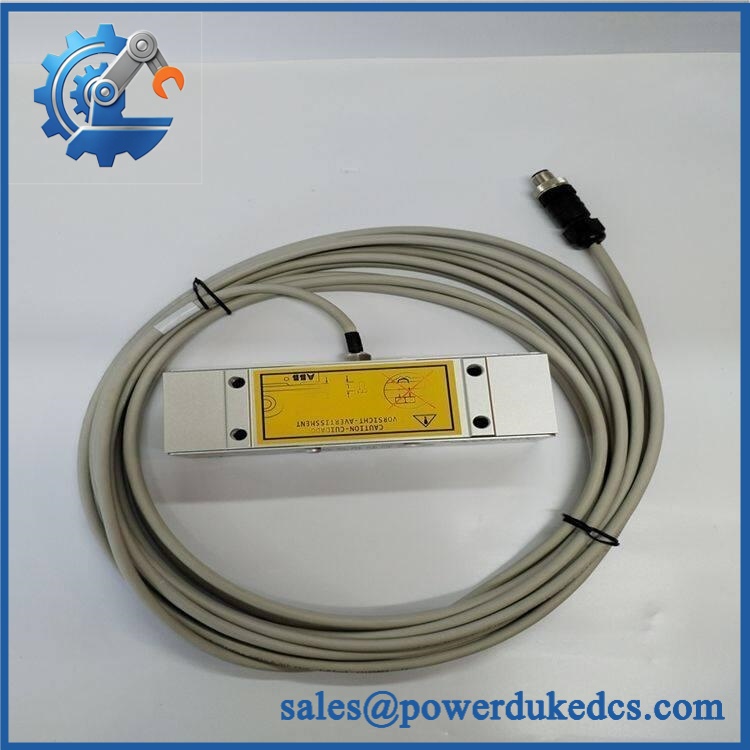
ABB PFTL301E-1
Field Engineer’s Tech Notes
- Check the load direction before tightening the mounting hardware. The is designed to measure the horizontal force component. Mounting it incorrectly can introduce mechanical loading outside the intended measurement direction and produce misleading tension values.
- Match the rated capacity exactly. The family spans 0.1 through 1.0 kN. A higher-capacity unit is not a harmless substitute because the measurement range and system calibration depend on the selected load-cell rating.
Strict QA & Testing SOP
- Inbound identification: Verify ABB marking, designation, rated-load marking, serial information, and cable condition.
- Mechanical inspection: Check the mounting body, sensing assembly, mounting surfaces, cable exit, and connectors for deformation, corrosion, or impact damage.
- Installation verification: Confirm mounting dimensions, mechanical alignment, load direction, and cable routing against the applicable ABB installation drawing. ABB’s documented assembly drawing specifies a minimum cable bending radius and detailed mounting dimensions.
- Electrical checks: Perform appropriate continuity and insulation checks within the OEM-approved limits. Do not apply arbitrary excitation or test voltages to the sensing circuit.
- Load verification: Where calibrated test equipment is available, apply controlled horizontal forces across the applicable rated range and confirm a repeatable measurement response.
- System integration: When used with ABB PFEA tension electronics, verify the load-cell signal, zero point, calibrated tension response, and stable operation under controlled load.
- Final QC: Record serial number, rated capacity, inspection results, and photographs. Package the sensor to prevent mechanical shock and cable damage.
Test reports, inspection photographs, and test videos are available upon request.
Buyer’s FAQ
Q: What is ABB -1 used for?
A: It is a horizontal tension load cell designed for web-processing applications, where it measures the horizontal force component associated with web tension.
Q: What load capacities are available in the family?
A: ABB specifies 0.1, 0.2, 0.5, and 1.0 kN nominal-load versions. The exact capacity of the supplied -1 should be verified from its nameplate or ordering documentation.
Can I replace it with another without recalibration?
A: Not necessarily. The nominal capacity, mechanical installation, and associated PFEA tension electronics configuration must match. A replacement should be calibrated or verified according to the applicable system procedure.
Q: Is -1 a PLC or DCS module?
A: No. It is a force-measurement sensor/load cell used as part of an industrial web-tension measurement system. ABB documents it alongside PFEA tension electronics rather than as a conventional PLC I/O module.


 Start Chat