

Description
Module 2: The 10-Second Procurement Snapshot
- Brand: ABB
- Full Model Number: PFXA401SF 3BSE024388R4
- Lifecycle Status: Legacy / Lifecycle status to be confirmed
- Core Function: Tension measurement and control
- Product Type: Tension Control Unit / Load Cell Interface
- Top 3 Technical Specs: Up to 4 load-cell inputs; configurable analog outputs; Profibus communication reported
- Application: Web and strip tension control
- Compatible Sensors: QGPR 102/104 load cells reported
- Maximum Load Range: Up to 2 MN reported
- Stock & Condition: New Surplus / Tested Stock; physical stock confirmation required
ABB’s official product page confirms 3BSE024388R4 as an ABB product identifier, while available technical records identify PFXA401SF as a controller associated with tension/load-cell applications.
Module 3: Supply Chain & Technical Deep Dive
A failed tension-control unit can stop a rolling, converting, or web-processing line even when the main drive system remains operational. PFXA401SF is associated with ABB tension-measurement systems and is reported as supporting up to four weighing sensors with configurable analog outputs for tension control or monitoring. That makes an exact part-number match important when replacing a legacy controller.
The available technical references report 4 analog inputs, Profibus support, angle compensation, and compatibility with QGPR 102/104 load cells up to 2 MN. Some secondary records also publish conflicting electrical and I/O specifications, so those values should not be treated as universal for every installation. For TCO planning, verify the nameplate, hardware revision, load-cell arrangement, and original ABB documentation before approving a substitute.
Module 4: Migration, Compatibility & Field Traps
Replacement Matrix
| Replacement Scenario | Assessment | Engineering Action |
|---|---|---|
| Exact PFXA401SF 3BSE024388R4 | Direct replacement candidate | Match complete part number and revision |
| Same PFXA401SF with different material code | Compatibility check required | Compare hardware and application data |
| PFXA401S 3BSE024388R2 | Not automatically interchangeable | Verify hardware and control function |
| PFXA401F 3BSE024388R3 | Different variant | Confirm application before substitution |
| Generic tension controller | Not a direct replacement | Check load cells, I/O, bus, and control logic |
| Hardware modification | Avoid unless documented by ABB | Preserve existing wiring and architecture |
ABB-related listings show PFXA401F, PFXA401S, and PFXA401SF as separate variants, so the suffix should not be ignored during procurement.
⚠️ Field Traps
1. Do not substitute by model family alone.
PFXA401SF, PFXA401S, and PFXA401F have different material numbers. A similar-looking board can have a different application or configuration.
2. Load-cell configuration must be preserved.
Record the number and arrangement of connected load cells before removal. The available documentation associates this unit with up to four weighing sensors.
3. Check the fieldbus configuration.
Profibus is reported for this variant. Record the station address, communication settings, and existing PLC/DCS configuration before replacing the unit.
4. Do not rely on an online voltage specification without verification.
Public listings disagree significantly on power requirements. One source reports 85–264 VAC, while another describes 24 VDC. This is exactly the kind of discrepancy that can damage a replacement unit if ignored.
Check the actual cabinet supply and ABB wiring documentation first.
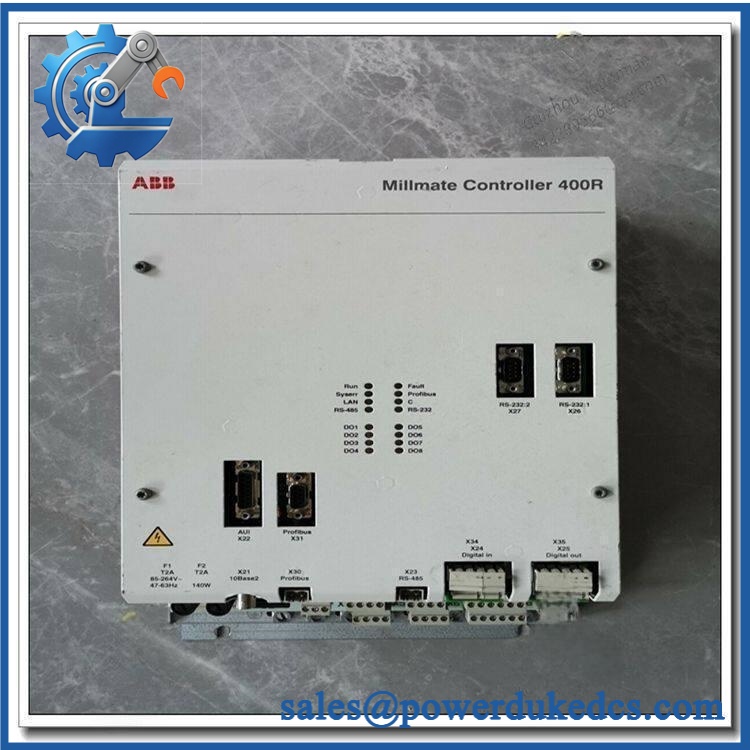
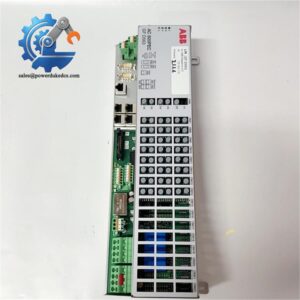
ABB PFXA401SF 3BSE024388R4
Module 5: Quality Assurance & Testing SOP
For a legacy tension-control unit, appearance is only the starting point. The unit should be traced, inspected, powered under controlled conditions, and tested against the intended application.
1. OEM Identity Inspection
- Verify ABB PFXA401SF
- Verify 3BSE024388R4
- Record serial number
- Record hardware revision
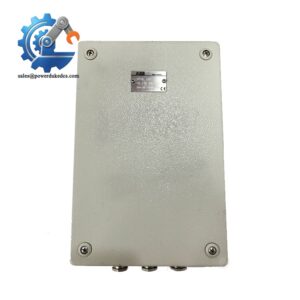
- Photograph the complete nameplate
- Perform OEM anti-counterfeit visual inspection
- Check PCB condition
- Inspect connectors and terminal areas
- Look for corrosion, burn marks, cracked components, or repair evidence
2. Mechanical and Configuration Inspection
- Photograph DIP switches and jumpers, if fitted
- Record terminal positions
- Photograph the existing configuration
- Inspect connector locking mechanisms
- Compare the board against the approved reference unit
3. Electrical Pre-Test
- Verify the applicable supply voltage from the OEM documentation.
- Check for obvious shorts.
- Inspect power-input components.
- Check connector continuity where applicable.
- Record all measurements.
Because public specifications conflict, do not apply power until the exact electrical variant has been confirmed.
4. Power-On Test
Use an appropriate ABB tension-control test setup.
- Apply the verified supply voltage.
- Observe startup behavior.
- Check diagnostic indicators.
- Monitor current consumption.
- Monitor temperature rise.
- Record startup status.
5. Load-Cell / I/O Functional Test
Where the appropriate test equipment is available:
- Connect simulated or approved load-cell signals.
- Verify input channel response.
- Test each configured analog input.
- Check analog output response.
- Verify Profibus communication where applicable.
- Confirm stable measurement values.
- Check alarm or diagnostic behavior.
The objective is to verify functional behavior, not merely power-on status.
6. Extended Observation
- Run the unit under controlled conditions.
- Monitor input stability.
- Check communication for intermittent faults.
- Monitor temperature.
- Record test values.
- Generate a serial-number-linked Test Report.
7. Final QC and Packaging
- QC technician signs the inspection record.
- Photograph the tested unit.
- Seal in an ESD-safe bag.
- Protect terminals and connectors.
- Add shock-absorbing material.
- Use a rigid carton.
- Apply QC Passed identification and test date.
Test photographs and the Test Report can be supplied for procurement review.
Module 6: Procurement-Driven FAQ
1. Is PFXA401SF 3BSE024388R4 physically in stock?
Availability should be confirmed against the actual warehouse unit before order release. Current supplier records show this exact part number listed for sale, but an online listing should not be treated as confirmed physical inventory.
For an urgent shutdown, request the actual unit photo, nameplate, condition, test status, and confirmed dispatch date.
2. How do you verify the condition of a surplus unit?
Use a serial-number-controlled inspection process:
- Nameplate verification
- PCB inspection
- Connector inspection
- Electrical pre-test
- Controlled power-on
- I/O simulation
- Communication test where applicable
- Extended observation
- Final QC
New Surplus and Tested Refurbished should be quoted as separate conditions.
3. What warranty should I require for this legacy ABB controller?
Specify the warranty period and return procedure before purchase. The shipped serial number should appear on the Test Report and sales documentation.
For critical tension-control equipment, also define coverage for DOA, functional failure, incorrect part shipment, and return freight.
4. Are there firmware or configuration compatibility issues?
Potentially. The bigger concern is configuration matching.
Before removal, record the hardware revision, load-cell setup, analog I/O configuration, Profibus address, and controller parameters. Reproduce those settings on the replacement only after confirming they apply to the new unit.
5. Can I replace PFXA401SF with another PFXA401 variant?
Not automatically. Available ABB-related records distinguish PFXA401F, PFXA401S, and PFXA401SF by separate material numbers.
For procurement approval, provide PFXA401SF 3BSE024388R4 + nameplate photograph + tension-control system model + load-cell model + existing communication configuration. That information gives the engineering team a much safer basis for replacement approval.



 Start Chat