

Description
- Model: ABB PKZMO-10-T
- Brand: ABB
- Series: PKZMO Motor Protection Series
- Core Function: Manual motor protection and switching
- Product Type: Motor protection circuit breaker / manual motor starter
- Key Specs: Adjustable motor current range | Thermal overload protection | Short-circuit protection
- Condition: Confirm New Original / New Surplus / Used before order
Key Technical Specifications
| Parameter | Specification |
|---|---|
| Manufacturer | ABB |
| Model | PKZMO-10-T |
| Product Type | Motor Protection Circuit Breaker |
| Series | PKZMO |
| Application | Motor protection and manual switching |
| Protection | Thermal overload and short-circuit protection |
| Current Setting | Verify exact range from nameplate/manual |
| Motor Rating | Application-dependent |
| Phase | Typically used in three-phase motor circuits |
| Mounting | Panel / starter assembly dependent |
| Auxiliary Accessories | Available depending on configuration |
| Certification | Verify against the specific production revision |
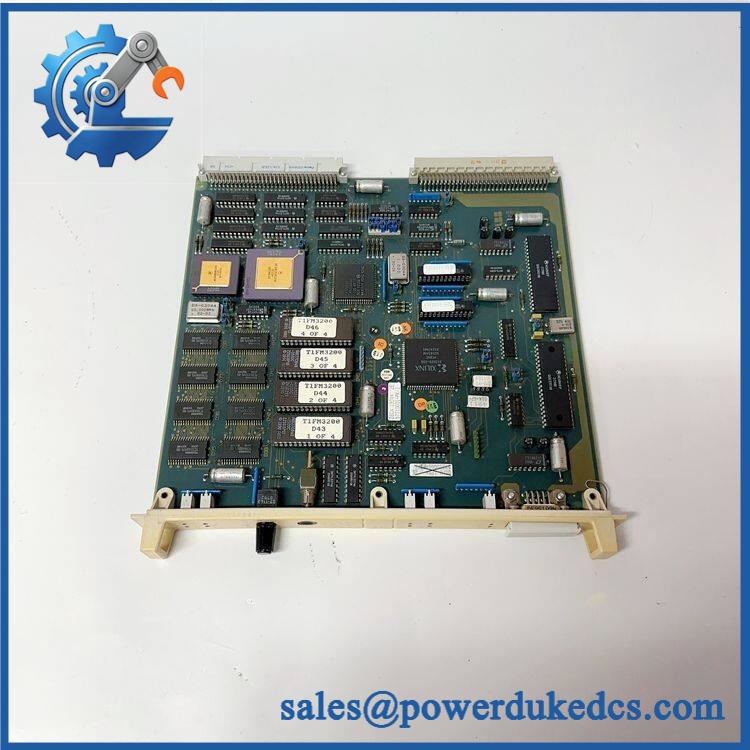
ABB PKZMO-10-T
Technical identification note: The PKZMO designation is associated with ABB’s Eaton-origin PKZ motor-protection product family. However, the exact suffix “-T” and current setting should be verified from the physical nameplate before specifying electrical ratings. Do not infer the trip range solely from the model string.
Product Introduction
ABB PKZMO-10-T is a motor protection switching device intended for protecting and manually switching industrial motor circuits. The PKZMO family is designed around motor-specific overload and short-circuit protection rather than serving as a general-purpose miniature circuit breaker.
For replacement work, the important checks are motor rated current, trip-setting range, coordination with the contactor, available accessories, and the actual device revision. A mechanically similar breaker is not necessarily an electrically equivalent motor-protection device.
Application Scenarios & Pain Points
A motor starter can look simple until a production pump refuses to restart after an overload trip. I have seen maintenance teams replace the protective device based only on frame size, then discover that the motor’s full-load current falls outside the new device’s usable setting range.
The PKZMO-10-T is best treated as part of a motor protection coordination scheme, not as an isolated circuit breaker.
Typical Application Scenarios
- Industrial pump systems — motor branch protection
Used within motor starter assemblies where overload and short-circuit protection must be coordinated with the motor’s rated current. - Conveyor systems — local motor switching
Manual switching can be useful during maintenance and local commissioning, while the protective function provides a first line of defense against motor overload. - Fans and ventilation equipment — auxiliary motor circuits
The device can be integrated into compact motor starter arrangements where space and straightforward local operation matter. - Machine-building control panels — motor feeder protection
OEM machine builders may use motor protection breakers ahead of contactors, provided the selected unit matches the motor current and coordination requirements. - MRO spare inventory — replacement of aging motor starters
For legacy installations, keeping the exact device or an officially verified equivalent can avoid field modifications during an unplanned shutdown.
Engineering Case
A maintenance technician finds a tripped motor protector on a cooling-water pump. The instinct is to reset it.
Then it trips again.
At that point, repeatedly resetting the device is the wrong response. Check motor current, phase balance, mechanical loading, bearing condition, and insulation condition first. If the motor is healthy, then investigate whether the protection setting matches the motor nameplate.
That distinction matters. A motor protection breaker should trip because the motor circuit has exceeded its permissible operating condition—not because someone selected the wrong current range.
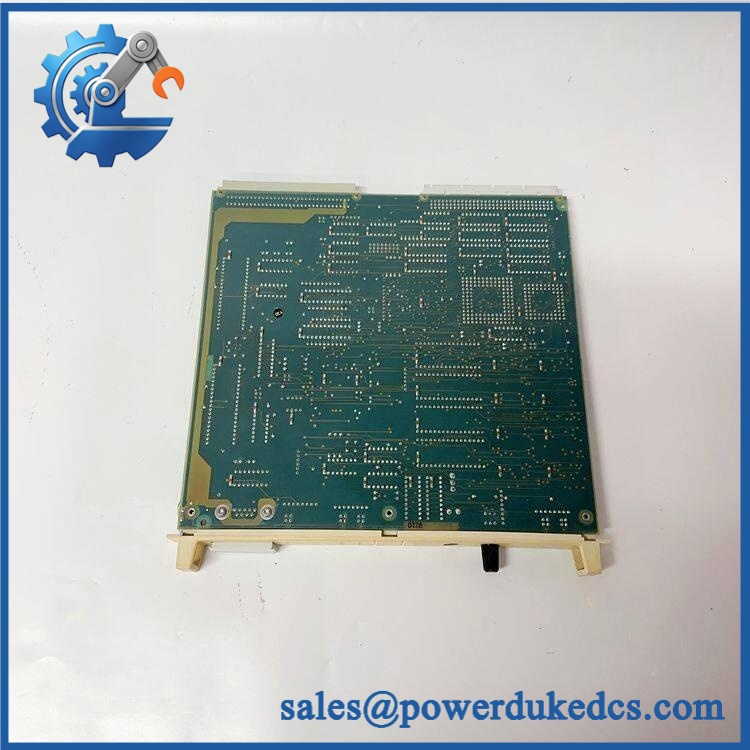
ABB PKZMO-10-T
Quality Inspection & Test Procedure
1. Incoming Inspection
- Traceability: Check supplier documentation and available original packaging records.
- Identification: Verify PKZMO-10-T against the device nameplate.
- Serial / Date Information: Record available manufacturing information.
- Visual Inspection: Check for cracks, corrosion, discoloration, damaged terminals, broken adjustment mechanisms, or signs of previous modification.
- Accessories: Verify auxiliary contacts, terminal accessories, or other components if included with the supplied unit.
2. Live / Functional Test
For a standalone motor protection breaker, testing should be performed using a controlled test arrangement appropriate to the manufacturer’s specifications.
Recommended checks:
- Mechanical ON/OFF operation
- Trip/reset mechanism
- Current-setting mechanism
- Continuity through main poles
- Controlled overload-trip verification where suitable test equipment is available
- Terminal integrity
- Test Report recording
A Fluke 115 or equivalent calibrated meter can be used for basic continuity and resistance checks. Actual protection-trip testing requires an appropriate current injection or motor-protection test system.
3. Electrical Testing
- Continuity: Check all main poles.
- Insulation Resistance: Perform only according to the manufacturer’s applicable test procedure.
- Grounding: Verify protective-earth continuity where applicable to the installation.
- Withstand Test: Only perform a dielectric test when permitted by the manufacturer’s instructions and the applicable test standard.
Do not apply arbitrary hipot voltage to a device containing electronic accessories. The exact test procedure depends on the configuration.
4. Configuration Verification
Unlike a PLC CPU, this device does not normally involve firmware management.
The critical configuration data are:
- Motor current setting
- Pole configuration
- Accessory arrangement
- Mechanical mounting
- Contactor coordination
- Upstream/downstream protection
Photograph the adjustment setting before removing the original device.
5. Final QC and Packaging
- QC inspection sign-off
- Terminal protection
- Protective packaging
- Bubble wrap + rigid carton
- QC Passed label + inspection date
- Nameplate photographs retained
- Test report retained when functional testing has been performed
Inspection photographs and test records can be supplied when available.
Technical Pitfall Guide
1. Do Not Match the Breaker by Motor Voltage Alone
Case: A 400 VAC motor needs a replacement protector. The technician finds another device rated for 400 VAC and assumes it is suitable.
The motor still trips.
The missing parameter was motor current.
Avoid it: Read the motor nameplate first. Compare full-load current with the protector’s actual adjustable range.
2. Do Not Assume “10” Means a 10 A Fixed Trip
The PKZMO-10-T designation should not be treated as proof that the device has a fixed 10 A trip point.
Check the actual nameplate and manufacturer documentation.
This is particularly important when purchasing older inventory where suffix conventions and revisions may differ.
3. Contactor Coordination Matters
A motor protection breaker normally works as part of a starter assembly.
Case: The breaker is electrically suitable for the motor, but the contactor and overload coordination are wrong.
The result can be nuisance trips or inadequate fault protection.
Avoid it: Verify the complete starter combination rather than approving the breaker in isolation.
4. Do Not Repeatedly Reset an Overloaded Motor
❗ A repeated trip is a diagnostic signal.
Check:
- Motor current
- Phase imbalance
- Mechanical load
- Bearing condition
- Cable condition
- Insulation resistance
- Supply voltage
- Protection setting
Resetting the device repeatedly without identifying the cause can turn a protection event into equipment damage.
5. Photograph the Setting Before Removal
This sounds trivial.
It is not.
Take a clear photograph of the original current-setting position before removing the old unit. Then compare it with the replacement.
One photograph can prevent an unnecessary commissioning trip.
Compatibility & Replacement Matrix
| Existing / Candidate Part | Compatibility | Replacement Note |
| ABB -T → S | Direct replacement subject to verification | Confirm exact revision, current range, accessories, and mounting |
| → Same PKZMO family with different current range | Requires selection verification | Current range must match motor nameplate current |
| → Different ABB motor protection breaker | Requires engineering verification | Check electrical ratings, dimensions, terminals, accessories, and coordination |
| → Generic motor circuit breaker | Requires engineering verification | Do not substitute based on voltage or physical size alone |
| → Standard MCB | Not equivalent by default | Motor overload characteristics and protection coordination differ |
No alternative model should be described as a direct drop-in replacement without an ABB-approved cross-reference or a complete electrical/mechanical comparison.
Procurement Notes
- Model:
- Manufacturer: ABB
- Product Category: Motor Protection Circuit Breaker
- Application: Motor feeder / starter protection
- Current Setting: Confirm from nameplate
- Condition: Confirm New Original / New Surplus / Used
- Stock: Confirm physical warehouse stock before PO
- Lead Time: Confirm before purchase
- Warranty: Confirm supplier warranty
- Documentation: Request nameplate photograph and available test report
- Price: Market-dependent; request current quotation
Important: For an MRO replacement, send the supplier a photograph of the existing device nameplate and the motor nameplate together. That gives the supplier enough information to verify the protection range instead of guessin” alone.



 Start Chat