

Description
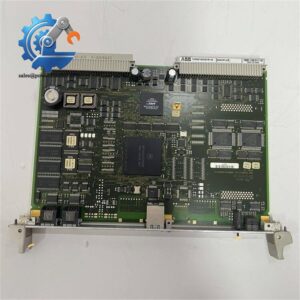
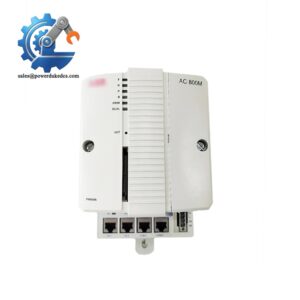
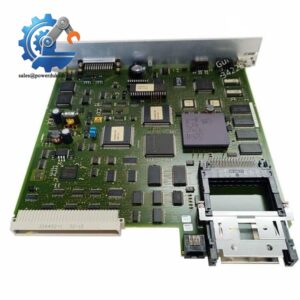
- Model: ABB PM510V08
- Part Number: 3BSE00B373R1
- Brand: ABB
- Series: ABB AC 500
- Part Type: PLC CPU / Processor Module
- Core Function: Executes the user application, manages the AC 500 control program, and coordinates connected I/O and communication functions.
- Key Specs: 24 VDC supply, AC 500 controller architecture, processor-based control, onboard diagnostic/status indication, and modular I/O/communication expansion.
Product Introduction
When an older PLC installation begins showing unexplained CPU stops, program faults, or intermittent controller resets, the processor module itself needs to be separated from the I/O and power-supply diagnosis.
The ABB PM510V08 3BSE00B373R1 belongs to the AC 500 PLC family and is identified as a CPU/controller module. The PM510 family forms part of ABB’s modular AC 500 automation platform, where the CPU provides the central execution environment for the control application.
For replacement procurement, use the complete PM510V08 + 3BSE00B373R1 reference. (The “V08” revision is particularly important when comparing an installed controller against available legacy stock.)
Core Technical Specifications
| Parameter | Value |
|---|---|
| Manufacturer | ABB |
| Product Family | AC 500 |
| Model | PM510V08 |
| Order Number | 3BSE00B373R1 |
| Product Type | PLC CPU / Processor Module |
| Controller Class | AC 500 programmable controller |
| CPU Function | Application execution and controller management |
| Supply Voltage | 24 VDC |
| CPU Architecture | Modular PLC controller |
| Program Execution | Cyclic PLC execution |
| I/O Architecture | Modular local/expansion I/O |
| Communication | Expansion/communication modules supported |
| Programming Environment | ABB AC 500 engineering environment |
| Diagnostics | CPU/system status diagnostics |
| Front-Panel Indicators | Status/diagnostic LEDs |
| Memory | Model/revision dependent |
| User Program Capacity | Model/revision dependent |
| Data Memory | Model/revision dependent |
| Integrated Ethernet | Verify against exact V08 hardware configuration |
| Serial Interface | System/configuration dependent |
| Mounting | DIN-rail / AC 500 system architecture |
| Expansion | AC 500 I/O and communication expansion |
| Firmware | CPU/system dependent |
| Operating Temperature | Verify against applicable AC 500 hardware manual |
| Storage Temperature | Verify against applicable AC 500 hardware manual |
| Dimensions | AC 500 form-factor dependent |
| Weight | Approximately 0.2–0.5 kg class; verify actual unit |
| Application | Industrial PLC control |
| Typical Industries | Manufacturing, process control, utilities, machine automation |
| Lifecycle Position | Legacy / established spare |
| Replacement Strategy | Match CPU type, revision, firmware, and application |
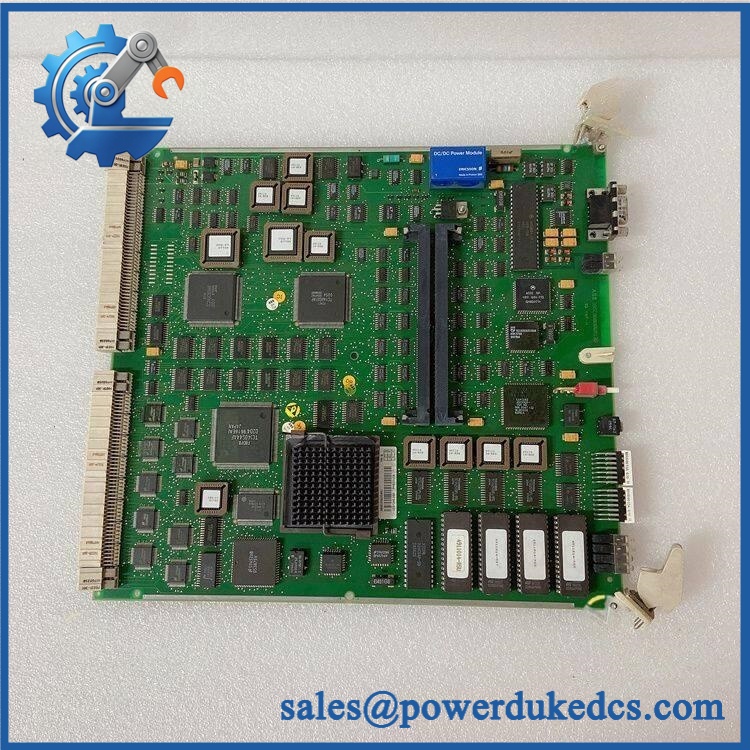
ABB PM510V08 3BSE00B373R1
Technical Identification Note
The PM510V08 should be treated as an AC 500 processor/controller rather than a generic 24 VDC PLC CPU. Exact values for CPU clock speed, memory capacity, Ethernet ports, communication interfaces, and execution performance depend on the precise AC 500 hardware documentation and revision.
Do not transfer specifications from PM571, PM573, PM581, PM590, or other AC 500 CPU families to this part number.
Application Scenarios & Pain Points
In machine-control applications, the PM510V08 provides the central PLC processing layer while separate AC 500 I/O modules handle field signals. A CPU failure can therefore stop the complete machine even when individual I/O modules test normally.
For process-control panels, the modular AC 500 architecture allows I/O and communication hardware to be expanded around the controller. This makes exact CPU identification important when replacing an older processor.
During legacy PLC migration, keeping the original as a tested spare can provide a practical bridge while the control system is being redesigned or migrated to newer hardware.
At cabinet temperatures around 50°C, verify the environmental rating of the actual controller and cabinet installation rather than relying on a generic AC 500 temperature specification.
Common Error Codes & Diagnostic Symptoms
No verified public source establishes dedicated -specific numeric fault codes for this exact ordering reference. The following are common controller-level symptoms:
- CPU STOP / Controller Not Running → Diagnosis: Possible application, firmware, memory, power, or processor hardware fault. → Action: Check CPU diagnostics and application status; replace the processor if hardware failure is confirmed.
- CPU LED Red / Diagnostic Fault → Diagnosis: A system, hardware, configuration, or application-level fault may be present. → Action: Read the controller diagnostic information before replacing the CPU.
- Repeated CPU Reset → Diagnosis: Unstable 24 VDC supply, internal processor fault, watchdog event, or firmware/application problem may cause repeated restarts. → Action: Verify supply stability and diagnostics; replace the CPU after hardware failure is isolated.
Cross-Reference & Lifecycle Migration
Cross-Reference
| Reference | Identification |
|---|---|
| ABB AC 500 CPU designation | |
| 3BSE00B373R1 | ABB order number |
| Complete purchasing reference | |
| PM510 | CPU family designation |
| AC 500 | ABB controller family |
| CPU / Processor Module | Functional classification |
Compatibility
Before replacing the , compare:
- Exact CPU model
- Complete order number
- Hardware revision
- Firmware version
- Application program
- Memory configuration
- I/O architecture
- Communication modules
- Engineering-software compatibility
- Retentive data requirements
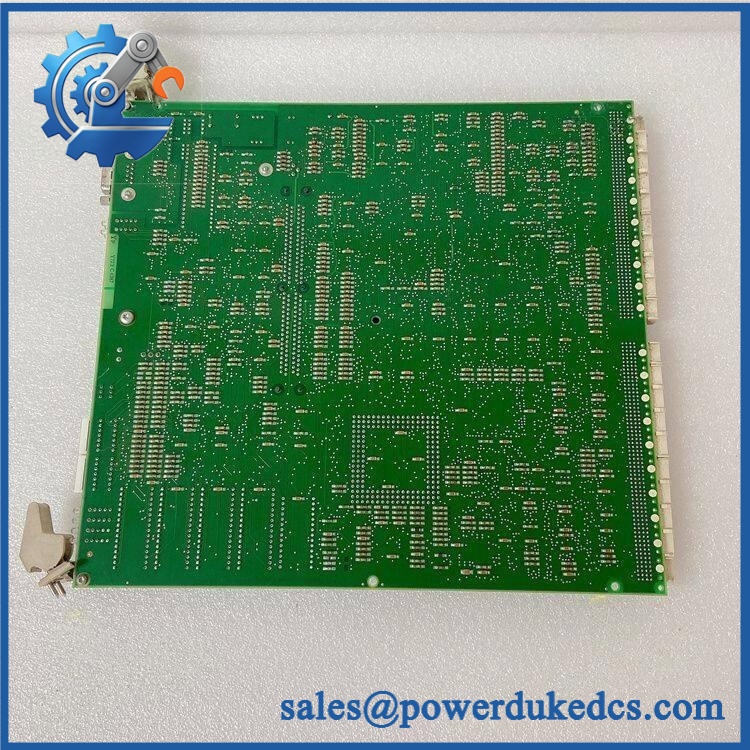
ABB PM510V08 3BSE00B373R1
Direct Replacement
The preferred replacement reference is another:
ABB — 3BSE00B373R1
A newer AC 500 CPU should not be treated as a direct drop-in replacement without checking application compatibility, firmware, I/O configuration, programming environment, and cabinet wiring.
Firmware
Unlike a passive I/O module, the is a programmable CPU. Firmware compatibility can therefore matter when replacing the controller.
Do not flash firmware merely because the replacement has a different revision. First back up the existing application and verify the required firmware/software combination.
Lifecycle
Recommended classification: Legacy / Established Spare.
For equipment that still relies on an older AC 500 controller, maintaining a tested CPU in buffer stock can reduce downtime while allowing a controlled migration to newer automation hardware.
Field Engineer’s Tech Notes
1. Back up the PLC application before replacing the CPU.
Do not assume the replacement CPU contains the required user program. Preserve the application, hardware configuration, retentive data requirements, and communication settings before removing the failed controller.
2. Check the 24 VDC supply under load.
A marginal supply can imitate a CPU failure. Measure the voltage at the controller terminals while the rack is operating, not only with the system powered down.
Strict QA & Testing SOP
- Inbound identification — Verify ABB, , and 3BSE00B373R1.
- Nameplate inspection — Record serial number, revision, and manufacturing information.
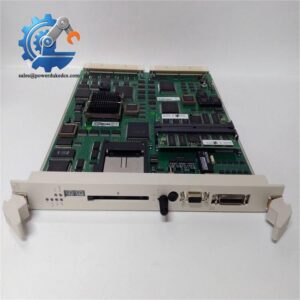
- Physical inspection — Examine housing, terminals, connectors, LEDs, and mounting components.
- PCB inspection — Check for corrosion, contamination, component damage, and previous repair work.
- Power test — Apply the approved 24 VDC supply and verify normal startup.
- CPU diagnostic test — Observe status LEDs and controller diagnostic information.
- Program test — Load an approved test application where permitted.
- I/O test — Verify communication with compatible AC 500 I/O hardware.
- Communication test — Test supported interfaces using an appropriate AC 500 configuration.
- Cycle/run test — Operate the CPU continuously under a controlled test application.
- Restart test — Verify controlled startup and recovery after an approved power cycle.
- Final documentation — Record firmware, serial number, test results, and photographs.
- ESD packaging — Package the CPU in antistatic material with adequate protection.
Test videos can be provided when available, showing the actual identification, power-up sequence, CPU status, PLC operation, and connected-system testing.
Buyer’s FAQ
Q1: Is a PLC CPU?
A: Yes. It is an ABB AC 500 processor/controller module, rather than a simple I/O or power module.
Q2: What power supply does it use?
A: The AC 500 PM-series controller architecture uses 24 VDC control power. Verify the actual terminal requirements against the applicable ABB hardware documentation before energizing a replacement.
Q3: Can I replace with another AC 500 CPU?
A: Not automatically. CPU type, application compatibility, firmware, I/O configuration, communication modules, and engineering-software requirements must be checked.
Q4: Can the CPU be hot-swapped?
A: Do not assume it can. CPU replacement should normally follow the approved shutdown and isolation procedure for the specific AC 500 installation.
Q5: Does a replacement CPU need firmware programming?
A: It may require firmware compatibility checking and application/configuration loading. Back up the original PLC program before replacement.
Q6: How do I verify a New Original ABB ?
A: Check the ABB label, , 3BSE00B373R1, serial/traceability information, hardware revision, connectors, and physical construction. For used or surplus stock, request an actual-unit power-up and PLC functional test report.


 Start Chat