

Description
- Brand: ABB
- Full Model Number: PM511V08 / 3BSE011180R1
- Additional Identifier: SE04462921
- Product Type: Processor Module
- Lifecycle Status: Legacy Advant Controller 450 platform; AC450 entered Limited lifecycle phase July 1, 2025
- Core Function in System: Central CPU for ABB Advant Controller 450
- Top 3 Hardcore Specs: 8 MB dynamic RAM with ECC | PCMCIA flash-memory slot | Dual-CPU redundancy support on compatible AC450 systems
- Memory Included: 2 × 3BSC120004R2 SIMM memory modules
- Controller Platform: Advant Controller 450 Version 2.3
- Direct I/O: No direct process I/O; field signals handled by associated I/O subsystems
- Product Net Weight: 0.76 kg
- Country of Origin: Sweden
- Condition & Lead Time: New or verified surplus inventory subject to exact revision and memory verification; expedited dispatch for stocked units
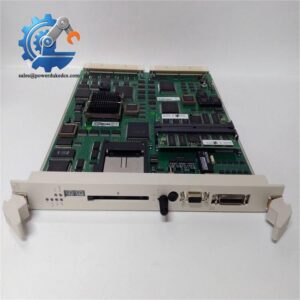
ABB identifies 3BSE011180R1 as PM511V08 Processor Module for the Advant Controller 450. ABB’s product information specifies 8 Mbyte dynamic RAM with ECC, a PCMCIA slot for flash memory, and two 3BSC120004R2 SIMM memory modules. ABB’s official Advant Controller 450 product guide also distinguishes PM511V08 with 8 Mbyte RAM from PM511V16 with 16 Mbyte RAM.
Module 3: Technical Intro & Downtime Impact
A failed PM511V08 is a controller-level fault, not a minor I/O interruption. In an Advant Controller 450, this processor executes the configured control application and coordinates the controller’s I/O and communication resources. A CPU failure can therefore leave an entire control section unavailable even when the connected field hardware remains electrically healthy. ABB identifies PM511V08 as the processor module for the AC450 architecture and documents support for configurations using up to two PM511 CPU boards for redundancy.
For MTTR reduction, the critical figures are 8 MB ECC dynamic RAM, the PCMCIA flash-memory interface, and the included 2 × 3BSC120004R2 memory modules. The exact ABB product data gives a 0.76 kg net weight. The processor does not provide direct field I/O; those signals are handled by the configured AC450 I/O architecture. ABB’s spare-parts publication lists 3BSE011180R1 as PM511V08, while current product information identifies 3BSE011181R1 as the newer replacement product ID, so substitution should be confirmed against the actual AC450 software and hardware revision before purchase.
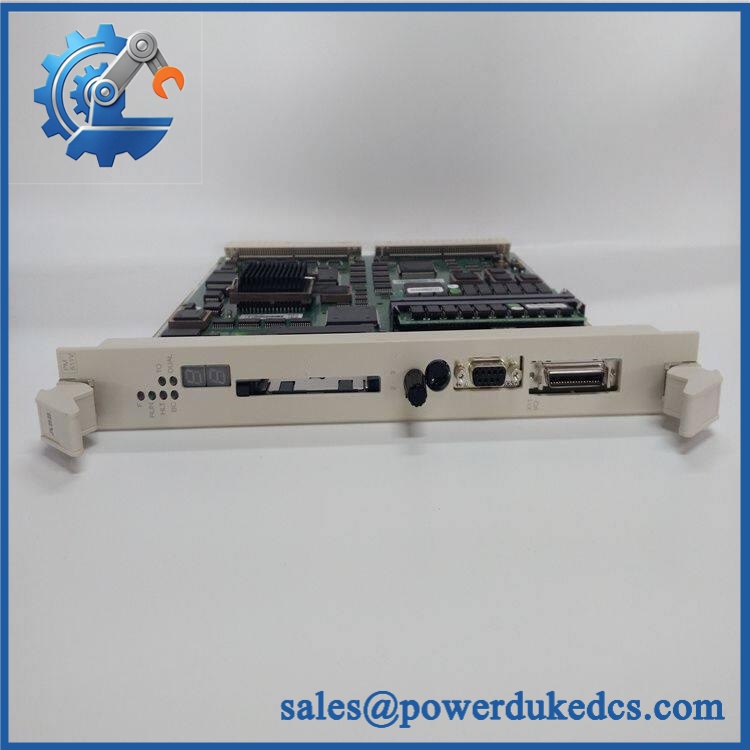
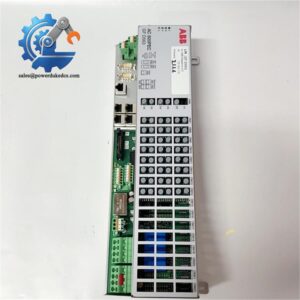
ABB PM511V08 3BSE011180R1
Module 4: Dynamic Emergency Swap & Configuration Guide
1. Pre-Swap Prep — Preserve the AC450 Application Before Removal
Apply the plant’s approved controller shutdown and LOTO procedure. Before removing the failed processor, record the exact / 3BSE011180R1 identification, hardware revision, serial number, memory-card status, controller slot, redundancy arrangement, and current diagnostic information.
Back up the application and configuration through the approved Advant engineering procedure. Also record the installed software version. ABB’s product information distinguishes from PM511V16, and the newer replacement product ID must not be assumed compatible without checking the controller revision.
2. Removal — Extract the Processor Module From the Rack
After the controller has been safely taken out of service, disconnect any applicable front-panel or memory-card connections according to the rack procedure. Release the processor’s ejector or retaining hardware and withdraw the board evenly from the controller rack.
Do not force the card against the backplane. Inspect the removed unit for oxidized contacts, damaged ejectors, contamination, heat discoloration, or evidence of previous repair. Keep the PCMCIA memory card and SIMM memory arrangement protected from ESD throughout the operation.
3. Installation & Configuration — Match Processor and Memory Configuration
Install the replacement into the same processor position and secure it using the rack’s retaining mechanism. Confirm that the supplied memory configuration matches the original unit. ABB specifies 2 × 3BSC120004R2 SIMM modules as included with the .
Where the original application uses flash memory through the PCMCIA slot, restore the approved memory card or application-loading procedure. Verify the controller’s software release, application database, redundancy configuration, and communication settings before starting the plant process.
A field note: the replacement relationship deserves particular attention. ABB lists 3BSE011180R1 as and identifies 3BSE011181R1 as the newer replacement product. That does not by itself prove universal interchangeability across every installation.
4. Power-On Self-Test (POST) — Verify CPU Health Before Process Release
Restore controller power under the approved startup procedure and monitor the processor’s diagnostic indicators. Confirm that the CPU completes its normal initialization without processor, memory, or communication errors.
Verify that the configured application starts correctly, the expected I/O subsystems become available, and controller diagnostics return to the normal state. In a redundant configuration, confirm that both processor positions establish the intended redundancy state before returning the controller to automatic process operation.
Module 5: Quality Assurance & Testing SOP
Each available ABB / 3BSE011180R1 should undergo a documented processor-level QA sequence before shipment:
- OEM anti-counterfeit visual inspection — verify ABB markings, designation, 3BSE011180R1 identification, serial number, board construction, connectors, memory sockets, and manufacturing markings.
- Part-number reconciliation — compare the physical processor with the customer’s exact BOM and installed CPU designation.
- Memory verification — confirm 8 MB ECC dynamic RAM and inspect the installed 2 × 3BSC120004R2 SIMM modules.
- PCMCIA inspection — verify the flash-memory slot, card contacts, eject mechanism, and connector condition.
- PCB inspection — check for corrosion, cracked solder joints, damaged components, unauthorized rework, and contamination.
- Insulation and grounding checks — perform the applicable low-voltage electronics safety checks using laboratory-approved methods.
- Controlled power test — install the processor in a compatible test rack and verify correct startup voltage conditions.
- Power-on self-test (POST) checking for CPU and diagnostic indicators — document the complete startup sequence and final diagnostic state.
- Memory integrity test — run the available controller diagnostic or approved memory test and verify ECC memory operation without errors.
- PCMCIA flash test — read the approved flash-memory device where available and verify stable access.
- Application execution test — load a controlled test application and verify processor execution, scan behavior, and diagnostic stability.
- I/O full-range simulation — exercise the configured controller I/O interfaces through the test environment and verify that the CPU correctly exchanges data with the associated I/O subsystems.
- Communication test — verify all communication interfaces provided by the specific configuration and confirm stable controller data exchange.
- Redundancy test — where the test rack supports dual CPU operation, verify processor synchronization and controlled failover behavior.
- Power-cycle test — perform repeated controlled restarts and confirm consistent initialization without memory or application corruption.
- Extended run test — operate the processor continuously under representative controller loading while monitoring diagnostics, memory behavior, and communication stability.
- Final QA record — retain nameplate photographs, serial number, PCB revision, memory identification, PCMCIA result, POST record, I/O results, redundancy test results, and final packaging photographs.
ABB’s official documentation distinguishes the from the 16 MB PM511V16, so the memory configuration should be explicitly recorded in the QA report rather than inferred from a similar processor designation.
Module 6: Maintenance & Reliability FAQ
Is the ABB 3BSE011180R1 a direct drop-in replacement, or does it require a firmware flash?
It is the correct processor type for compatible Advant Controller 450 Version 2.3 configurations, but replacement should not be treated as a blind swap. ABB identifies 3BSE011180R1 as and lists 3BSE011181R1 as the newer replacement product ID. The installed software version, application database, memory configuration, and redundancy architecture should therefore be checked before installation.
Is it safe to hot-swap the while the system is running?
Do not assume it is. The processor is a central controller component, and removing it can interrupt controller operation and affect process control. Use the approved maintenance procedure and plant LOTO requirements unless the exact rack and redundancy configuration has an explicitly documented energized-replacement procedure.
Will replacing the cause my current program to be lost?
The processor is responsible for executing the control application, so application recovery must be planned before replacement. The provides a PCMCIA flash-memory interface, and ABB specifies its memory hardware as part of the processor assembly. Maintain an independent backup of the application, parameters, and configuration rather than relying only on the physical processor or memory card.
What should I verify before ordering an emergency spare?
Verify , 3BSE011180R1, controller family, software version, processor revision, memory arrangement, PCMCIA configuration, and redundancy setup. ABB’s product guide explicitly distinguishes from PM511V16 with 16 MB RAM. Also note that ABB identifies 3BSE011181R1 as the newer replacement product ID for 3BSE011180R1.
What is the significance of SE04462921 on the unit?
SE04462921 appears to be an additional unit-specific identification rather than the primary ABB product ID. The authoritative product identification is 3BSE011180R1 / . Record SE04462921 in the purchasing and QA documentation as a traceability identifier, but do not use it as a substitute for the ABB order number.
What are the warranty terms if the processor fails after installation?
Warranty depends on the supplying party, stock condition, and purchase agreement. Confirm the warranty period, DOA coverage, test scope, and return procedure before shipment. Keep the pre-shipment CPU test record, memory verification, application test results, and serial-number photographs. Those records are especially valuable when separating a processor failure from a corrupted application, defective PCMCIA memory card, rack backplane problem, or configuration mismatch.



 Start Chat