

Description
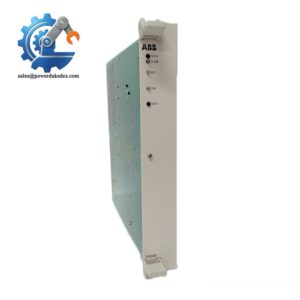
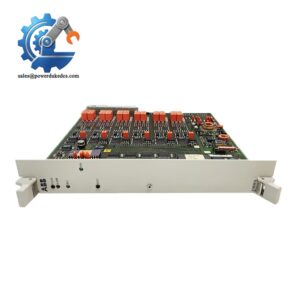
- Model & Brand: ABB PM645B, part number 3BSE010535R1.
- Product Type: Processor Module for the ABB Advant Controller 110/160 / AC160 platform.
- Physical Dimensions: Approximately 279 × 51 × 279 mm (W × H × D).
- Estimated Shipping Weight: Approximately 1.7 kg net; some distributors quote approximately 3 kg as shipping weight after packaging.
- What’s in the Box: PM645B processor module; original mounting hardware, manuals, and accessories should be confirmed against the supplier packing list.
- Mechanical Construction: Metal-alloy enclosure with a front-facing module interface; supplier documentation describes slot installation in the AC160 rack.
- Receiving Check: Photograph the ABB nameplate, 3BSE010535R1 identifier, serial/date code, connectors, enclosure, and packaging before installation.
Product Introduction
Architecture Hook
The ABB PM645B is the processor module at the center of an Advant Controller 110/160 architecture. It is a controller CPU rather than an ordinary I/O card, so its physical installation has to be considered together with the AC160 rack, power arrangement, communication interfaces, and the associated controller configuration. The documented part identity is PM645B / 3BSE010535R1.
Mount the processor only in the approved controller rack position. The module is reported at roughly 279 × 51 × 279 mm and 1.7 kg, making cabinet clearance and mechanical support relevant during replacement work. Do not substitute PM645A or another processor solely because the enclosure appears identical; the two part numbers are distinct and documented as separate CPU variants.
Core Technical Specifications
| Parameter | Value |
|---|---|
| Manufacturer | ABB |
| Model | PM645B |
| Article / Part Number | 3BSE010535R1 |
| Product Type | Processor Module |
| Product Family | ABB Advant Controller 110/160 |
| Controller Platform | AC160 / Advant OCS |
| Installation | Controller rack / module slot |
| Dimensions | Approx. 279 × 51 × 279 mm |
| Net Weight | Approx. 1.7 kg |
| Reported Shipping Weight | Approx. 3 kg, packaging dependent |
| Housing | Metal-alloy enclosure |
| Front Protection | IP20 reported by secondary source |
| Power Consumption | Verify against the applicable ABB hardware manual |
| Heat Dissipation | Not independently verified |
| Processor Frequency | Not reliably verified for this exact revision |
| Application Memory | Not reliably verified for this exact revision |
| Flash / Program Storage | Not reliably verified for this exact revision |
| Operating Temperature | Verify by hardware revision/manual |
| Certifications | See compliance section |
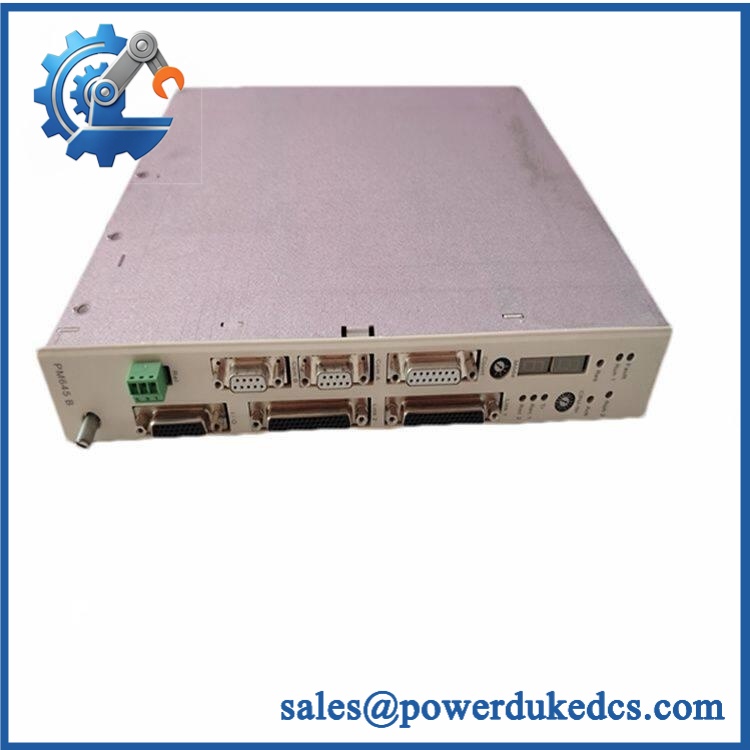
ABB PM645B 3BSE010535R1
The physical dimensions and approximately 1.7 kg weight are consistently reported in available distributor records.
Do not populate an asset master with unsupported CPU speed, memory capacity, power draw, or thermal figures. Those values can vary by controller generation and hardware revision.
? Global Compliance & Industry Certifications
For an ABB industrial controller processor, certification status should be established from the exact product documentation and hardware revision.
- CE Mark: Applicable conformity documentation should be verified for the exact PM645B configuration.
- UL/cUL: Verify the actual product marking or ABB certification documentation before recording North American approval.
- ATEX / IECEx: Do not assume hazardous-area certification. If the AC160 system is installed in a hazardous location, verify the complete certified installation.
- Marine approvals: DNV/DNV GL approval should only be recorded when the exact product and application are covered by the relevant certificate.
- RoHS: Environmental compliance should be checked against the applicable ABB declaration for the product revision.
A controller CPU can be part of a larger certified system without every configuration being independently certified for every hazardous or marine application. The distinction matters during an audit.
Verify specific lot certifications with OEM.
? Long-Term Storage & Asset Preservation Guide
Keep the in its original ESD-protective packaging. The processor contains electronic circuitry; unnecessary exposure to static discharge, dust, and connector contamination is avoidable warehouse risk.
Control humidity and condensation. A clean storage cabinet maintained below approximately 60% RH is a practical target for long-term electronic spare preservation. Avoid rapid temperature transitions that can create condensation on the PCB and mating connectors.
Do not periodically power-cycle an unknown spare. For a legacy controller CPU, energization should be performed only as part of a controlled inspection or refurbishment procedure using the correct AC160 test environment. Record the hardware revision, serial number, and storage history before deployment.
Inspect the connector contacts and module retaining hardware before installation. Corrosion, bent contacts, damaged guides, or cracked enclosure components are receiving-rejection conditions for a critical CPU spare.
Physical Installation Prerequisites
- Install the into the approved controller rack/module position; it is not a generic DIN-rail component.
- Verify the rack, backplane, power supply, and controller configuration before insertion.
- Maintain the manufacturer’s required airflow and service clearance around the rack. Do not substitute a generic 50 mm clearance rule for ABB’s actual cabinet documentation.
- Ensure the rack and cabinet protective-grounding arrangement is intact before energization.
- Use ESD protection when handling the processor and its backplane connector.
- Inspect the retaining clips, module guides, and mating connector before insertion.
- Confirm / 3BSE010535R1 against the approved BOM before removing the existing CPU.
- For redundant controller configurations, verify the intended redundancy architecture and software compatibility before commissioning.
Buyer’s FAQ
Q: What HS tariff code should be declared for the ?
A: One distributor lists 8537109060 for this part. Treat that as a supplier classification rather than a universally valid customs determination. HS classification can vary by jurisdiction and depends on the actual function and configuration of the imported item.
Q: What COO should appear on the commercial documents?
A: One secondary listing identifies Sweden as the country of manufacture. That should not automatically be copied into a commercial invoice or Certificate of Origin. Verify the COO from the actual unit, ABB documentation, or an appropriate origin declaration.
Q: Is shipping insurance worthwhile for one processor module?
A: Yes, particularly for a high-value legacy CPU that may be difficult to replace. Photograph the sealed package, module identification, and final carton before dispatch, then retain the carrier record and declared value.
Q: Does the ship with the latest firmware pre-loaded?
A: Do not make that assumption. The is a legacy processor module, and firmware/software compatibility is tied to the controller architecture and installed system version. Confirm the exact hardware revision and supported software level against the ABB documentation before commissioning.
Asset-control recommendation: Record the complete / 3BSE010535R1 identity, serial/date code, hardware revision, COO evidence, certification evidence, packaging condition, and firmware/software compatibility status as separate fields. This prevents a visually identical legacy CPU from being incorrectly accepted as a drop-in replacement.


 Start Chat