

Description
- Brand: ABB
- Full Model Number: PM891 3BSE053240R1
- Lifecycle Status: Legacy installed base; PM891 remains listed in ABB System 800xA 6.2 and 7.0 documentation
- Core Function in System: AC 800M high-performance process controller; CPU, application execution, control-network communications, S800 I/O management
- Top 3 Hardcore Specs: 450 MHz MPC8270 processor; 256 MB RAM / 208.985 MB application RAM; 2 × 10/100 Mbit/s Ethernet
- Power: 24 V DC, 19.2–30 V DC
- Operating Temperature: 0 to +55 °C / +32 to +131 °F
- Performance: 0.043 ms per 1,000 Boolean operations; application cycle down to 1 ms
- I/O Capacity: Up to 7 optical ModuleBus clusters; up to 84 I/O modules
- Condition & Lead Time: Factory-sealed or tested inventory; emergency dispatch subject to confirmed stock
- Part-Number Verification: ABB current catalogs identify PM891K01 as 3BSE053241R1 and PM891K02 as 3BSE053242R1; verify the installed nameplate against 3BSE053240R1 before shipment
Module 3: Technical Intro & Downtime Impact
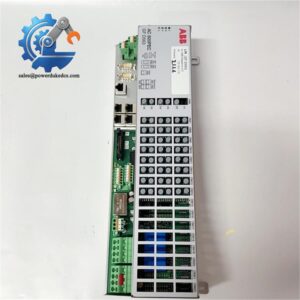
A failed AC 800M controller can stop logic execution, sever control-network communications, and leave downstream S800 I/O unavailable to the running application. The PM891 is the high-performance CPU platform used for process-control execution, control-network connectivity, CEX-Bus expansion, and optical ModuleBus communication. ABB specifies two built-in Ethernet ports, an isolated RJ45 service interface, support for up to seven optical I/O clusters, and a maximum of 84 I/O modules.
For the documented PM891K01 hardware, processing runs at 450 MHz with 256 MB RAM, including 208.985 MB available for application use. The controller accepts 19.2–30 V DC, with typical/maximum +24 V consumption of 660/750 mA, while operating from 0 to +55 °C. Boolean execution performance is specified at 0.043 ms per 1,000 operations, with application cycle times down to 1 ms. Those figures matter during an emergency swap: matching the existing hardware revision and configuration can reduce troubleshooting time after power restoration rather than turning a CPU replacement into a controls re-engineering exercise.
Module 4: Dynamic Emergency Swap & Configuration Guide
1. Pre-Swap Prep — isolate the failure path first
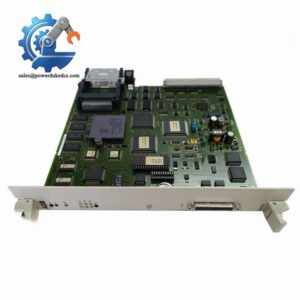
Confirm the failed controller from the AC 800M diagnostics, then record the existing firmware revision, Control Builder configuration, Ethernet settings, SD-card contents, CEX-Bus arrangement, and RCU/redundancy wiring. Use an ESD wrist strap, insulated hand tools, and a labeled terminal/wiring record. The PM891 is a rail-mounted controller with screw-terminal power connections, RJ45 Ethernet interfaces, CEX-Bus connections, and an optical ModuleBus interface.
2. Removal — release the rail-mounted CPU cleanly
Isolate the 24 V DC supply unless the installation is an ABB-supported redundant/hot-replacement arrangement. Disconnect L+, L− and the supervision connections, remove the CN1/CN2 Ethernet plugs and service connection as applicable, then disconnect the relevant CEX-Bus, RCU, and optical ModuleBus connections. Release the controller from its DIN rail/base mounting without forcing the connectors; inspect terminal hardware for heat discoloration or mechanical damage before installing the spare.
3. Installation & Configuration — reproduce the existing hardware state
Seat the replacement PM891 securely on the rail and reconnect each interface according to the recorded cabinet drawing. Do not assume that the software image alone establishes a valid replacement: verify the controller hardware designation, firmware compatibility, Ethernet addressing, CEX-Bus topology, and redundancy configuration. Also confirm the exact ABB article number on the nameplate. ABB’s current documentation distinguishes PM891K01 at 3BSE053241R1 from the PM891K02 redundant processor unit at 3BSE053242R1, so the supplied 3BSE053240R1 identifier requires nameplate verification before deployment.
4. Power-On Self-Test — judge the restart by diagnostics, not just LEDs
Restore power and observe the controller’s RUN/diagnostic indication while checking for initialization faults. Confirm the CPU reaches its normal operating state, Ethernet links establish correctly, the engineering tool recognizes the controller, and the expected application starts without configuration or communication alarms. Then verify S800 I/O communication and process values before returning the control loop to normal service. PM891 provides front-panel LED diagnostics, an INIT pushbutton, and a service interface for troubleshooting.
Module 5: Quality Assurance & Testing SOP
Every spare should be treated as a control-system asset, not simply a boxed electronic part.
- Identity Verification: Record manufacturer marking, designation, article number, serial number, hardware revision, and visible date codes where present.
- OEM Anti-Counterfeit Visual Inspection: Check ABB labeling, enclosure markings, connector geometry, PCB construction, fasteners, terminal blocks, and manufacturing identifiers against known-good reference hardware.
- Mechanical Inspection: Verify rail-mount hardware, RJ45 ports, CEX-Bus interfaces, optical ModuleBus connector, SD interface, and power terminals for cracks, bent contacts, corrosion, or impact damage.
- Power-On Self-Test (POST): Apply controlled 24 V DC and record startup current, initialization behavior, RUN/diagnostic LED states, and any persistent ERR indications.
- Firmware and Hardware Revision Check: Read the installed firmware revision and record it against the customer’s existing controller before release.
- Ethernet Verification: Test both built-in 10/100 Mbit/s Ethernet channels, link establishment, and controller communication where the test setup permits.
- Service Port Check: Verify the isolated RS-232C service interface and engineering-tool communication.
- I/O Full-Range Simulation: Exercise representative S800 I/O communication across expected signal states and confirm that values, statuses, alarms, and diagnostics are correctly received.
- CEX-Bus Verification: Confirm communication with representative expansion interfaces where applicable.
- Thermal Observation: Run the controller under powered test long enough to identify abnormal heating, fanless enclosure issues, or unstable startup behavior.
- Final QC Record: Attach serial-number traceability, test results, firmware revision, inspection status, and packaging sign-off before shipment.
ABB specifies a 24 V DC operating range of 19.2–30 V, 0–55 °C operating temperature, IP20 protection, and applicable EMC/electrical-safety certifications for the PM891K01 hardware.
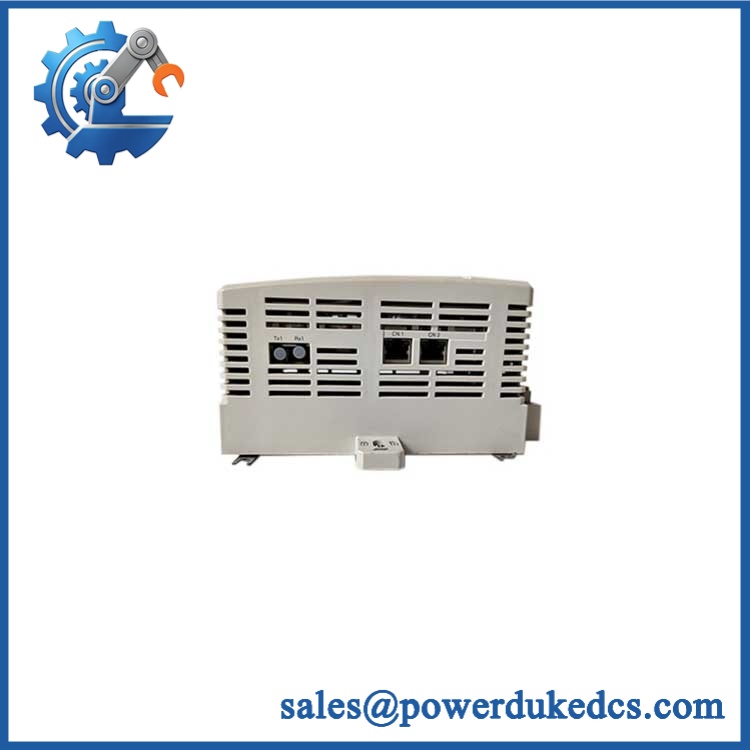
ABB PM891 3BSE053240R1
Module 6: Maintenance & Reliability FAQ
1. Is the 3BSE053240R1 a direct drop-in replacement, or does it require a firmware flash?
Do not treat the part number as sufficient proof of interchangeability. ABB’s current documentation identifies the standard PM891K01 as 3BSE053241R1, while third-party field listings use 3BSE053240R1 for . That discrepancy makes a nameplate, hardware-revision, and firmware check mandatory before dispatch. Compare the installed controller’s firmware and project version in Control Builder before attempting a replacement.
2. Is it safe to hot-swap this controller while the system is running?
Not as a blanket procedure. ABB specifically states that hot replacement of a requires the BC810K02 in the appropriate redundant configuration. The PM891K02 redundant package itself does not include the BC810K02. A single-controller installation should not be treated as hot-swappable merely because the controller supports redundancy.
3. Will replacing this CPU cause my current program to be lost?
The safest practice is to back up the complete AC 800M project, controller configuration, Ethernet settings, firmware information, and any removable storage data before intervention. The includes flash storage for application/data storage and does not contain an internal backup battery, according to ABB’s controller documentation. Do not assume a replacement CPU automatically contains the customer’s live application image.
4. What should be checked before energizing a replacement ?
Verify the exact hardware designation, firmware revision, 24 V DC supply range, grounding, Ethernet addressing, CEX-Bus topology, RCU connections, optical ModuleBus connections, and application download status. Inspect the cabinet for heat damage at the power terminals and connectors before transferring the spare into service.
5. What are the warranty terms if the unit fails after installation?
Warranty should be stated against the specific stock condition supplied—factory-sealed, refurbished, or tested surplus—with the serial number recorded on the order and inspection report. A practical industrial warranty should cover hardware failure under normal operating conditions while excluding installation errors, incorrect supply voltage, ESD damage, unauthorized modification, and configuration faults. The exact warranty period should be confirmed on the quotation before purchase.



 Start Chat