

Description
- Model: REC670
- Brand: ABB
- Series: Relion 670 Series
- Part Type: Bay Control and Protection IED
- Core Function: Controls, supervises, and protects substation bays while providing integrated automation, measurement, communication, and breaker/disconnector control.
- Key Specs: IEC 61850-based substation communication, configurable binary I/O, analog measurement inputs, synchrocheck, circuit-breaker control, interlocking, event recording, and disturbance recording.
- Typical Application: Transmission substations, distribution substations, line bays, transformer bays, bus-coupler bays, and other high-voltage switchyard applications.
Product Introduction
A substation bay rarely fails because of a single component. Breaker position, disconnector status, interlocking, protection logic, measurement, and station communication all have to agree before an operator or automation system can safely execute a switching command.
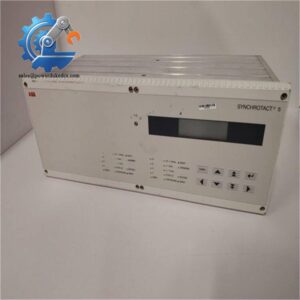
The ABB REC670 is a bay control and protection intelligent electronic device (IED) from the ABB Relion 670 Series. It is designed for control, protection, and supervision of high-voltage switchgear installations, combining bay-level automation with communication and measurement functions.
In a typical substation architecture, REC670 interfaces with circuit breakers, disconnectors, earthing switches, CTs, VTs, station automation equipment, and the protection/control network. Its configurable logic allows the IED to be adapted to different bay arrangements rather than forcing every installation into one fixed scheme.
For legacy substations undergoing IEC 61850 migration, REC670 can also serve as an important interface between conventional switchyard signals and modern station-level automation.
Core Technical Specifications
| Parameter | Value |
|---|---|
| Manufacturer | ABB |
| Model | REC670 |
| Product Family | Relion 670 Series |
| Product Type | Bay Control and Protection IED |
| Main Application | High-Voltage Substation Bay Control |
| Control Functions | Circuit Breaker / Disconnector Control |
| Protection | Configurable protection functions according to ordering configuration |
| Communication | IEC 61850 station-bus communication |
| Automation | Substation Automation |
| Interlocking | Configurable |
| Synchrocheck | Supported according to configuration |
| Measurement | Three-phase current and voltage measurement according to hardware configuration |
| Binary Inputs | Configurable according to I/O configuration |
| Binary Outputs | Configurable according to I/O configuration |
| Event Recording | Supported |
| Disturbance Recording | Supported |
| Local HMI | Available according to configuration |
| Engineering | ABB protection and control engineering tools |
| Typical Installation | Transmission / Distribution Substation |
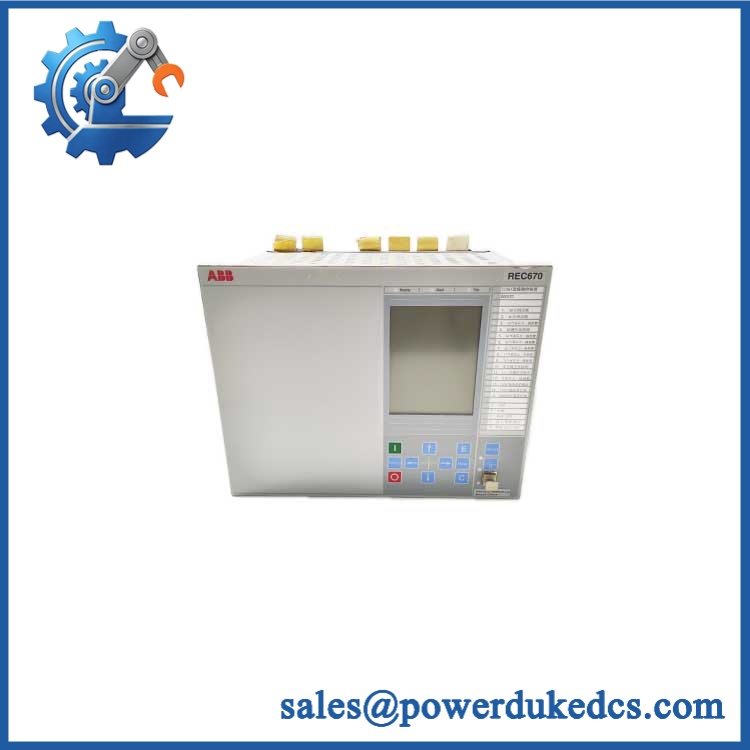
Important: REC670 is a configurable IED platform. The exact protection functions, I/O quantity, communication interfaces, auxiliary power supply, and hardware arrangement depend on the complete ABB ordering code. Therefore, “” alone is not sufficient to establish every technical option.
Application Scenarios & Pain Points
At a transmission line bay, can supervise breaker and disconnector positions while coordinating control commands and interlocking logic. This becomes particularly useful where several switching devices must follow a defined operating sequence.
For a transformer bay, the IED can integrate bay-level control, measurements, status indications, and station communication. A correctly engineered configuration reduces the number of separate control interfaces required in the protection panel.
During IEC 61850 modernization, can connect bay-level protection and control information to the station automation system. Digital communication can reduce dependence on large quantities of traditional hardwired status and control signals.
In a bus-coupler or bus-section application, synchrocheck and interlocking functions become particularly important. The engineering team must verify the actual switching philosophy rather than simply copying settings from another bay.
Where panel temperatures exceed 50°C, inspect the auxiliary power supply, ventilation, terminal connections, and IED diagnostic status carefully. High ambient temperature combined with aging power supplies can produce intermittent behavior that initially resembles a software or configuration problem.
Common Error Codes & Diagnostic Symptoms
Symptom/Code: Internal IED diagnostic / self-supervision alarm
→ Diagnosis: The self-supervision system has detected an internal hardware, memory, communication, or configuration-related problem.
→ Action: Read the diagnostic information through the local HMI or engineering tool, identify the affected function, and replace the if an internal hardware failure is confirmed.
Symptom/Code: Breaker control command rejected
→ Diagnosis: Check interlocking conditions, breaker position feedback, control authority, local/remote selection, blocking signals, and synchrocheck conditions. A rejected command does not necessarily indicate a failed IED.
→ Action: Verify the control logic and field inputs first; replace the IED only after hardware failure is established.
Symptom/Code: IEC 61850 communication unavailable
→ Diagnosis: Inspect the Ethernet/fiber network, station-bus configuration, communication status, SCL configuration, network switches, and IED communication interface.
→ Action: Restore the communication path or replace the communication hardware if the interface is confirmed defective.
Cross-Reference & Lifecycle Migration
Product Identification
The requested unit is:
- ABB:
- Family: Relion 670 Series
- Product Type: Bay Control and Protection IED
- Primary Role: Substation bay control, protection, automation, and supervision
- Typical Network: Transmission and high-voltage distribution substations
should be purchased using the complete ordering number, not the generic model name alone. ABB 670 Series devices are highly configurable, and two units can have materially different hardware and functional arrangements.
Compatibility Check
Before ordering a replacement, compare:
- Complete type designation
- ABB ordering number
- Hardware revision
- Auxiliary supply voltage
- Binary input/output configuration
- CT/VT input arrangement
- Communication interfaces
- IEC 61850 configuration
- Protection functions
- Local HMI arrangement
- Existing application configuration
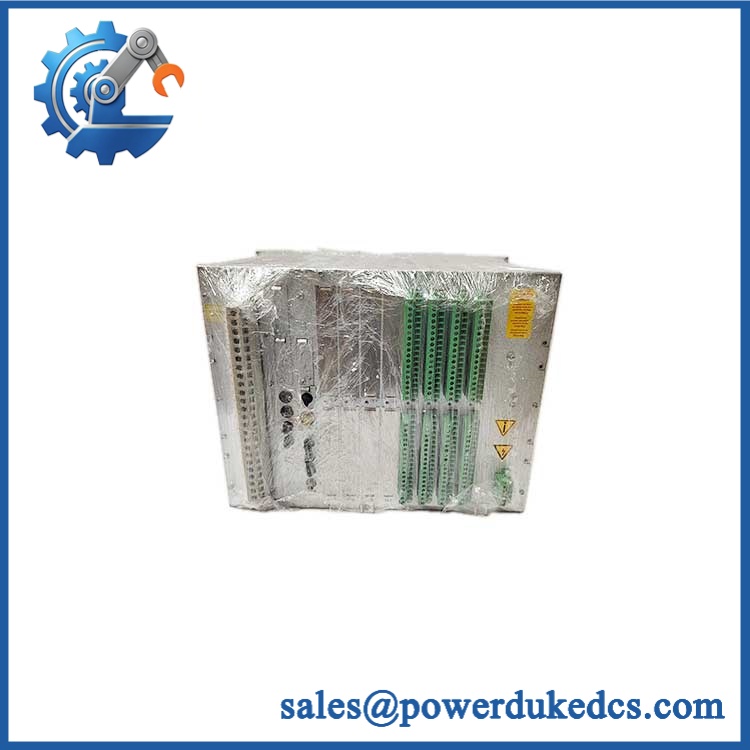
- ABB
For IEC 61850 installations, preserve the relevant SCD/ICD/CID configuration files before replacing the IED. A physically compatible replacement still requires correct engineering data before being placed back into service.
Lifecycle Strategy
belongs to ABB’s Relion 670 Series, a mature substation protection and control platform. For substations that continue to depend on , maintaining a tested spare can reduce restoration time after an unexpected IED failure.
Buffer-stock records should include the complete ordering number, hardware revision, firmware version, application configuration, IEC 61850 engineering files, and tested I/O configuration.
Firmware migration should not be assumed to be automatic. When replacing an , verify firmware compatibility and the corresponding configuration-engineering environment before loading the application.
Field Engineer’s Tech Notes
Tech Note 1 — Never treat a failed breaker command as proof of a bad .
First check the complete permissive chain: breaker position, disconnector status, interlocking, local/remote control authority, blocking signals, and synchrocheck. A single missing field indication can intentionally inhibit the command.
Tech Note 2 — Preserve the IEC 61850 engineering files.
Before replacing an operating IED, save the relevant configuration and document the station-bus settings. Do not assume that entering a few visible parameters into a replacement will reproduce the original IEC 61850 behavior (GOOSE and report configuration can be especially important).
Strict QA & Testing SOP
- Part Number Verification
Confirm the complete ordering designation. - Nameplate Inspection
Record model, ordering code, serial number, hardware revision, and manufacturing information. - Visual Inspection
Examine the enclosure, front HMI, terminals, communication ports, connectors, and PCB condition. - Auxiliary Power Test
Apply the correct supply voltage using a controlled IED test setup. - Self-Supervision Check
Verify normal startup and confirm that no persistent internal diagnostic alarm remains. - Binary Input Test
Simulate breaker, disconnector, earthing-switch, local/remote, and other configured status signals. - Binary Output Test
Verify configured trip, close, alarm, interlock, and control outputs using an appropriate protection test system. - Analog Measurement Test
Inject calibrated current and voltage signals according to the installed hardware configuration. - Protection Function Test
Test the protection functions actually enabled in the customer’s application. - Breaker Control Test
Verify open/close commands and feedback logic under controlled conditions. - Interlocking Test
Confirm that prohibited switching sequences are correctly blocked. - Synchrocheck Test
Where configured, verify voltage magnitude, phase-angle, and frequency permissive logic. - IEC 61850 Test
Verify station-bus communication, reports, GOOSE messaging, and relevant logical-node data. - Event Recording Test
Confirm event records and time-stamped indications can be retrieved. - Disturbance Recording Test
Verify disturbance-recorder operation where the function is configured. - Engineering-Tool Test
Confirm stable communication with the applicable ABB engineering environment. - Extended Run Test
Monitor auxiliary supply, communication status, I/O, and self-supervision during an extended test period. - Configuration Backup
Save the verified configuration and IEC 61850 engineering files. - Final QA Documentation
Record all test conditions, measured values, firmware, hardware revision, and test date. - ESD-Safe Packaging
Protect the IED using anti-static packaging and shock-resistant outer protection.
Test videos can be provided when available, together with actual product photographs, nameplate images, and inspection records.
Buyer’s FAQ
Q1. What is ABB used for?
is an ABB bay control and protection IED designed for high-voltage substations. It combines bay-level control, supervision, automation, measurement, communication, and configurable protection functions.
Q2. Is a PLC?
No. is a dedicated substation protection and control IED, rather than a general-purpose PLC. Its hardware, firmware, protection algorithms, and IEC 61850 functions are designed specifically for power-system applications.
Q3. Can be hot-swapped?
Do not assume hot-swapping capability. Removing an IED from an energized protection and control panel can affect breaker control, protection, interlocking, and station communication. Follow the approved substation maintenance procedure and isolate affected functions before replacement.
Q4. Does every have the same I/O and protection functions?
No. is a configurable platform. Hardware quantity, CT/VT inputs, binary I/O, communication interfaces, protection functions, and auxiliary supply can vary according to the complete ordering configuration.
Q5. Will I need to reload the IEC 61850 configuration?
Potentially, yes. A replacement IED normally needs the correct application and station-communication configuration. Keep the original SCD/ICD/CID files, parameter backup, and firmware information before removing the existing device.
Q6. How should I verify an replacement before purchasing?
Provide the complete ABB type designation and nameplate photograph, not only “.” Also compare hardware revision, auxiliary supply, I/O configuration, communication interfaces, firmware, and application configuration. For a critical substation, request actual product photographs, functional-test records, warranty terms, and return conditions.


 Start Chat