
Description
- ABB SDCS-CON-2 | SDCS-CON2 Drive Control Board for Legacy ABB Systems
2. At-a-Glance Executive Brief
- Model: SDCS-CON-2
- Brand: ABB
- Series: DCS500 / DCS600 DC Drive
- Part Type: Converter Control Board / Main Drive Control Board
- Core Function: Executes converter-related control functions and manages standard I/O within ABB DCS500/DCS600 drive systems.
- Key Specs: 80186EM microprocessor, DC94L01 ASIC, 24 VDC control-board supply, RS-485 communication, analog/digital I/O, pulse-encoder inputs, and thyristor firing-pulse generation.
- Primary Application: ABB DCS500 and DCS600 DC drive converters, industrial motor control, armature-current regulation, field weakening, and motor protection.
3. Product Introduction
A DC drive can appear completely inactive when the actual problem is concentrated on its main converter control board. Loss of firing-pulse generation, measurement processing, or standard I/O handling can prevent the power section from operating even when the thyristor bridge itself is healthy.
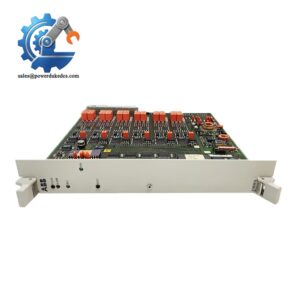
The ABB SDCS-CON-2 is the converter control board used in ABB DCS500 drive architecture and also forms part of the DCS600 control hardware. ABB documentation identifies the board as being based on an 80186EM microprocessor and the DC94L01 ASIC.
Within the DCS500 system, the board handles functions such as measurement, A/D and D/A conversion control, watchdog supervision, standard I/O, and thyristor firing-pulse generation. In DCS600 systems, converter-related functions including armature-current control, field weakening, motor protection, and I/O handling are assigned to the SDCS-CON-2 software.
4. Core Technical Specifications
| Parameter | Value |
|---|---|
| Manufacturer | ABB |
| Model | SDCS-CON-2 |
| Product Type | Converter Control Board |
| Drive Family | DCS500 / DCS600 |
| Main Processor | 80186EM |
| Main ASIC | DC94L01 |
| Control Supply | 24 VDC |
| Communication | RS-485 |
| Control Functions | Measurement, I/O, converter control |
| Firing Control | Thyristor firing-pulse generation |
| Analog Processing | A/D and D/A conversion control |
| Encoder Interface | Pulse encoder inputs |
| Temperature Input | PTC / temperature measurement support |
| Diagnostic Display | Seven-segment display |
| Memory | Flash PROM / static RAM with backup |
| Watchdog | Internal watchdog |
| Installation | ABB DC drive control section |
| Application | DC Motor / Converter Control |
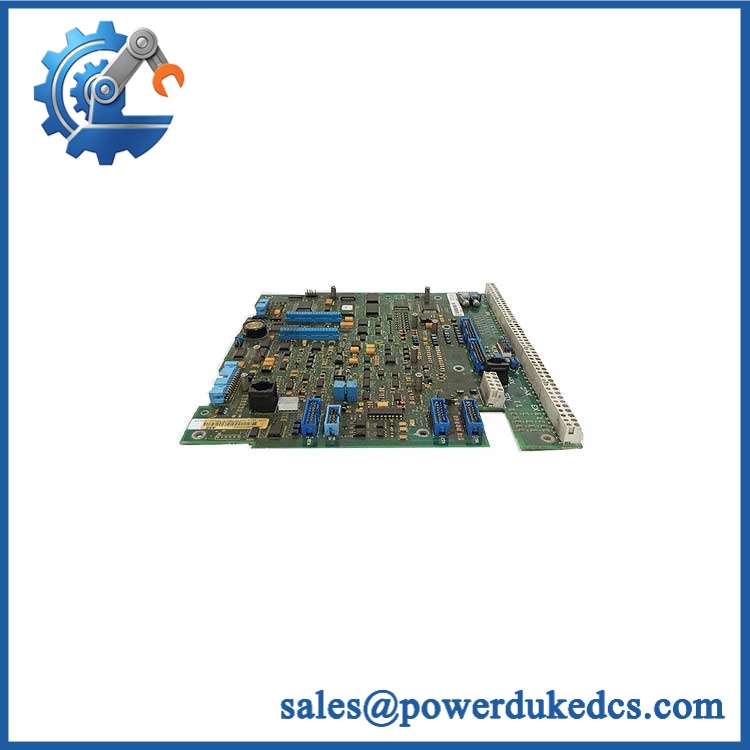
ABB SDCS-CON-2
ABB technical documentation states that the SDCS-CON-2 uses an 80186EM processor and DC94L01 ASIC and provides measurement, communication, watchdog, conversion-control, and thyristor firing functions.
5. Application Scenarios & Pain Points
On a rolling-mill DC drive, the SDCS-CON-2 can sit at the heart of converter control, coordinating measurement and firing functions required to regulate motor operation. A control-board failure can therefore stop the associated drive even when the power semiconductors remain intact.
For paper-machine drives, accurate armature-current regulation and speed-related feedback are essential to maintaining stable machine operation. The board’s encoder inputs and control functions make it a critical component within the drive-control chain.
In material-handling equipment, a failing control board may appear as inconsistent start behavior, missing feedback, or an inability to generate the required firing pulses. Troubleshooting should separate the control-board fault from motor, encoder, field, and power-converter faults.
During a planned drive overhaul, technicians should record the existing parameter and jumper configuration before removing the SDCS-CON-2. The board stores system and parameter information in Flash PROM, while fault and alarm information is held in static RAM with backup.
At cabinet temperatures above 50°C, inspect cooling, PCB condition, connectors, and the backup-capacitor area carefully. Heat-related aging can make an older control board increasingly prone to intermittent startup or memory-related faults.
6. Common Error Codes & Diagnostic Symptoms
Symptom/Code: E1 — ROM memory test error
→ Diagnosis: The SDCS-CON-2 startup diagnostics detect a ROM memory problem. ABB documentation indicates that the SDCS-POW-1 and SDCS-CON-2 should be checked if the fault returns after a power cycle.
→ Action: Power-cycle according to the drive procedure, verify the board and power supply, and replace the SDCS-CON-2 if the error persists.
Symptom/Code: E2 — RAM memory test error
→ Diagnosis: Startup memory diagnostics have detected a RAM-related problem on the control board.
→ Action: Check the control board and associated supply circuitry; replace the SDCS-CON-2 if the hardware fault is confirmed.
Symptom/Code: E5 — No control program in memory
→ Diagnosis: ABB documentation identifies E5 as indicating that no control program is available in the SDCS-CON-2 memory.
→ Action: Reload the appropriate firmware/control program. If the board cannot retain or accept the program, replace the control board.
7. Cross-Reference & Lifecycle Migration
Product Identification
The requested product is:
- ABB Model: SDCS-CON-2
- Product Type: Converter Control Board
- Drive Family: DCS500 / DCS600
- Main Function: Converter control and standard I/O
- Control Supply: 24 VDC
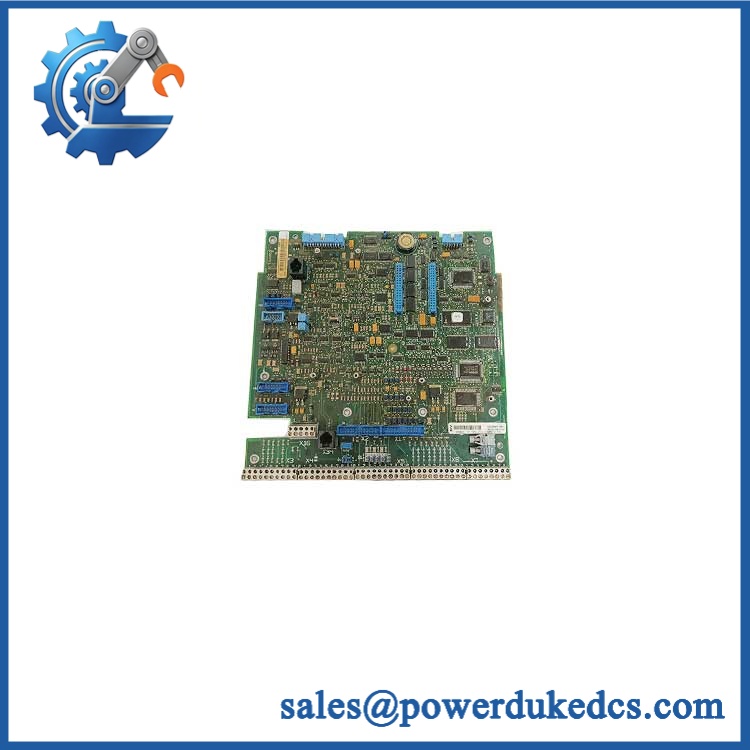
ABB SDCS-CON-2
Industry listings associate SDCS-CON-2 with the ABB part reference 3ADT309600R1, while other related listings show SDCS-CON-21 and other revision references. Because revisions and ordering references can differ, the actual board label should be matched before purchasing.
Compatibility
Before installing a replacement, compare:
- Complete board designation
- ABB ordering number
- Hardware revision
- DCS500/DCS600 drive type
- Firmware version
- Jumper settings
- Encoder configuration
- I/O expansion board
- Existing parameter set
The DCS500 documentation shows that the SDCS-CON-2 can work with expansion boards such as SDCS-IOB-2 and SDCS-IOB-3, depending on the I/O arrangement.
Lifecycle Strategy
The SDCS-CON-2 belongs to a mature/legacy ABB DC-drive platform. For production assets that still depend on DCS500 or DCS600 drives, keeping a tested spare is sensible because a control-board failure can disable the complete converter.
Firmware should not be assumed to be interchangeable between every revision. If the replacement board does not contain the correct control program, ABB documentation indicates that the appropriate firmware can be loaded into the board’s Flash PROM.
8. Field Engineer’s Tech Notes
Tech Note 1 — Photograph every jumper before removal.
The SDCS-CON-2 has configurable jumper locations associated with encoder inputs and other functions. Record the existing positions before removing the board. A replacement with incorrect jumper coding can produce a perfectly healthy board with completely incorrect field behavior.
Tech Note 2 — Do not lose the parameter information.
The board stores the system program and application parameters in Flash PROM, while fault/alarm information uses static RAM with backup. The backup capacitor requires charging time, so do not assume stored data will remain indefinitely after extended power removal.
9. Strict QA & Testing SOP
- Part Number Verification
Confirm SDCS-CON-2 and the exact board ordering reference against the purchase request. - Nameplate Inspection
Photograph the ABB label, revision, serial number, and PCB identification. - PCB Visual Inspection
Check connectors, ICs, capacitors, solder joints, jumper headers, and PCB tracks. - Jumper Configuration Record
Document all jumper positions before testing or shipment. - Power-Supply Test
Verify the applicable 24 VDC control supply under controlled conditions. - Startup Diagnostic Test
Power the board in a suitable test environment and observe the seven-segment diagnostic display. - Memory Test
Verify normal startup memory behavior and check for E1/E2-type diagnostic conditions. - Firmware Verification
Confirm that the installed control program is appropriate for the intended DCS500/DCS600 application. - I/O Test
Verify applicable analog and digital input/output functions. - Encoder Input Test
Where supported by the test setup, simulate appropriate pulse-encoder signals and confirm correct response. - Communication Test
Verify the applicable RS-485 communication interfaces. - Firing-Control Test
In an approved drive test environment, verify the control-board firing-pulse function without exposing personnel to energized power-stage hazards. - Watchdog Test
Verify normal watchdog behavior according to the applicable ABB test procedure. - Extended Run Test
Monitor board operation, diagnostic status, temperature, and communication stability. - Final QA Documentation
Record firmware, hardware revision, test readings, diagnostic results, and test date. - ESD Packaging
Package the PCB in anti-static material with sufficient protection against connector and component damage.
Test videos can be provided when available, together with actual board photographs and inspection records.
10. Buyer’s FAQ
Q1. What does SDCS-CON-2 do?
It is the main converter control board for ABB DCS500/DCS600 drive architectures. It handles converter-related control functions, standard I/O, measurement processing, and thyristor firing control.
Q2. Is SDCS-CON-2 a PLC CPU?
No. It is a DC-drive converter control board, not a general-purpose PLC CPU. Its firmware and hardware are dedicated to ABB DCS500/DCS600 drive-control functions.
Q3. Can SDCS-CON-2 be hot-swapped?
Do not assume hot-swapping capability. The drive must be placed into the appropriate safe maintenance condition, isolated as required, and allowed to discharge before removing the control board.
Q4. What does an E5 fault mean?
E5 indicates that no control program is present in memory on the SDCS-CON-2. ABB documentation specifies reloading the firmware/control program as the corrective direction.
Q5. Does the replacement board require firmware?
It may. The correct control program depends on the drive application and board configuration. ABB documentation states that different programs can be downloaded to the Flash PROM, so firmware compatibility should be verified before commissioning.
Q6. What should I provide when purchasing?
Specify ABB SDCS-CON-2 and provide the exact part number printed on the existing PCB, together with the DCS500/DCS600 drive model, hardware revision, firmware version, and photographs of the board. For a critical application, request actual nameplate photos, test documentation, warranty terms, and return conditions.

 Start Chat