

Description
- Brand: ABB
- Full Model Number: SW-190148
- ABB Type Designation: Q-0621-A Deionizer
- Associated Product ID: 3BHB043813R0001
- Product Type: Liquid Deionizer / Cooling-System Filter
- Lifecycle Status: Current ABB spare-part listing; old product ID 3BHB043813R0001 shown as replaced
- Core Function in System: Removes ionic contamination from liquid cooling-system water
- Top 3 Hardcore Specs: 8.2 L resin volume; 7.4 kg net weight; 596.9 × 166.4 × 167.6 mm
- Gross Packaging Volume: 16.647 dm³
- System Association: ABB ACS6000 medium-voltage drive cooling system
- Product Category: Drive service spare / liquid filter
- Condition: ABB listing identifies the part type as New
- Condition & Lead Time: New, factory-supplied inventory; emergency dispatch subject to confirmed stock
ABB product data identifies SW-190148 as the Q-0621-A Deionizer; Filter (Liquid). The same record lists 3BHB043813R0001 as the old product ID, with an 8.2-liter volume, 7.4 kg net weight, and dimensions of 596.9 × 166.4 × 167.6 mm. It is categorized under drive service spare parts.
Module 3: Technical Intro & Downtime Impact
A contaminated or exhausted deionizer cartridge can become a cooling-system reliability issue on a liquid-cooled medium-voltage drive. The purpose of the ABB SW-190148 Q-0621-A is to condition the cooling liquid by controlling ionic contamination. That matters because conductive cooling water can increase electrical leakage risk and place additional stress on insulation and cooling hardware. ABB identifies SW-190148 specifically as a liquid deionizer/filter and associates it with the drive service spare-parts category.
The published physical data is unusually useful for maintenance planning: 8.2 L resin volume, 7.4 kg net weight, and a product envelope of 596.9 mm high × 166.4 mm wide × 167.6 mm deep. ABB also lists 3BHB043813R0001 as the old product ID, making that number useful when matching historical maintenance records. This is a consumable/service component rather than a programmable control board, so MTTR is driven mainly by correct cartridge identification, mechanical fit, water-loop isolation, leak-free replacement, and post-change conductivity verification.
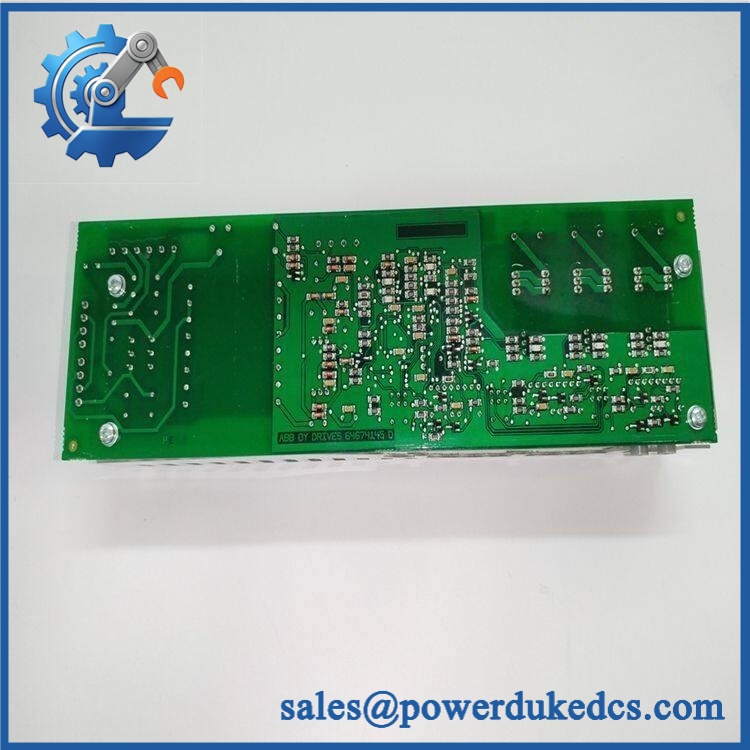
ABB SW-190148
Module 4: Dynamic Emergency Swap & Configuration Guide
1. Pre-Swap Prep — verify the cooling circuit before isolation
Place the ACS6000 or affected liquid-cooled drive in the plant-approved shutdown condition. Follow the site’s electrical LOTO procedure and the cooling-system isolation procedure. Record the existing deionizer identification, flow direction, hose/pipe connections, holding strap arrangement, and any cooling-water conductivity reading available from the drive system. Prepare spill containment, gloves, eye protection, suitable hand tools, replacement seals as required, and a calibrated conductivity meter.
2. Removal — isolate, depressurize, and drain the cartridge safely
Isolate the cooling circuit and allow pressure and temperature to reach the approved maintenance condition. Drain or capture residual liquid before disconnecting the deionizer. Release the holding strap or mechanical retention arrangement and remove the existing Q-0621-A carefully; the unit is approximately 7.4 kg net, so support the cartridge during removal rather than relying on the connected piping. Inspect fittings, seals, hoses, and the surrounding cooling assembly for mineral deposits or leakage evidence.
3. Installation & Configuration — reproduce the original flow arrangement
Install the replacement SW-190148 Q-0621-A in the same orientation and secure it with the original retaining arrangement or approved replacement hardware. Confirm that inlet and outlet connections are not reversed. Verify seal condition, fitting engagement, and hose routing before restoring flow. Because ABB’s current record uses SW-190148 while identifying 3BHB043813R0001 as the old product ID, both identifiers should be recorded on the maintenance work order for future traceability.
4. Power-On Self-Test (POST) — for a filter, prove water quality and no leakage
Restore the cooling circuit gradually and inspect every connection for leakage. Remove trapped air according to the cooling-system procedure and confirm stable circulation. Check the cooling-water conductivity or resistivity measurement against the site’s approved acceptance value. Watch the drive for cooling-system alarms, flow abnormalities, and temperature deviations during the initial run. A dry enclosure and normal liquid flow are required before returning the drive to normal load.
Module 5: Quality Assurance & Testing SOP
The SW-190148 should be inspected as a fluid-service component rather than as an electronic control board.
- OEM Anti-Counterfeit Visual Inspection: Verify ABB labeling, SW-190148, Q-0621-A designation, old product ID 3BHB043813R0001, housing construction, fittings, and identification markings.
- Serial and Identity Traceability: Photograph the complete identification label and record the product ID and maintenance batch information.
- Mechanical Inspection: Check the housing, fittings, connection points, holding strap interface, and sealing surfaces for cracks, deformation, corrosion, or shipping damage.
- Dimensional Verification: Confirm the approximately 596.9 × 166.4 × 167.6 mm product dimensions against the installation envelope.
- Weight Verification: Record approximate net weight against the documented 7.4 kg reference where appropriate.
- Resin/Capacity Verification: Confirm the specified 8.2-liter volume and product configuration before installation.
- Flow-Path Inspection: Verify inlet and outlet geometry and confirm no blockage or foreign material is present.
- Seal Inspection: Inspect all applicable O-rings, gaskets, and threaded or quick-connect sealing surfaces.
- Leak Test: Pressurize the installed cooling section under the approved maintenance procedure and check every connection for leakage.
- Conductivity Verification: Measure cooling-liquid conductivity/resistivity before and after replacement and compare against the site’s approved operating limit.
- Flow Verification: Confirm stable cooling-water circulation after installation.
- Alarm Verification: Confirm that cooling-system alarms clear and that no flow, temperature, or water-quality diagnostic remains active.
- Extended Run Test: Monitor cooling temperature, flow, conductivity, and connection integrity during an extended operational check.
- Final QC Record: Record part number, old product ID, physical condition, installation date, water-quality measurements, leak-test results, and technician approval.
ABB’s official product record also lists the part as New, with no build-to-order restriction and a minimum order quantity of one piece.
Module 6: Maintenance & Reliability FAQ
1. Is the SW-190148 a direct drop-in replacement, or does it require a firmware flash?
There is no firmware requirement because SW-190148 is a liquid deionizer/filter, not a programmable controller. The critical replacement checks are mechanical dimensions, connection arrangement, cooling-system compatibility, and identification. ABB currently lists SW-190148 as the Q-0621-A deionizer and identifies 3BHB043813R0001 as the old product ID.
2. Is it safe to hot-swap this filter while the system is running?
No. This is a cooling-system service component, and replacement requires controlled isolation of the liquid circuit. The maintenance procedure should address both the electrical condition of the drive and the pressure, temperature, and residual liquid in the cooling circuit.
3. Will replacing the deionizer cause my current drive program or configuration to be lost?
No. Replacing the deionizer does not modify the drive’s control application or software configuration. The important records to preserve are the cooling-system settings, conductivity limits, alarm thresholds, installation orientation, and maintenance history.
4. What should I test after installing the replacement?
Check for leakage first. Then verify stable liquid circulation, cooling-water conductivity or resistivity, cooling temperature, and drive cooling-system diagnostics. During the first operating period, monitor for abnormal conductivity rise or cooling alarms before returning the drive to full process load.
5. What are the warranty terms if the unit fails post-installation?
Warranty terms should distinguish manufacturing defects from normal resin exhaustion and service-life limitations. Coverage should also exclude damage caused by incorrect installation, contaminated replacement hardware, excessive mechanical stress, improper cooling-water chemistry, or leakage caused by reused or damaged seals. The exact warranty period and return procedure should be stated on the quotation before purchase.


 Start Chat