

Description
- Model: UDC920BE01
- ABB Part Number: 3BHE034863R0001
- Brand: ABB
- Series: UDC920
- Part Type: ABB control-system hardware module
- Core Function: Provides control-system processing and/or signal-interface functionality within the associated ABB automation architecture.
- Key Specs: The model/part-number pairing is consistently identified as UDC920BE01 / 3BHE034863R0001, but public sources conflict substantially on its exact functional classification and detailed electrical specifications.
Product Introduction
The ABB UDC920BE01 3BHE034863R0001 requires careful identification before procurement because publicly available descriptions are inconsistent. Some supplier records classify it as an analog input module, while other listings describe it as a control or processing board.
The strongest recurring identification is the exact UDC920BE01 / 3BHE034863R0001 pairing. However, claims such as a specific number of analog channels, processor architecture, communications protocols, or high-voltage inverter functionality should not be treated as verified specifications without the corresponding ABB technical documentation. (This is especially important when the part is being purchased as a direct replacement.)
For maintenance procurement, the safest method is to match the complete ABB part number, installed equipment, board revision, connector arrangement, and original nameplate. This avoids turning an uncertain third-party description into an incorrect replacement specification.
Core Technical Specifications
| Parameter | Value |
|---|---|
| Manufacturer | ABB |
| Model | UDC920BE01 |
| ABB Part Number | 3BHE034863R0001 |
| Product Family | UDC920 |
| Product Classification | ABB industrial automation/control hardware |
| Exact Functional Role | Requires equipment-level confirmation |
| Analog Input Function | Reported by multiple distributors, but detailed channel specification is not independently verified |
| Digital I/O | Not reliably established from authoritative documentation found |
| Communication Interfaces | Not reliably established for this exact variant |
| Operating Voltage | Requires confirmation from the associated ABB manual |
| Resolution | Not reliably established |
| Operating Temperature | Requires confirmation from ABB documentation |
| Dimensions | Third-party listings vary; do not use for cabinet engineering without verification |
| Weight | Approximately 1.2–1.5 kg in several distributor listings, but not treated as an official ABB specification |
| Firmware | Depends on associated ABB system |
| Replacement Strategy | Exact part-number and revision matching recommended |
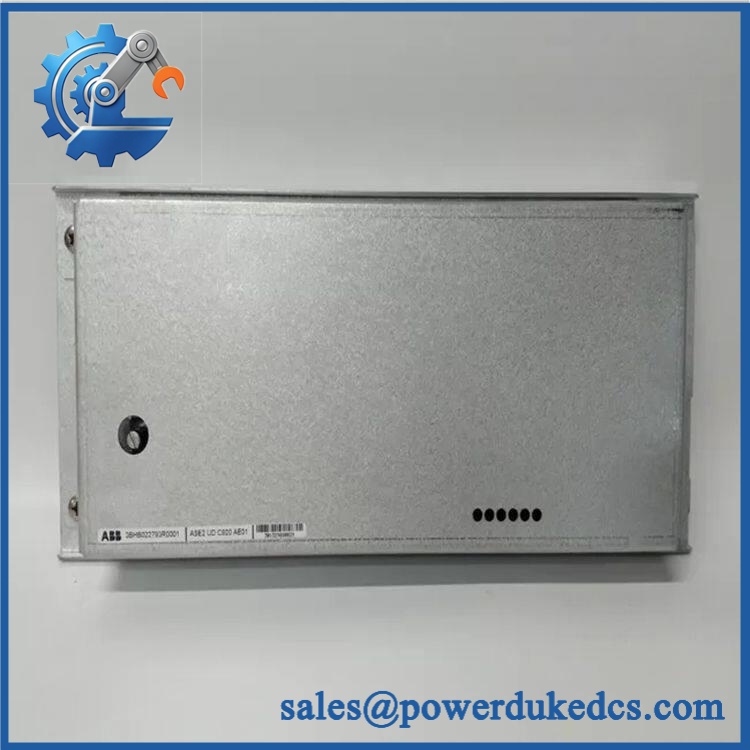
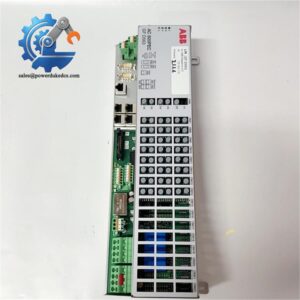
ABB UDC920BE01 3BHE034863R0001
Several commercial sources describe 3BHE034863R0001 / UDC920BE01 as an analog input module, while others assign incompatible descriptions such as a controller or inverter component. Because of that conflict, specifications such as “8 channels,” “18-bit resolution,” “24 VDC,” or specific Ethernet/fieldbus protocols should not be presented as confirmed facts without the original ABB datasheet.
Application Scenarios & Pain Points
During a legacy ABB control-system repair, incorrect identification can be more expensive than the module itself. A replacement should be matched against the installed system and original hardware markings before energization.
Process-control installations: Third-party sources repeatedly associate the with analog signal acquisition and industrial automation applications. These descriptions suggest use around field measurement and control, but the exact I/O configuration must be confirmed for the installed variant.
DCS maintenance: Legacy ABB automation equipment often remains operational long after its original procurement cycle. An exact article-number match can help maintenance teams source a replacement without redesigning the cabinet.
Power and electrical-control equipment: Some commercial listings associate with ABB power-control hardware. Because these descriptions conflict with the analog-input classification, engineers should verify the parent equipment before using the part in a power-electronics application.
Migration projects: When replacing older ABB equipment with a newer controller architecture, document the original ‘s actual field connections and system function first. This provides a reliable basis for selecting a modern equivalent.
Common Error Codes & Diagnostic Symptoms
No reliable ABB-specific numeric fault-code table for was found in the available sources. The following are therefore diagnostic symptoms, not claimed official ABB error codes.
- Symptom/Code: Module not recognized / hardware configuration fault → Diagnosis: Check rack position, connectors, power, hardware revision, and host-system configuration → Action: Verify the exact assembly before replacing the module.
- Symptom/Code: Abnormal or missing analog/process data → Diagnosis: Check field wiring, signal source, terminal/interface hardware, and the actual function assigned to the → Action: Test the signal path and replace the module only after isolating the fault.
- Symptom/Code: Repeated initialization or communication failure → Diagnosis: Possible hardware-revision mismatch, configuration incompatibility, connector problem, or module-level failure → Action: Compare the replacement’s complete markings and revision with the original unit.
Cross-Reference & Lifecycle Migration
- Exact identification: / 3BHE034863R0001.
- Cross-reference caution: Do not use descriptions such as “analog input,” “digital input,” “controller,” or “inverter module” as interchangeable product classifications. Public listings conflict on this point.
- Direct replacement: The safest replacement is the same 3BHE034863R0001 article number with matching hardware revision.
- Firmware: No firmware-flashing requirement should be assumed from the article number alone.
- Configuration: If the module participates in a programmable ABB control system, configuration compatibility should be checked before commissioning.
- Revision control: Record the complete label, including any suffix, revision, serial number, and PCB identification.
- Lifecycle: The part appears in current industrial-spare marketplaces primarily as legacy ABB hardware. For plants dependent on the installed system, maintaining a tested spare is a sensible buffer-stock measure.
- Migration: If the parent ABB system is being modernized, preserve the original wiring and functional mapping before selecting a newer replacement.
Field Engineer’s Tech Notes
Warning 1 — Do not trust a generic product title. Multiple commercial listings assign contradictory functions to . One source calls it an analog input module, another describes a control board, and another assigns high-voltage inverter functionality.
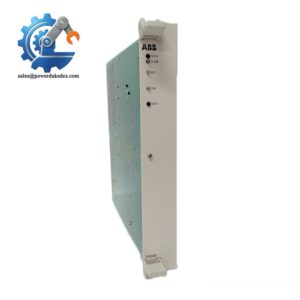
Warning 2 — Photograph the installed assembly before removal. Capture the ABB label, PCB markings, connectors, rack position, and surrounding modules. (For an obscure legacy part, those details can be more useful than a distributor’s generic catalog description.)
Strict QA & Testing SOP
- Part verification — Confirm / 3BHE034863R0001 against the purchase order.
- Nameplate inspection — Record all model, article, revision, and serial information.
- Parent-equipment identification — Determine the exact ABB system in which the module is installed.
- Physical inspection — Check housing, PCB, connectors, terminals, and mounting hardware.
- Revision comparison — Compare the replacement revision with the original.
- Connector verification — Confirm connector type and physical pin arrangement.
- Power verification — Use the applicable ABB equipment documentation to determine the correct supply.
- Functional identification — Establish whether the installed unit performs analog acquisition, control processing, or another system function.
- Controlled power-up — Test on an approved compatible platform.
- I/O verification — If used as an I/O interface, apply calibrated test signals and verify the resulting data.
- Control-function test — If used as part of a controller architecture, verify the appropriate system diagnostics and control functions.
- Communication test — Test only the interfaces documented for the specific installation.
- Extended run test — Monitor for intermittent hardware or communication faults.
- Final inspection — Record photographs, serial number, revision, and test results.
- ESD packaging — Package the electronic module in anti-static material with adequate cushioning.
- Test evidence — Test videos can be provided when available, particularly for powered functional testing.
Buyer’s FAQ
Q: What is ABB 3BHE034863R0001?
A: It is an ABB UDC920-series hardware module. Public commercial sources commonly identify it as an analog input module, but other sources give conflicting classifications, so the exact system function should be verified before procurement.
Q: Is it definitely an analog input module?
A: That is the most common third-party description, but I would not treat detailed analog specifications as authoritative without the ABB technical manual for the exact variant.
Q: Can I use another UDC920 module as a replacement?
A: Not automatically. Match the complete article number, hardware revision, parent equipment, connector arrangement, and configured function.
Q: Does it require firmware?
A: Firmware requirements depend on the host ABB system. Do not assume a firmware update is required solely because the module is being replaced.
Q: How do I verify a New Original ?
A: Request photographs showing , 3BHE034863R0001, serial/revision markings, PCB identification, and original packaging. For a critical spare, request a powered functional-test report or video.
Q: What warranty should I request?
A: Have the supplier state whether the unit is New Original, New Surplus, refurbished, or previously installed, and specify the warranty period and functional-test coverage in writing.



 Start Chat