

Description
- Brand: AMAT / Applied Materials
- Full Model Number: 0190-15779
- Associated Model: Schumacher 10-0415 / CFAC
- System/Series Family: Applied Materials semiconductor equipment pneumatic control
- One-Sentence Core Function: Pneumatic controller assembly for managing air-controlled functions within compatible Applied Materials equipment
- Top 3 Hardcore Specs: 10-0415 controller; CFAC pneumatic controller; AMAT P/N 0190-15779
- Stock Status: New Surplus / Fully Tested Refurbished — verify CFAC configuration, tool compatibility, and connector condition before shipment
Module 3: Technical Product Introduction
A pneumatic-control fault on a semiconductor process tool can interrupt chamber operation even when the main machine controller and electrical I/O remain healthy. The AMAT 0190-15779 is cross-referenced to Schumacher 10-0415, identified as a CFAC pneumatic controller for Applied Materials equipment. Multiple industrial parts records associate these identifiers directly, providing substantially stronger identification than listings that describe 0190-15779 as a generic high-power DC supply.
The exact pneumatic architecture is configuration-dependent, and publicly available sources do not establish a reliable OEM specification for supply pressure, controlled outlet pressure, valve count, analog resolution, or communications protocol. One industrial repair source separately identifies 10-0415 as an Applied Materials “AIR CONTROLLER_SCHUMACHER” / CFAC assembly, reinforcing the pneumatic-control classification. For procurement, the safest identity is therefore AMAT 0190-15779 / Schumacher 10-0415 / CFAC, with the host-tool model and physical assembly label used to establish final compatibility.
Module 4: Application Scenarios & Field Realities
- Inside Applied Materials semiconductor equipment, the 0190-15779 / 10-0415 assembly is used as an air-control component associated with the Schumacher CFAC platform. When pneumatic functions fail while electrical controls remain operational, this controller should be examined together with the upstream air supply and downstream valve manifold.
- When a pneumatic actuator does not reach its commanded position, check the controller, air supply, tubing, pressure regulators, valve manifolds, and electrical control signals as one loop. Replacing the 0190-15779 before confirming adequate facility air can lead to an unnecessary board swap.
- During preventive maintenance on legacy AMAT tools, retain both identifiers: 0190-15779 and 10-0415 / CFAC. Current industrial records use these references together, making the secondary model particularly useful when matching removed hardware.
- For surplus inventory receiving, record the controller’s complete label and physical configuration. One current parts record gives a unit weight of approximately 2.45 kg, but this should be treated as an observed logistics value rather than a definitive OEM engineering weight.

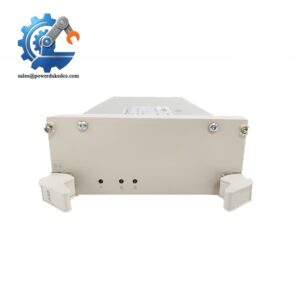
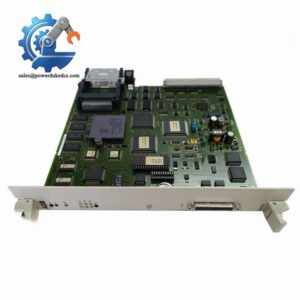
AMAT 0190-15779 10-0415
Module 5: Migration, Compatibility & Installation Traps
Replacement Matrix
| Replacement Type | Assessment |
|---|---|
| Drop-in Replacement | Conditional — appropriate only when 0190-15779 / 10-0415 / CFAC and the host-tool configuration match |
| Software Compatible | Conditional — verify the AMAT tool software, controller configuration, pneumatic recipe parameters, and installed interface configuration |
| Hardware Modification Required | Normally no for an exact like-for-like assembly; pneumatic connections, electrical interfaces, and mounting arrangement must match |
⚠️ Field Traps — Watch Out
1. Do not classify 0190-15779 as a generic DC power supply.
One current commercial listing makes that claim and assigns highly specific 480 VAC, 200 VDC, and 200 A characteristics, but multiple independent records instead identify the exact number with Schumacher 10-0415 CFAC pneumatic control equipment. The conflicting description should not be used for engineering specifications.
2. Verify the Schumacher 10-0415 identity.
An industrial repair listing explicitly catalogs APPLIED MATERIALS — AIR CONTROLLER_SCHUMACHER — 10-0415 / CFAC, while another current record maps 10-0415 directly to AMAT 0190-15779.
3. Check pneumatic connections before energization.
Confirm inlet/outlet ports, tubing routing, pressure requirements, and the controlled pneumatic function from the tool schematic. A mechanically similar controller with a different port arrangement can create a process-equipment fault.
4. Preserve the installed recipe and calibration information.
A pneumatic controller may depend on application-specific setpoints or calibration. Hardware replacement alone does not prove that the tool will reproduce the original pressure behavior.
Module 6: Quality Assurance SOP
- OEM anti-counterfeit visual inspection — inspect Applied Materials and/or Schumacher identification, 0190-15779 marking, 10-0415/CFAC references, serial labels, connectors, pneumatic fittings, enclosure, and manufacturing identifiers.
- Exact part-number verification — confirm 0190-15779 character-for-character and record the associated 10-0415 / CFAC designation where present.
- Host-tool verification — identify the exact Applied Materials equipment in which the removed controller was installed. Compare the cabinet BOM and pneumatic schematic before testing.
- Configuration record — photograph all electrical connectors, pneumatic ports, labels, adjustment controls, tubing interfaces, and visible configuration codes.
- Mechanical inspection — inspect fittings, tubing interfaces, mounting hardware, connectors, enclosure, and PCB areas for contamination, corrosion, cracked fittings, bent contacts, or impact damage.
- Power-on self-test (POST) — energize the controller only after confirming the correct electrical supply from the host-tool documentation. Record startup indications, current behavior, fault status, and abnormal heating.
- Pneumatic input verification — provide the approved clean, dry instrument-air source at the documented tool pressure and confirm stable controller response.
- Output-pressure verification — test representative controlled pneumatic outputs against the applicable AMAT/Schumacher service specification. Record commanded pressure, measured pressure, settling behavior, and any abnormal drift.
- Valve/control response verification — connect an approved pneumatic load or simulator and verify that commanded changes produce the expected actuator response.
- Leak-test verification — inspect and test pneumatic connections for unacceptable leakage before connecting the assembly to production equipment.
- Electrical interface verification — verify the controller’s actual field-control inputs and outputs against the confirmed tool schematic. Do not assume generic Ethernet, RS-232, RS-485, or analog I/O functionality without documentation.
- Communication handshake verification — perform only the communication test supported by the confirmed AMAT tool configuration. If the controller operates through discrete or analog interfaces rather than a digital network, document the applicable signal-level test instead.
- Recipe/setpoint validation — where the service environment permits, load the approved tool configuration and verify that pneumatic setpoints and monitored values correspond to the original equipment requirements.
- System-level validation — run an approved maintenance sequence without an uncontrolled production load and confirm correct interaction with the pneumatic subsystem.
- Final QC and packaging — document exact identifiers, host-tool compatibility, pneumatic test results, electrical-interface results, photographs, ESD protection, fitting protection, and packaging condition before shipment.
Engineering note: The most defensible identification for AMAT 0190-15779 is Schumacher 10-0415 / CFAC Pneumatic Controller. Multiple independent industrial records make this exact association, including an equipment listing that names 0190-15779 as “SCHUMACHER CFAC PNEUMATIC CONTROLLER” and an industrial repair database identifying 10-0415 / CFAC as an AMAT air controller. Public evidence does not adequately substantiate the detailed electrical specifications published by some other sellers, so those values should not be used as hard engineering specifications without physical/OEM verification.


 Start Chat