

Description
- Brand: Bently Nevada
- Full Model Number: 3500/25 125792-01
- Lifecycle Status: Legacy / established 3500 Series
- Core Function: Enhanced Keyphasor Module
- Top 3 Technical Specs: 3 input channels; accepts Keyphasor proximity and magnetic pickup signals; two-stage signal conditioning
- System: Bently Nevada 3500 Machinery Protection System
- Module Type: Enhanced Keyphasor Module
- Primary Function: Shaft speed and phase reference
- Inputs: Three Keyphasor transducer channels
- Data Role: Provides speed/phase timing signals to 3500 monitor modules
- Output: Conditioned Keyphasor signals distributed through the 3500 rack
- Stock & Condition: Exact stock confirmation required; New Surplus / Tested Refurbished; Emergency shipping subject to warehouse cutoff
Baker Hughes identifies the 3500/25 125792-01 as the Enhanced Keyphasor Module used in the 3500 Machinery Protection System. The module accepts inputs from proximity probes or magnetic pickups and provides processed Keyphasor signals for speed and phase-reference functions.
Module 3: Obsolescence & Supply Chain Deep Dive
A failed 3500/25 125792-01 can remove the shaft-speed and phase reference required by multiple 3500 monitor functions, even when the vibration-input cards themselves remain operational. The Enhanced Keyphasor Module processes up to three Keyphasor inputs, allowing the rack to derive precise rotational reference information from proximity probes or magnetic pickups. Without a valid reference pulse, speed-dependent measurements, phase relationships, and certain tracking functions can become unavailable or unreliable.
For TCO, replacing the exact Keyphasor module preserves the existing 3500 rack, probes, monitor cards, channel assignments, and machinery-monitoring architecture. There is little justification for a system-wide migration when the fault is isolated to the reference-signal module. Installation is usually straightforward; the critical work comes afterward, when each Keyphasor channel must be checked for correct pulse detection, speed calculation, phase reference, and downstream monitor behavior. (A spare that has already passed signal-simulation testing can materially reduce outage risk for rotating equipment.)
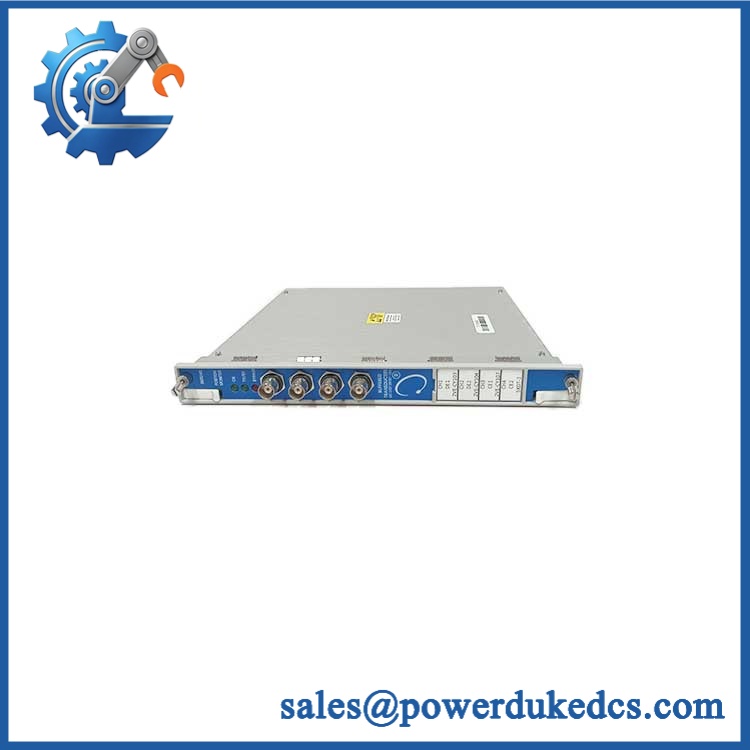
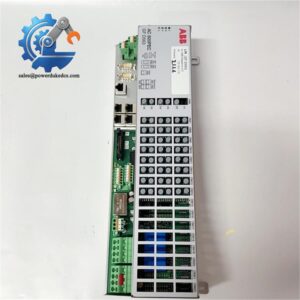
BENTLY 3500/25 125792-01
Module 4: Compatibility & Replacement Matrix
| Approval Item | Engineering Assessment |
|---|---|
| Exact Part Replacement | Drop-in Replacement for an installed 3500/25 using 125792-01 |
| Software Compatibility | Configuration-dependent; verify rack configuration and Keyphasor channel assignments |
| Firmware Flash | Normally not required as a routine field action; verify installed system generation |
| Hardware Modification | Normally none for an exact replacement |
| Module Type | Enhanced Keyphasor Module |
| Input Channels | 3 Keyphasor channels |
| Transducer Types | Proximity probe or magnetic pickup, subject to configured installation |
| Estimated Physical Swap | 30–90 minutes |
| Engineering / Commissioning Allowance | 300–1,000 planning range |
| Post-Replacement Testing | Required for all configured Keyphasor channels and downstream speed/phase functions |
The 3500/25 documentation describes the Enhanced Keyphasor Module as a three-channel interface that conditions Keyphasor signals for use by the 3500 system. It can accept proximity-transducer or magnetic-pickup inputs depending on the configured installation.
⚠️ Field Traps — Watch Out
- Input Transducer Mismatch: Verify whether the installed channel uses a Bently Nevada proximity probe or a magnetic pickup. The replacement must be tested using the same signal type and expected amplitude/frequency range.
- Channel Assignment Error: A mechanically identical replacement can still cause incorrect speed or phase information if the three channels are connected to the wrong field inputs. Record the original channel mapping before removing the failed module.
Module 5: Quality Assurance & Testing SOP
- OEM anti-counterfeit visual inspection — verify Bently Nevada markings, complete 125792-01 identification, front-panel labeling, connector geometry, PCB construction, and manufacturing traceability.
- Part-number and revision audit — record the exact 3500/25 125792-01 identification and all visible hardware markings.
- Mechanical inspection — examine the rack connector, module guides, ejector hardware, board edges, and mounting interfaces for damage or deformation.
- PCB condition inspection — check for corrosion, contamination, overheated components, cracked solder joints, damaged traces, and unauthorized modifications.
- Electrical pre-screening — perform continuity, grounding, isolation, and input/output path checks before energization.
- Power-on self-test (POST) — install the module in an approved 3500 test rack and confirm normal initialization and module recognition.
- Keyphasor input simulation — independently apply controlled pulse signals to all three configured input channels.
- Amplitude and threshold verification — verify reliable pulse detection across representative input levels and frequencies appropriate to the transducer type.
- Speed calculation test — apply controlled pulse frequencies corresponding to known rotational speeds and verify correct speed information at the rack interface.
- Phase-reference test — verify stable phase timing and correct reference-pulse generation for downstream monitor functions.
- Channel-isolation test — activate each Keyphasor input independently and confirm there is no unintended interaction between channels.
- Downstream monitor test — verify that connected 3500 monitor modules correctly receive Keyphasor information and do not generate nuisance faults.
- Extended operating test — monitor pulse detection, speed stability, diagnostics, and communication behavior over an extended energized period.
- Final QC release — photograph the identification, retain pulse/speed test records, package with ESD protection, and preserve complete traceability.
For this module, a simple voltage check is insufficient. The meaningful acceptance criteria are pulse detection, threshold behavior, speed calculation, phase reference, channel independence, and correct interaction with the installed 3500 monitoring modules.
Module 6: Procurement & Lifecycle FAQ
Q1. Is BENTLY 3500/25 125792-01 genuinely in stock, and what is the cutoff for emergency shipping?
Exact availability should be confirmed against 3500/25 125792-01, quantity, condition, and destination before PO release. Emergency requirements should be identified before the daily warehouse cutoff so physical inventory, testing status, and same-day carrier options can be confirmed.
Q2. How do you verify the condition and authenticity of an obsolete 125792-01?
Require OEM marking inspection, complete part-number verification, PCB and connector examination, electrical screening, powered 3500-rack testing, three-channel pulse simulation, speed verification, phase-reference testing, and downstream monitor checks. Keep the test record linked to the individual module.
Q3. Are there firmware compatibility issues engineers should check before issuing the PO?
The primary engineering concern is Keyphasor signal and system configuration compatibility, rather than a routine firmware flash. Confirm the rack configuration, transducer type, channel assignment, pulse characteristics, and downstream monitor dependencies before commissioning.
Q4. Can another 3500/25 Keyphasor module replace 125792-01?
Do not assume that every 3500/25-family unit is interchangeable. Verify the complete part number and hardware revision, then match the installed transducer type and three-channel wiring. For a critical rotating machine, the replacement should be validated under the actual Keyphasor signal conditions before return to service.
Q5. What warranty and return terms should procurement require?
Require a written warranty period, DOA criteria, return-authorization process, serial/part-number traceability, and exclusions for incorrect installation, wiring errors, electrical overstress, or damage to the module during field work. The quotation should explicitly state 3500/25 125792-01 and the tested condition.



 Start Chat