

Description
- Brand: Bently Nevada
- Full Model Number: 3500/61
- Lifecycle Status: Active 3500 Series product family
- Core Function: Six-channel temperature monitoring with recorder outputs
- Top 3 Technical Specs: 6 input channels; RTD or thermocouple inputs; 4–20 mA recorder output per channel
- System: Bently Nevada 3500 Machinery Protection System
- Module Type: Temperature Monitor with Recorders
- Inputs: 1–6 RTDs and/or thermocouples, depending on I/O configuration
- Alarm Function: Programmable temperature and temperature-differential setpoints
- Recorder Outputs: Six individual 4–20 mA outputs
- I/O Options: RTD/TC non-isolated, isolated TC, or barrier versions
- Software: 3500 Rack Configuration Software
- Stock & Condition: Exact I/O configuration and stock confirmation required; New OEM / New Surplus / Tested Refurbished; Emergency shipping subject to cutoff
Baker Hughes identifies the 3500/61 as a six-channel temperature monitor that accepts RTD and thermocouple inputs. Unlike the 3500/60, the 3500/61 provides an individual 4–20 mA recorder output for each of its six channels. Different I/O modules are available for non-isolated RTD/TC, isolated thermocouple, and barrier installations.
Module 3: Obsolescence & Supply Chain Deep Dive
A failed 3500/61 can remove temperature protection from bearing, thrust, motor, compressor, steam, or other critical process locations while the remaining 3500 rack continues operating. The module conditions up to six RTD or thermocouple signals and compares the measured values with user-programmable alarm setpoints. For applications that require plant-side analog recording, each channel also provides its own 4–20 mA recorder output.
From a TCO perspective, replacing the temperature-monitor module can preserve the existing 3500 rack, field sensors, alarm logic, and recorder/DCS interfaces. A wider system replacement would add panel engineering, wiring changes, configuration work, commissioning, and outage exposure without necessarily improving the failed function. The real procurement issue is the I/O variant: a standard RTD/TC module, isolated-TC module, and barrier module are not interchangeable simply because the front panel says 3500/61. (For an emergency spare, the installed I/O part number should be captured before the purchase order is released.)
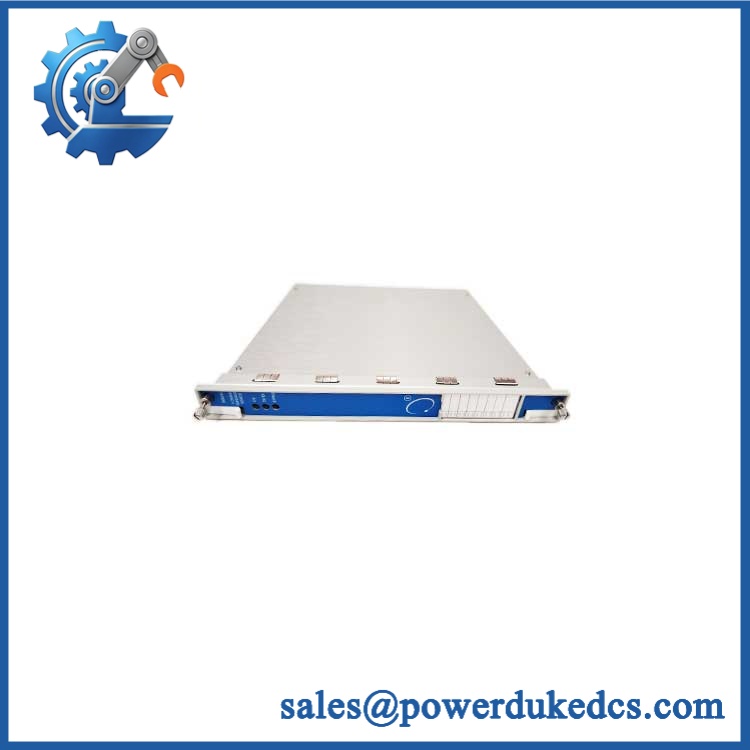
BENTLY 3500/61
Module 4: Compatibility & Replacement Matrix
| Approval Item | Engineering Assessment |
|---|---|
| Exact Part Replacement | Drop-in Replacement when the 3500/61 monitor and I/O configuration match |
| Software Compatibility | Configuration-dependent; verify channel type, scaling, setpoints, and alarm logic |
| Firmware Flash | May be required depending on installed hardware/software generation |
| Hardware Modification | Normally none for an exact I/O configuration match |
| Input Channels | 6 |
| Input Types | RTD and/or thermocouple |
| Recorder Outputs | 6 × 4–20 mA |
| I/O Variants | RTD/TC non-isolated; isolated TC; barrier |
| Temperature Differential | Supported |
| Estimated Physical Swap | 30–90 minutes |
| Engineering / Commissioning Allowance | 300–1,250 planning range |
| Post-Replacement Testing | Required for all active temperature channels, alarms, and recorder outputs |
The 3500/61 ordering structure contains several I/O options. The documentation lists 01 as RTD/TC temperature I/O with internal terminations, 02 as the external-termination version, 03/04 as isolated-TC variants, and 05 as the barrier temperature I/O option. ([turn551753search1])
⚠️ Field Traps — Watch Out
- I/O Variant Mismatch: Do not order a generic 3500/61 without identifying the installed I/O type. External-termination and internal-termination versions use different field interfaces, while isolated-TC and barrier versions have different electrical requireme
- Firmware / Software Compatibility: Bently Nevada’s maintenance documentation specifies minimum firmware/software combinations for 3500/61 installations. An older rack may therefore require a controlled compatibility review before installing a newer or differently revised moni
Module 5: Quality Assurance & Testing SOP
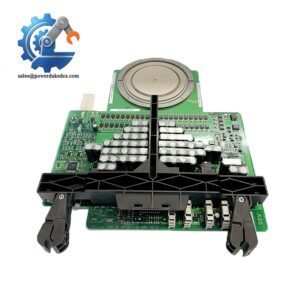
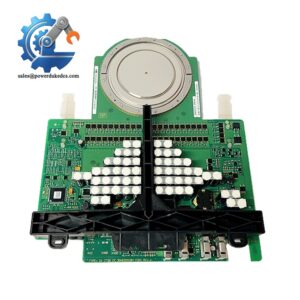
- OEM anti-counterfeit visual inspection — verify Bently Nevada markings, 3500/61 identification, front-panel status LEDs, connector arrangement, PCB construction, and manufacturing traceability.
- Complete configuration audit — record the exact PWA/module identification and the installed I/O type: RTD/TC, isolated TC, barrier, internal termination, or external termination.
- Mechanical inspection — examine card guides, ejector hardware, connectors, terminal interfaces, and PCB edges for physical damage or deformation.
- PCB condition inspection — check for corrosion, contamination, overheated components, cracked solder joints, damaged traces, and unauthorized rework.
- Electrical pre-screening — verify continuity, grounding, isolation, and abnormal resistance before energization.
- Power-on self-test (POST) — install the monitor in an approved 3500 rack and verify normal initialization and diagnostic status.
- Status LED verification — confirm expected OK, TX/RX, and Bypass behavior for the installed configurat
- RTD simulation — where applicable, apply calibrated RTD resistance values to all configured channels and verify correct temperature conversion.
- Thermocouple simulation — where applicable, inject controlled thermoelectric-equivalent signals and verify correct temperature indication.
- Channel scaling verification — check low-, mid-, and high-range points for each active channel and confirm correct engineering-unit scaling.
- Temperature differential testing — where configured, simulate paired temperature values and verify the calculated differential.
- Alarm simulation — drive each applicable channel through configured Alert/Danger thresholds and verify alarm behavior and relay interaction.
- 4–20 mA load testing — independently test all six recorder outputs with representative loop loads and verify output tracking.
- Isolation verification — for isolated-TC versions, verify the specified channel-to-channel isolation and absence of unintended signal coupling.
- Barrier verification — for barrier configurations, verify the correct barrier I/O arrangement and associated grounding/interface requirements.
- Configuration-retention test — perform a controlled power cycle and confirm that channel configuration, setpoints, and output assignments remain correct.
- Extended operating test — monitor temperature stability, analog-output behavior, diagnostics, and intermittent channel faults.
- Final QC release — photograph the identification, retain channel-by-channel test data, document the exact I/O variant, package using ESD protection, and preserve traceability.
The manufacturer’s documentation makes the testing requirements configuration-specific: the 3500/61 may use RTDs, thermocouples, isolated thermocouples, or barrier interfaces, and each channel can provide its own 4–20 mA recorder out
Module 6: Procurement & Lifecycle FAQ
Q1. Is BENTLY 3500/61 genuinely in stock, and what is the cutoff for emergency shipping?
The 3500/61 family is currently documented by Bently Nevada, but exact inventory depends on the monitor revision and I/O configuration. Before emergency shipment, confirm the complete installed configuration, required quantity, destination, and warehouse dispatch cut
Q2. How do you verify the condition and authenticity of a 3500/61?
Require OEM marking inspection, complete PWA and I/O identification, PCB and connector examination, electrical screening, powered 3500-rack testing, six-channel temperature simulation, alarm testing, and six-channel 4–20 mA output verification. For isolated or barrier versions, include the corresponding electrical-interface checks.
Q3. Are there any firmware compatibility issues I should warn my engineers about before issuing the PO?
Yes. Bently Nevada maintenance documentation specifies minimum firmware and 3500 software combinations for 3500/61 installations, with later recommendations for certain functions. Engineers should record the existing 3500/20 firmware, 3500 Rack Configuration Software version, and 3500/61 firmware revision before approving the replacem
Q4. Can any 3500/61 I/O module replace the installed one?
No. The ordering structure distinguishes internal versus external termination, RTD/TC versus isolated-TC, and barrier versions. External termination blocks also cannot be used with internal-termination I/O modules. Match the complete I/O configuration before purch
Q5. What warranty and return terms should procurement require?
Require a written warranty period, DOA criteria, return-authorization procedure, serial/part-number traceability, and exclusions for incorrect field wiring, incompatible I/O configuration, electrical overstress, or unauthorized configuration changes. The quotation should state 3500/61, the exact I/O variant, supplied condition, and tested sttus.


 Start Chat