

Description
- Brand: Bently Nevada
- Full Model Number: 135613-02
- Lifecycle Status: Current / Revised to 135613-02-00
- Core Function: High-temperature turbine case expansion measurement
- Top 3 Technical Specs: 50.8 mm (2.0 in) linear range; 152.4 mm (6.0 in) rod; 0.10 V/mm electrical scale factor
- Stock & Condition: Physical stock verification required; New Surplus / Tested Refurbished; Emergency dispatch subject to QA release
Module 3: Obsolescence & Supply Chain Deep Dive
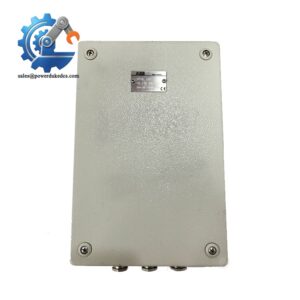
A failed case-expansion transducer can compromise turbine supervisory instrumentation even when the rest of the machinery monitoring system remains operational. The Bently Nevada 135613-02 is identified as a High Temperature Case Expansion Transducer Assembly (DC) for measuring thermal growth of large turbine casings relative to the foundation. Current product references show the earlier 135613-02 designation revised to the fuller 135613-02-00 ordering number. The 02 linear-range option corresponds to 50.8 mm (2.0 in) with a 152.4 mm (6.0 in) rod, while the 00 spring option specifies no spring return.
For a plant maintaining an established turbine TSI system, replacing the transducer assembly can cost substantially less than redesigning the case-expansion measurement chain. Existing installation hardware, signal conditioning, monitoring channels, calibration procedures, and operator logic can remain in service when the replacement is correctly matched. That reduces outage engineering and commissioning work while preserving the installed measurement strategy. The key TCO issue is not firmware; it is mechanical configuration and calibration. —The buyer should verify the sensing range, rod length, spring configuration, mounting arrangement, electrical scale factor, and compatibility with the associated case-expansion monitoring input before releasing the PO.
Module 4: Compatibility & Replacement Matrix
| Replacement Scenario | Classification | Engineering / Procurement Guidance |
|---|---|---|
Exact 135613-02 replacing the installed 135613-02 assembly |
Drop-in Replacement — subject to verification | Match range, rod length, spring configuration, mounting, and output characteristics |
135613-02-00 replacing 135613-02 |
Direct revised designation | Verify the complete ordering code and physical configuration before installation |
| Different 135613 range option | Hardware Modification / Engineering Review | Confirm measuring range, rod length, calibration, and mechanical travel |
| Different case-expansion transducer technology | Hardware Modification | Requires mounting, signal, calibration, and monitoring-system review |
Estimated switch cost/time: For a verified replacement already available at the site, plan approximately 2–4 hours for mechanical removal, installation, wiring verification, calibration, and functional checkout. A newly sourced unit may require 1–5 business days for inspection and transportation, depending on destination and carrier cutoff. These are planning estimates.
Field Traps — Watch Out
- Range and rod-length mismatch: The
02configuration specifies a 50.8 mm (2.0 in) linear range with a 152.4 mm (6.0 in) rod. A different 135613 range option should not be treated as equivalent. - Spring configuration: The
00suffix specifies without spring return. Confirm the installed mechanical arrangement before approving a different spring option. - Part-number revision: Field and supplier references identify
135613-02as revised to135613-02-00. Receiving inspection should record the actual full ordering number on the nameplate. - Calibration direction: A physically compatible assembly can still produce incorrect case-growth readings if the electrical scaling and zero position are not matched to the existing monitoring setup.
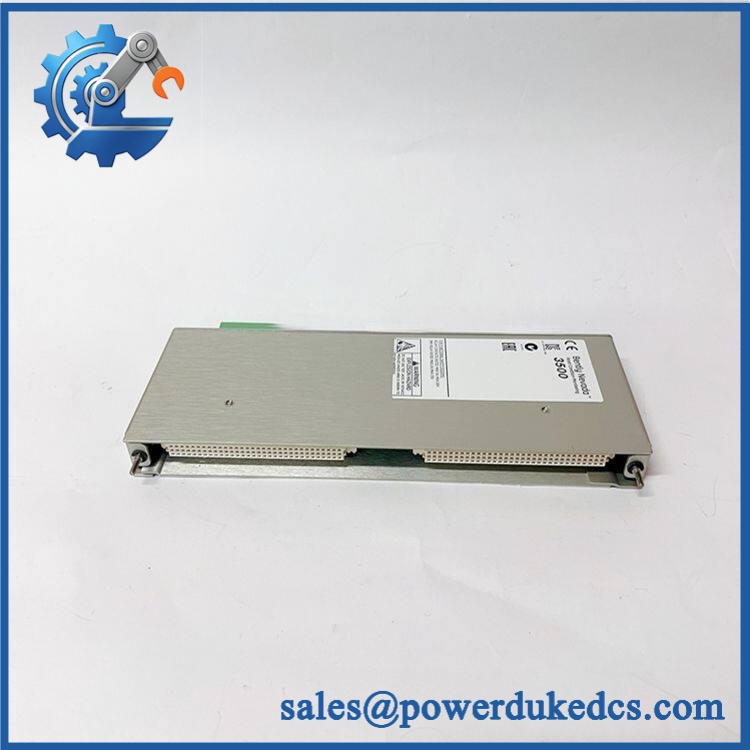
Bently Nevada 135613-02
Module 5: Quality Assurance & Testing SOP
A case-expansion transducer is a measurement device, so QA must cover mechanical travel and calibrated electrical response rather than appearance alone.
- Part-number verification: Confirm
135613-02/135613-02-00, complete ordering suffix, serial number, and manufacturer identification. - OEM anti-counterfeit visual inspection: Inspect Bently Nevada markings, housing finish, connector/interface details, rod construction, labels, and evidence of unauthorized modification.
- Mechanical inspection: Check the rod, sensing assembly, mounting body, fasteners, seals, and mechanical travel for damage or deformation.
- Range verification: Confirm the 50.8 mm (2.0 in) linear range and 152.4 mm (6.0 in) rod configuration.
- Spring verification: Confirm the specified no-spring-return configuration.
- Continuity testing: Check applicable electrical paths and connector integrity before signal testing.
- Power/interface verification: Connect the transducer to a controlled DC measurement setup appropriate to the installed monitoring interface.
- Output calibration test: Move the sensing mechanism through representative positions and verify the expected electrical response.
- Scale-factor verification: Check the specified 0.10 V/mm (2.5 V/in) electrical scale factor against calibrated displacement.
- Linearity testing: Measure several points across the working range and compare the results against the applicable acceptance limits.
- Repeatability test: Cycle the transducer through representative travel points and verify consistent return readings.
- Temperature/environment inspection: Confirm suitability for the specified installation environment; published specifications list −25°C to +85°C operating temperature for the assembly.
- Extended observation: Monitor output stability during repeated measurement cycles to identify intermittent electrical or mechanical behavior.
- Final QC release: Record serial number, full ordering code, calibration results, measured scale factor, photographs, condition grade, test date, and QC authorization.
The published technical data also gives a typical 200 Hz −3 dB frequency, 0.125% full-scale stability, and less than 0.25% full-scale non-linearity for the specified assembly. These values are useful as QA reference points when building an acceptance test.
Module 6: Procurement & Lifecycle FAQ
Q1. Is the Bently Nevada 135613-02 genuinely in stock, and what is the cutoff for emergency shipping?
Physical inventory should be verified against the exact transducer assembly and full ordering suffix before the PO is accepted. Emergency dispatch depends on QA completion, warehouse location, carrier pickup time, and destination. Same-day shipment should only be confirmed after the actual unit has been physically identified and released.
Q2. How do you guarantee the condition and authenticity of a 135613-02?
Require exact model and suffix verification, OEM visual inspection, mechanical-travel inspection, electrical continuity testing, calibrated output testing, and documented QC results. The actual serial-number label and physical condition should be photographed for the procurement record.
Q3. Is 135613-02 the same as 135613-02-00?
Current product references identify 135613-02-00 as the fuller revised designation corresponding to the earlier 135613-02 reference. The complete ordering suffix should be checked against the installed unit before purchase.
Q4. Does the 135613-02 require firmware compatibility checks?
No firmware flash is normally associated with the transducer assembly itself. Engineering review should instead focus on mechanical installation, measuring range, rod length, spring configuration, electrical scale factor, calibration, and compatibility with the receiving TSI input.
Q5. What warranty and return terms should be written into the PO?
Specify warranty duration, DOA coverage, mechanical-travel and signal-performance coverage, calibration conformity, return authorization, inspection period, and serial-number traceability. For refurbished units, require the actual calibration/test record and define coverage for failures discovered during commissioning.


 Start Chat