

Description
- Brand: Bently Nevada
- Full Model Number: 22810-01-05-50-02
- Lifecycle Status: Legacy / Obsolescence-risk
- Core Function: Non-contact shaft vibration and position measurement
- Top 3 Technical Specs: Proximity transducer system | 5 m cable configuration | Vibration and shaft-position monitoring
- Stock & Condition: Physical stock confirmation required | New Surplus / Tested Refurbished by lot | Emergency dispatch subject to inventory and carrier cutoff
Module 3: Obsolescence & Supply Chain Deep Dive
Sourcing an exact replacement for an installed Bently Nevada proximity measurement chain can become difficult when the original system has moved into the legacy-spares market. 22810-01-05-50-02 is identified by multiple industrial parts references as a Bently Nevada proximity transducer system, although publicly available records do not consistently expose a complete manufacturer configuration breakdown for this exact ordering code. Current listings place the part within Bently Nevada machinery-monitoring inventory, while separate Bently Nevada documentation describes proximity-transducer systems as the measurement path for shaft vibration, position, and speed-related applications.
For a plant already engineered around the corresponding proximity measurement arrangement, preserving the installed sensor architecture can cost less than changing the complete monitoring chain. The TCO calculation should include probe replacement, cable routing, driver/interface changes, calibration, alarm-setting verification, commissioning, and machinery outage exposure. Because publicly available information for this exact code is inconsistent, the procurement decision should be based on the actual nameplate, component breakdown, and installed application rather than a generic catalog description. (For legacy vibration-monitoring assets, verified physical stock can remove a sourcing delay that would otherwise extend a maintenance outage.)
Module 4: Compatibility & Replacement Matrix
| Purchase Review Item | Engineering Guidance |
|---|---|
| Replacement Classification | Configuration-Matched Replacement — conditional |
| Hardware Modification | None expected when the complete installed assembly is matched |
| Primary Function | Non-contact machinery vibration / shaft-position measurement |
| System Type | Bently Nevada proximity transducer application |
| Cable Configuration | Public listings associate this code with a 5 m cable configuration; verify against the actual unit |
| Software Compatibility | Generally not the primary issue; sensor/interface compatibility is more important |
| Typical Switch Time | ~2–6 labor hours depending on calibration and field access |
| Typical Engineering Cost | Approximately 300–1,200 excluding outage and site travel |
| Recommended Migration Path | Photograph existing assembly → verify exact code and component breakdown → identify sensor/interface → replace → calibrate → verify vibration/position values |
A key procurement issue is that public records do not provide a sufficiently authoritative configuration table for every segment of 22810-01-05-50-02. One current listing describes it as a proximity transducer system, while another simply categorizes the same code as a vibration-monitoring product. Accordingly, engineering should not approve a substitute based solely on the broad description.
Field Traps — Watch Out
- Exact configuration uncertainty: Verify the supplied unit against the installed probe, extension cable, driver/interface, connector arrangement, and measurement range. Do not assume that another Bently Nevada proximity assembly is electrically equivalent.
- Calibration and gap setting: After installation, verify probe-to-target geometry and output response using the applicable Bently Nevada procedure for the actual transducer family. A physically compatible assembly can still produce incorrect vibration or position values if the installation gap is wrong.
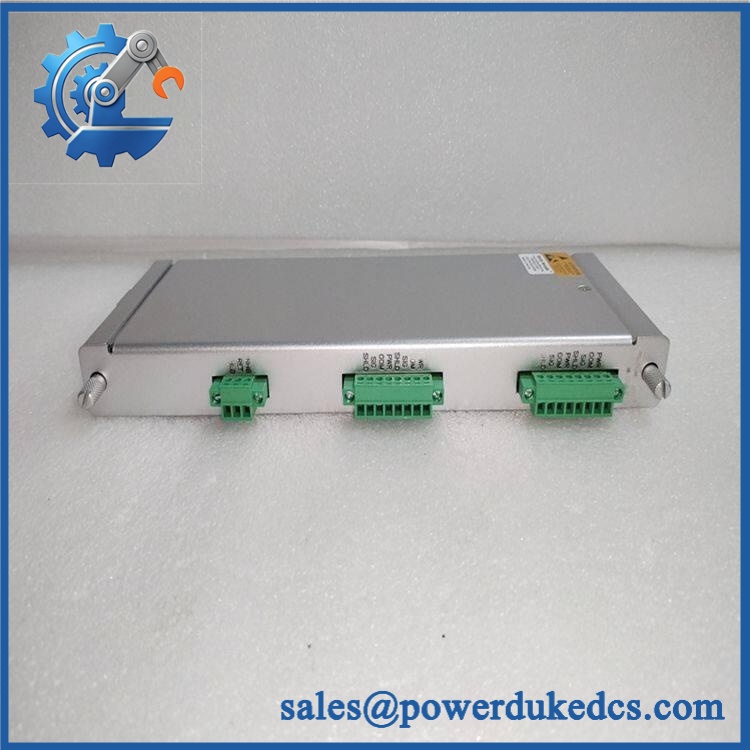
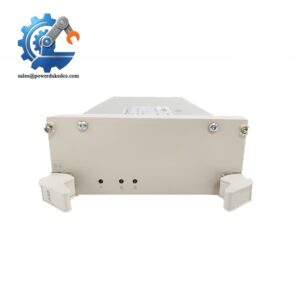
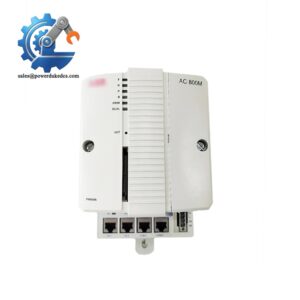
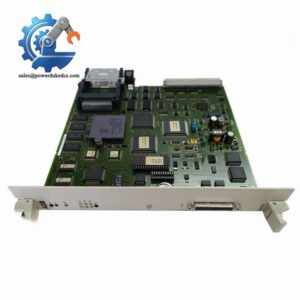
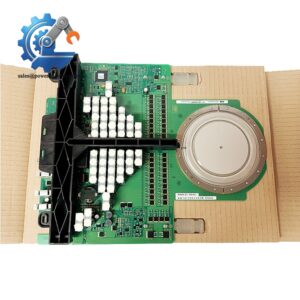
Bently Nevada 22810-01-05-50-02
Module 5: Quality Assurance & Testing SOP
A strict pre-shipment inspection for Bently Nevada 22810-01-05-50-02 should include:
- Identity verification: Confirm the complete 22810-01-05-50-02 marking, serial information, labels, connectors, and supplied component configuration.
- OEM anti-counterfeit visual inspection: Examine Bently Nevada markings, housing, probe/driver identification, cable construction, connector molding, and evidence of unauthorized modification.
- Mechanical inspection: Check the probe or transducer body, cable, connectors, threaded interfaces, strain reliefs, and mounting components for damage.
- Cable continuity test: Verify conductor continuity and insulation condition across the complete supplied cable assembly.
- Power-on test: Where the assembly includes an externally powered driver/interface, energize it using the specified test arrangement and check normal status indications.
- Signal output test: Apply a controlled simulated target or calibrated test fixture and verify stable measurement output.
- Vibration simulation: Use a suitable calibrated vibration input to verify measurement response across representative operating points.
- Position verification: Confirm shaft-position/displacement response where applicable.
- Gap and linearity check: Verify installation-related measurement behavior against the applicable Bently Nevada transducer specification.
- Temperature/operating check: Monitor output stability under representative operating conditions.
- Extended run test: Check for intermittent signal loss, drift, noise, connector faults, or output instability.
- Final QC: Record part number, serial number, measured outputs, cable-test results, condition grade, photographs, and packaging approval.
Because the available public documentation for this exact ordering code is incomplete, the QA record should explicitly document what components were physically supplied and tested rather than relying on the part number alone.
Module 6: Procurement & Lifecycle FAQ
Is Bently Nevada 22810-01-05-50-02 genuinely in stock, and what is the cutoff for emergency shipping?
The part is currently listed by several industrial suppliers, including one listing that marks it as in stock. That does not establish physical availability at every supplier, so the exact serial-numbered inventory should be confirmed before PO release. Emergency dispatch depends on stock location, payment clearance, export documentation, and the carrier pickup cutoff.
How do you verify the condition and authenticity of this legacy proximity assembly?
Require complete part-number and serial verification, OEM marking inspection, mechanical inspection, cable continuity testing, signal-output testing, and application-specific vibration/position verification. The supplier should identify whether the shipment is a complete system or only one component of the assembly.
Are there firmware compatibility issues engineers should check before issuing the PO?
Firmware is generally not the primary compatibility concern for a passive proximity measurement assembly. The critical checks are the exact probe/driver combination, measurement range, cable configuration, interface requirements, connector type, and the installed monitoring system.
Can 22810-01-05-50-02 be installed as a direct replacement?
Treat it as a configuration-matched replacement, not an unconditional drop-in. Public descriptions of this exact code are inconsistent, so the existing installed assembly should be photographed and its component-level configuration verified before purchase.
What warranty and return terms should procurement require?
The quotation should specify the exact 22810-01-05-50-02 code, supplied component breakdown, condition grade, serial traceability, calibration/test scope, warranty period, DOA coverage, and return authorization procedure. For a measurement assembly, the acceptance record should include actual signal-test results rather than visual inspection alone.




 Start Chat