

Description
- Brand: Bently Nevada
- Full Model Number: 330980-51-05
- Lifecycle Status: Obsolete / Discontinued
- Core Function: 3300 XL NSv Proximitor signal conditioning
- Top 3 Technical Specs: 5.0 m system length; DIN-rail mount; 24 VDC nominal system supply / 200 mV/mil output
- Stock & Condition: New Surplus / Tested Stock / Fast Dispatch subject to physical inventory confirmation
The 330980-51-05 is identified by multiple industrial-parts sources as discontinued, while the underlying device is a 3300 XL NSv Proximitor Sensor with a 5.0 m system-length option and DIN mounting.
Module 3: Obsolescence & Supply Chain Deep Dive
A failed 3300 XL NSv Proximitor can stop a vibration-monitoring channel even when the rest of the machinery protection system remains serviceable. For plants maintaining older rotating-equipment assets, the practical problem is rarely finding a proximity sensor; it is obtaining the exact electrical, mechanical, approval, and system-length configuration without forcing an unnecessary redesign. The Bently Nevada 330980-51-05 is configured for a 5.0 m system length and DIN-rail installation, making it particularly relevant where the installed architecture depends on the NSv configuration. Third-party lifecycle records currently identify this exact part number as discontinued, so procurement should treat available inventory as a finite replacement pool rather than assume indefinite factory supply.
From a TCO perspective, replacing one failed Proximitor is usually a much smaller intervention than redesigning an entire proximity-monitoring channel. The 330980-51-05 accepts compatible 3300 NSv or 3300 RAM probe and extension-cable arrangements, and documented upgrade scenarios can retain existing probe and cable hardware where compatibility conditions are satisfied. Its published electrical characteristics include a 200 mV/mil scale factor and a 1.5 mm linear range. The economic case becomes stronger when avoiding engineering rework, cabinet modification, recommissioning, loop checkout, and extended outage exposure. For critical machinery, the value is therefore measured not only by unit purchase price, but by the downtime avoided.
Module 4: Compatibility & Replacement Matrix
| Engineering Check | Assessment for 330980-51-05 |
|---|---|
| Replacement Classification | Drop-in Replacement within a correctly matched 3300 XL NSv installation |
| Software Compatibility | No user firmware update normally required; analog signal-conditioning hardware |
| Hardware Modification | Normally not required for a matching NSv DIN-mount configuration |
| System Length | 5.0 m / 16.4 ft configuration |
| Mounting | DIN rail |
| Electrical Output | 200 mV/mil nominal scale factor; 50 Ω output resistance |
| Typical Switch Time | Approximately 1–4 hours for an experienced technician, assuming wiring, probe, cable, and monitoring input are already compatible |
| Downtime Exposure | Often limited to isolation, replacement, gap verification, loop checkout, and machinery-monitoring verification |
| Engineering Cost Exposure | Typically far below a full monitoring-channel redesign; actual labor depends on site procedures and hazardous-area requirements |
The manufacturer family configuration matters. Option 51 corresponds to the 5.0 m system-length/DIN-mount configuration, while option 05 is associated with multiple agency approvals. Published specifications also identify an operating range around −52°C to +100°C, with the exact approved configuration requiring verification against the project certification requirements.
Field Traps — Watch Out
Probe and cable mismatch: Do not treat every 3300-series proximity probe as interchangeable. The 330980-51-05 is intended for the 3300 XL NSv system and can accept specified 3300 NSv or 3300 RAM probe/cable combinations. Verify the installed probe type, extension cable, total system length, and target application before issuing the PO.
Calibration target and gap: Published accuracy conditions reference a 1.0 mm (40 mil) probe gap and an AISI 4140 steel target of at least 31 mm diameter under specified test conditions. A mechanically compatible installation can still produce incorrect vibration or position readings when the target geometry or gap is wrong.
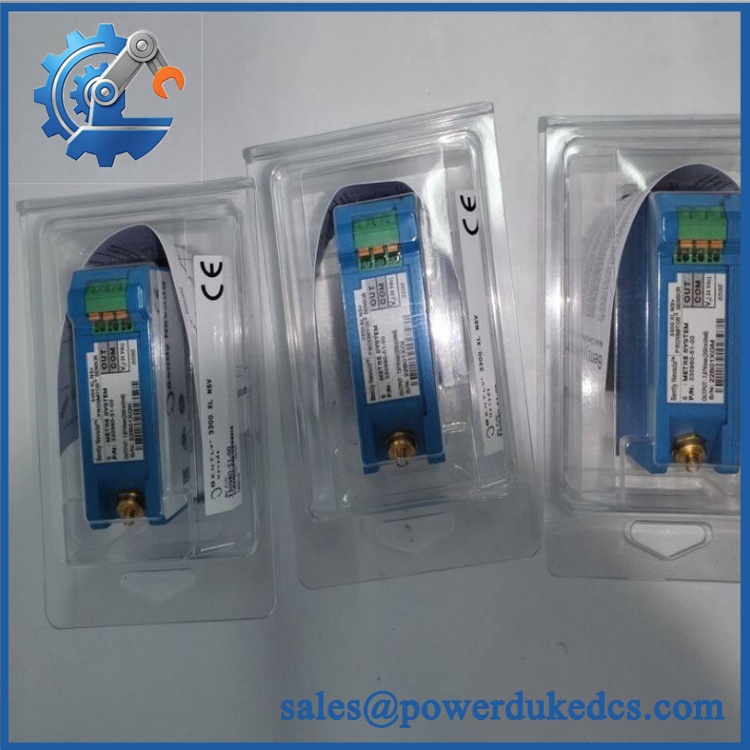
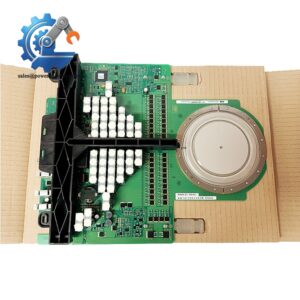
Bently Nevada 330980-51-05
Module 5: Quality Assurance & Testing SOP
For surplus or discontinued inventory, the inspection record should be tied to the exact 330980-51-05 part number, not merely the 3300 series.
1. Identity and anti-counterfeit inspection
Verify manufacturer markings, part number, option code, label quality, housing construction, terminal arrangement, mounting features, and traceability information. Compare the physical unit against known Bently Nevada product documentation and available reference images. Photograph the label before packaging.
2. Mechanical inspection
Check the enclosure for cracks, deformation, corrosion, impact marks, loose terminals, damaged DIN-mount hardware, and evidence of unauthorized opening. Inspect connector interfaces and terminal blocks under magnification where necessary.
3. Power-on self-test (POST)
Apply controlled DC power using a calibrated test setup. Confirm expected power consumption and verify that the unit reaches its normal operating condition without abnormal indication, excessive current draw, or thermal behavior.
4. Signal-conditioning test
Connect an approved compatible probe/test simulator and verify the Proximitor output against calibrated displacement inputs. Check the expected 200 mV/mil scale factor and confirm stable output behavior across the applicable measurement range.
5. I/O load testing
Test the output under representative load conditions, including the monitoring-input configuration expected at the installation. Verify output resistance, signal stability, and absence of intermittent behavior.
6. Environmental and connection checks
Inspect terminal retention and conductor clamping. Confirm that installation materials and environmental requirements are appropriate for the specified temperature and hazardous-area approval configuration.
7. Final QC record
Record part number, serial/traceability information where available, test date, measured electrical values, technician identification, inspection photographs, and final disposition. Units that fail any electrical or mechanical checkpoint should be segregated rather than returned to saleable inventory.
Module 6: Procurement & Lifecycle FAQ
Is the 330980-51-05 genuinely in stock, and what is the emergency-shipping cutoff?
Stock should be confirmed against the physical unit count immediately before PO release. Because this part is identified as discontinued, availability can change faster than factory-active components. For emergency requirements, the shipping cutoff should be confirmed together with the quotation, including quantity, destination, inspection status, and carrier service.
How do you verify the condition and authenticity of an obsolete or surplus 330980-51-05?
The unit should undergo part-number verification, label and housing inspection, terminal inspection, electrical testing, and signal-output verification. The final QC record should identify the exact unit tested. For high-risk applications, request serial/traceability photographs and the applicable test report before shipment.
Are there firmware compatibility issues engineers should check before issuing the PO?
The 330980-51-05 is analog signal-conditioning hardware and is not normally treated as a firmware-managed field device. The larger compatibility risk is the probe, extension cable, system length, target material, gap, monitoring input, and approval configuration. Engineers should verify these parameters against the existing installation drawing before approving substitution.
What warranty and return terms should procurement require?
The commercial warranty should be stated on the quotation or PO acknowledgment, including coverage period, test basis, DOA handling, and return authorization procedure. For obsolete inventory, procurement should avoid relying on an assumed OEM warranty; the seller’s written warranty should control the transaction.
Is a newer monitoring platform required instead of buying this obsolete Proximitor?
Not necessarily. When the existing machinery-monitoring architecture remains serviceable, replacing only the failed Proximitor can preserve the installed probe, cabling, monitoring hardware, and engineering configuration where compatibility is confirmed. That approach can materially reduce outage duration and engineering expenditure compared with replacing an entire monitoring channel. Bently Nevada continues to support condition-monitoring applications across industrial machinery, but the appropriate migration decision depends on the installed system and lifecycle strategy.



 Start Chat