

Description
- Brand: Bently Nevada
- Full Model Number: 3500/60
- Lifecycle Status: Active / Current Product Family
- Core Function: Six-channel RTD and thermocouple temperature monitoring
- Top 3 Technical Specs: 6 channels; RTD/TC inputs; programmable alarm setpoints
- Stock & Condition: New surplus / tested refurbished — verify exact I/O module and approval configuration before PO
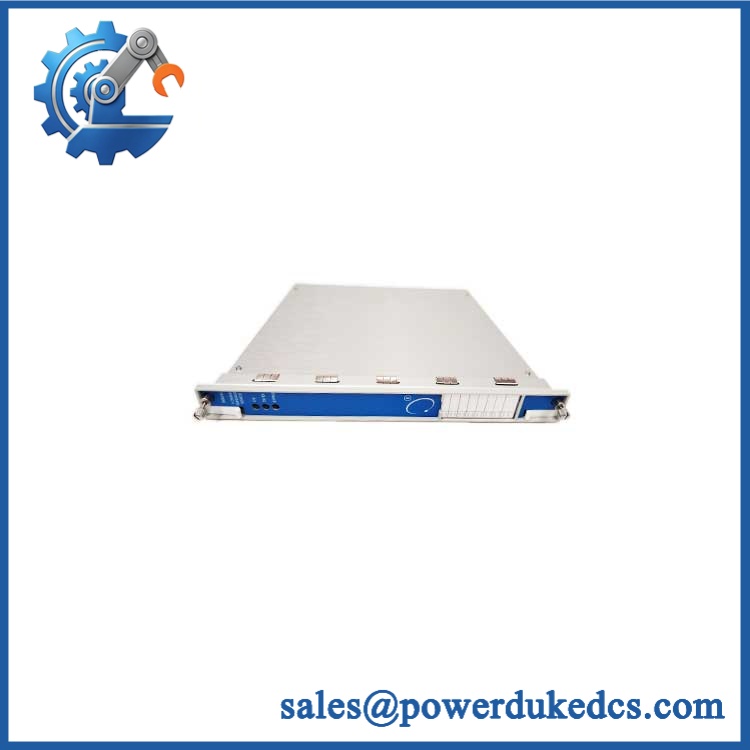
The 3500/60 is Bently Nevada’s six-channel temperature monitor for RTD and thermocouple inputs. The monitor supports temperature and differential-temperature measurements and can drive alarm logic through the 3500 relay architecture.
Module 3: Obsolescence & Supply Chain Deep Dive
When a 3500/60 channel fails, the immediate problem is often loss of bearing, thrust, winding, compressor, steam, or other process-temperature protection data. The 3500/60 processes six RTD or thermocouple inputs and compares the conditioned measurements against user-programmable alarm setpoints. That makes the monitor an important part of the protection path even though the temperature sensors themselves may remain functional.
From a TCO perspective, replacing the failed monitor while retaining the existing 3500 rack and field sensors is generally more economical than redesigning the complete temperature-monitoring system. The important procurement distinction is that 3500/60 is a monitor family, not one universal hardware configuration. Bently Nevada provides separate RTD/TC I/O modules for internal termination, external termination, isolated thermocouples, and internal barriers. The exact I/O assembly must therefore be matched to the installed field wiring and sensor architecture — particularly in hazardous-area installations.
Module 4: Compatibility & Replacement Matrix
| Procurement Check | 3500/60 Assessment | Engineering Action |
|---|---|---|
| Replacement Type | Drop-in Replacement when the same 3500/60 monitor and compatible I/O configuration are used | Match monitor, I/O type, and approval |
| Software Compatibility | Configuration-dependent | Verify firmware, channel setup, sensor type, and alarm parameters |
| Hardware Modification | Normally none for an identical installation | Confirm I/O termination and sensor wiring |
| Typical Switch Time | Approx. 1–3 hours | Allow additional time for calibration and alarm verification |
| Estimated Engineering / Testing Cost | Approx. 500–2,000 | Include RTD/TC simulation and relay testing |
| Alternative Migration | Newer 3500 temperature-monitoring architecture | Requires configuration and wiring review |
Field Traps — Watch Out
I/O module selection: The 3500/60 can use several I/O configurations. Current documentation identifies non-isolated internal and external termination versions, isolated TC versions, and an internal-barrier version. These configurations are not interchangeable without checking the field wiring and application.
3500/60 versus 3500/61: Both provide six-channel temperature monitoring, but the 3500/61 adds individual 4–20 mA recorder outputs, whereas the 3500/60 does not. Do not substitute a 3500/61 or assume recorder-output functionality exists on a 3500/60 installation.
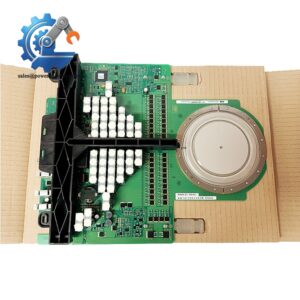
Bently Nevada 3500/60
Module 5: Quality Assurance & Testing SOP
The 3500/60 should undergo controlled electrical, channel, alarm, and rack-integration testing before shipment.
1. Incoming inspection
- Record manufacturer, complete model designation, serial number, and hardware revision.
- Perform OEM anti-counterfeit visual inspection.
- Inspect PCB surfaces, front panel, connectors, terminals, and mounting hardware.
- Check for corrosion, contamination, damaged contacts, cracked components, overheating, or unauthorized repair.
2. Configuration verification
- Confirm 3500/60 identification.
- Record the installed or supplied I/O configuration.
- Verify internal termination, external termination, isolated TC, or internal-barrier arrangement.
- Record firmware and hardware revision where available.
- Photograph identification labels and I/O interfaces for traceability.
3. Power-on testing
- Install the monitor in a compatible 3500 rack test setup.
- Apply controlled rack power.
- Perform power-on self-test (POST).
- Check applicable OK/FAULT/status indications.
- Confirm normal module initialization.
- Verify rack communication without diagnostic faults.
4. Temperature-channel testing
- Connect calibrated RTD and thermocouple simulators appropriate to the configured I/O.
- Test all six channels individually.
- Verify temperature measurement and channel identification.
- Check representative temperature and differential-temperature functions.
- Exercise programmed alarm setpoints.
- Verify relay/alarm behavior and reset operation.
- Test the TC-isolated configuration where applicable.
- Perform I/O load testing on relevant relay outputs.
- Run an extended operating test to identify intermittent input or hardware faults.
5. Final QC
- Record all six channel results, alarm transitions, I/O configuration, firmware/revision, serial number, and test date.
- Confirm the supplied monitor matches the requested I/O architecture.
- Generate a unit-specific Test Report.
- Verify connector and terminal integrity.
- Package using ESD and mechanical protection.
- Apply final QC identification before shipment.
Module 6: Procurement & Lifecycle FAQ
Is Bently Nevada 3500/60 genuinely in stock, and what is the emergency-shipping cutoff?
Physical availability should be confirmed against the actual monitor and its associated I/O module, because the 3500/60 designation alone does not define the field-interface configuration. Current Bently Nevada documentation continues to support the 3500/60 family, while actual shipment timing depends on QC completion, order/payment clearance, warehouse processing, and the courier cutoff.
How do you guarantee the condition and authenticity of surplus 3500/60 units?
Require complete model and serial-number verification, PCB inspection, controlled power-up, all six channel tests, alarm verification, and a unit-specific Test Report. The associated I/O module should also be inspected and matched to the customer’s actual termination and sensor configuration.
Are there any firmware compatibility issues I should warn my engineers about before issuing the PO?
Yes. Engineers should record the installed firmware, channel configuration, RTD/TC selection, alarm parameters, and I/O architecture before removing the failed monitor. The 3500/60 is configured through the 3500 system software, and the selected I/O hardware affects how the field sensors are connected.
Can I use any 3500/60 I/O module with this monitor?
No. The available configurations include RTD/TC non-isolated internal termination, RTD/TC non-isolated external termination, TC isolated internal termination, TC isolated external termination, and RTD/TC internal-barrier versions. The correct choice depends on the installed sensor type, field wiring, isolation requirement, and hazardous-area design.
What warranty and return terms should procurement require?
Specify 3500/60, the exact I/O module part number, serial number, hardware revision, tested condition, warranty period, DOA criteria, acceptance window, and return procedure in the PO. Functional acceptance should include six-channel temperature simulation, alarm verification, rack initialization, and confirmation that the replacement reproduces the installed application’s sensor and termination configuration.



 Start Chat