

Description
- Brand: Bently Nevada
- Full Model Number: 3500/62
- Lifecycle Status: Current / Supported 3500 Series
- Core Function: Six-channel process variable monitoring for pressure, flow, temperature, level, current, and other proportional process signals
- Top 3 Technical Specs: 6 channels; +4 to +20 mA or -10 to +10 VDC inputs; 7.0 W typical power consumption
- Stock & Condition: Physical stock verification required; New Surplus / Tested Refurbished; Emergency dispatch subject to QA release
Module 3: Obsolescence & Supply Chain Deep Dive
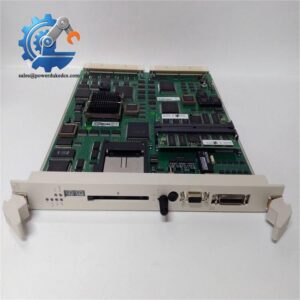
A failed Bently Nevada 3500/62 can remove six process-variable measurement channels from an operating 3500 machinery protection system. The monitor continuously processes parameters such as pressure, flow, temperature, level, motor current, and other proportional signals, then compares the measured values with configured Alert and Danger setpoints. Bently Nevada specifies +4 to +20 mA current inputs or proportional -10 to +10 VDC voltage inputs, depending on the selected I/O configuration. The monitor also provides front-panel OK, TX/RX, and Bypass status indications.
For an installed 3500 rack, replacing the failed 3500/62 can be substantially cheaper than redesigning process-variable instrumentation around a different monitoring platform. Existing transmitters, rack wiring, alarm logic, relay modules, and operator procedures can remain in service when the replacement configuration is matched correctly. The procurement issue is configuration-specific: Bently Nevada offers separate I/O types for ±10 VDC, isolated 4–20 mA, and 4–20 mA with internal barriers, with different termination arrangements. —For a replacement being added to an existing rack, firmware and software baselines also matter, so the installed rack configuration should be recorded before the PO is finalized.
Module 4: Compatibility & Replacement Matrix
| Replacement Scenario | Classification | Engineering / Procurement Guidance |
|---|---|---|
| Exact 3500/62 configuration replacing the same installed monitor | Drop-in Replacement | Match I/O type, termination method, agency option, firmware, and channel configuration |
| Same 3500/62 with identical I/O configuration | Hardware Compatible | Verify the input signal type and connected transmitters |
| Different 3500/62 I/O option | Hardware Modification / Engineering Review | Internal/external termination and current/voltage input architecture may change |
| Newer 3500 monitoring platform replacing 3500/62 | Hardware Modification | Requires field-wiring, configuration, alarm, and commissioning review |
Bently Nevada’s ordering structure identifies five I/O options for the 3500/62: internal/external ±10 VDC, internal/external isolated 4–20 mA, and internal-barrier 4–20 mA with internal termination.
Estimated switch cost/time: For an exact tested spare already staged on-site, plan approximately 1–3 hours for controlled replacement, input verification, configuration loading, alarm checkout, and communications testing. A newly sourced unit may require 1–5 business days for inspection and expedited transportation. These are planning estimates.
Field Traps — Watch Out
- I/O code mismatch: A 3500/62 configured for ±10 VDC is not equivalent to one configured for isolated 4–20 mA or internal-barrier 4–20 mA. Match the complete I/O configuration before installation.
- Internal vs. external termination: External termination blocks cannot be used with internal-termination I/O modules. An external-termination configuration also requires the appropriate termination block and cable.
- Firmware/software baseline: When adding the 3500/62 to an existing system, published requirements include 3500/20 firmware 1.07 (Rev G), 3500/01 software 2.20, 3500/02 software 2.10, and 3500/03 software 1.20 or later. Internal-barrier configurations have additional requirements.
- Signal scaling: The full-scale range for each channel is configured through 3500 software. Preserve the existing engineering units, scaling, alarm setpoints, and signal type before replacement.
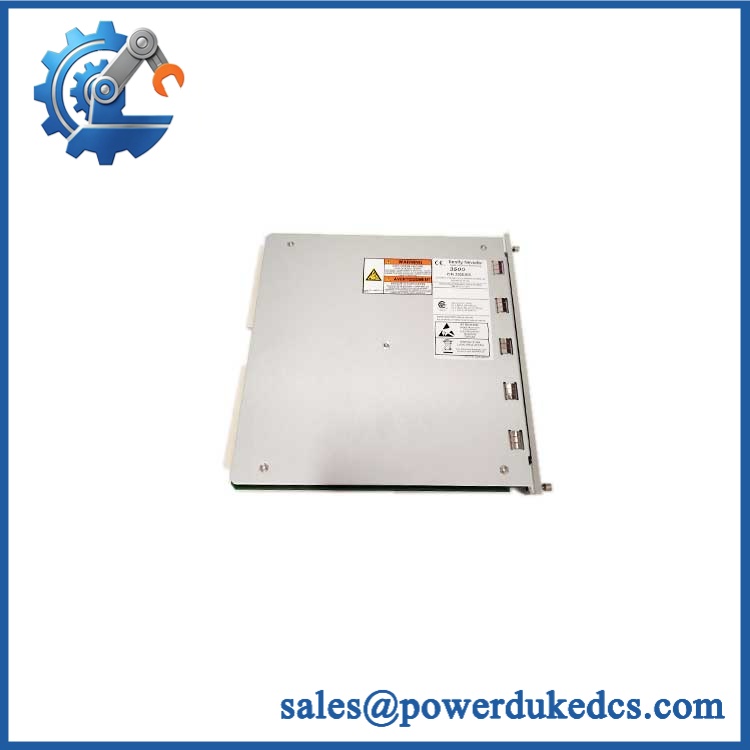
Bently Nevada 3500/62
Module 5: Quality Assurance & Testing SOP
The 3500/62 should be qualified as a six-channel measurement and alarm device. A successful power-up alone does not establish functional acceptance.
- Part-number verification: Confirm
3500/62, I/O configuration, approval option, revision, serial number, and Bently Nevada identification. - OEM anti-counterfeit visual inspection: Inspect manufacturer markings, PCB identifiers, front-panel construction, connectors, terminals, and evidence of unauthorized rework.
- Physical condition inspection: Check the enclosure, card edge, connector contacts, mounting hardware, PCB surfaces, and terminal interfaces.
- I/O configuration verification: Determine whether the module uses ±10 VDC, isolated 4–20 mA, or internal-barrier 4–20 mA inputs.
- Termination verification: Confirm internal or external termination and identify the correct associated terminal block/cable where applicable.
- Continuity testing: Verify applicable power, ground, input, output, and relay paths before energization.
- Power-on self-test (POST): Install the monitor in a compatible 3500 rack and verify startup and module recognition.
- LED verification: Confirm OK, TX/RX, and Bypass indications behave correctly during normal and test conditions.
- Six-channel input testing: Apply calibrated signals independently to all configured channels.
- 4–20 mA testing: For current-input configurations, inject representative 4–20 mA signals and verify corresponding engineering-unit values.
- ±10 VDC testing: For voltage-input configurations, apply controlled negative, zero, and positive voltage levels and verify correct channel response.
- Input-isolation testing: For isolated 4–20 mA configurations, verify the applicable electrical isolation according to the approved test procedure.
- Barrier I/O testing: For internal-barrier configurations, verify correct transducer power/interface behavior and barrier circuitry under controlled test conditions.
- Signal-scaling verification: Confirm channel ranges and engineering-unit conversion against the approved site configuration.
- Alarm testing: Simulate both under-limit and over-limit conditions and verify Alert and Danger responses.
- Alarm-delay testing: Verify configured Alert and Danger delay values using controlled step changes.
- Relay/interface testing: Where the monitor is connected to 3500 relay modules, verify that alarm states propagate correctly into the configured relay logic.
- Recorder-output testing: Where configured, verify the applicable proportional output behavior and scaling.
- Communication testing: Confirm rack communication and configuration access through the approved 3500 software environment.
- I/O load testing: Operate all applicable channels under representative signal loads while monitoring stability, power consumption, and temperature.
- Extended observation: Maintain six-channel operation long enough to identify intermittent inputs, communication faults, scaling errors, or alarm instability.
- Final QC release: Record exact configuration, firmware/software information, six-channel results, alarm setpoints, delay measurements, photographs, condition grade, test date, and QC authorization.
Bently Nevada specifies typical 3500/62 power consumption of approximately 7.0 W. The published accuracy is ±0.33% of full scale typical and ±1% maximum, while alarm accuracy is specified to approximately 0.13% of the desired value. These figures provide useful acceptance-test reference points when validating a replacement unit.
Module 6: Procurement & Lifecycle FAQ
Q1. Is the Bently Nevada 3500/62 genuinely in stock, and what is the cutoff for emergency shipping?
Physical inventory should be verified against the actual 3500/62 unit and its I/O configuration before the PO is accepted. Emergency dispatch depends on QA completion, warehouse location, carrier pickup time, and destination. Same-day shipment should only be confirmed after the specific unit has been identified and released.
Q2. How do you guarantee the condition and authenticity of a 3500/62?
Require exact I/O-option verification, OEM visual inspection, PCB and connector inspection, controlled power-up, six-channel signal testing, alarm verification, communications testing, and documented QC results. For surplus or refurbished inventory, retain photographs of the actual module and identification markings.
Q3. Are there firmware compatibility issues engineers should check before issuing the PO?
Yes. For an existing 3500 system, published documentation specifies minimum rack and software versions for adding the 3500/62. Record the installed 3500/20 firmware, 3500 software versions, 3500/62 firmware where applicable, and the existing channel configuration before replacement. Internal-barrier configurations have additional requirements.
Q4. Can any 3500/62 replace the installed 3500/62?
No. The I/O option must match the existing signal architecture. Bently Nevada provides separate ±10 VDC, isolated 4–20 mA, and internal-barrier 4–20 mA configurations, with internal and external termination variants. Confirm the complete ordering configuration before approving a substitute.
Q5. What warranty and return terms should be written into the PO?
Specify warranty duration, DOA coverage, six-channel measurement performance, input-configuration conformity, alarm-function coverage, configuration/firmware conformity, return authorization, inspection period, and serial-number traceability. For refurbished inventory, require the actual six-channel functional-test record and define whether commissioning-stage failures are covered.



 Start Chat


