

Description
-
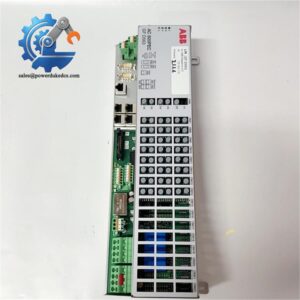
- Bently Nevada 3701/55 323174-01 ADAPT ESD CPU Module
- Bently Nevada 323174-01 In Stock ADAPT ESD CPU Module
- Bently Nevada 323174-01 Legacy Emergency Shutdown CPU Replacement
- Bently Nevada 323174-01 TMR Safety PLC CPU 18-36VDC
- Bently Nevada 323174-01 Original ADAPT ESD Fast Shipping
Module 2: The 10-Second Procurement Snapshot
- Brand: Bently Nevada
- Full Model Number: 3701/55 323174-01
- Lifecycle Status: Active / Current ADAPT ESD Spare
- Core Function: ADAPT ESD processing CPU for emergency shutdown and overspeed protection
- Top 3 Technical Specs: 18–36 VDC input; 6 Ethernet ports at 10/100 Mbps; 2 ms nominal logic processing time
- Stock & Condition: Physical stock verification required; New Surplus / Tested Refurbished; Emergency dispatch subject to QA release
Module 3: Obsolescence & Supply Chain Deep Dive
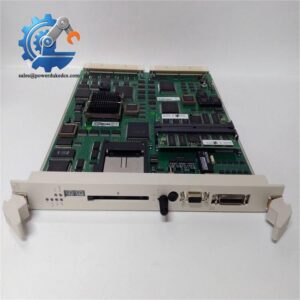
A failed Bently Nevada 3701/55 323174-01 is not a routine replacement-card event. This processor sits inside the ADAPT ESD Emergency Shutdown Device, where three CPU modules form the TMR processing architecture. Each CPU processes two dedicated speed inputs plus the system’s discrete and process-variable inputs, while the complete system uses the processed results to control emergency shutdown logic. The 323174-01 is the ADAPT ESD CPU Module and uses 18–36 VDC input power, six 10/100 Mbps Ethernet interfaces across the system, and a nominal 2 ms input-to-output logic-processing time.
For a plant with an installed 3701/55 system, replacing one failed CPU is generally far less costly than rebuilding the emergency-shutdown architecture around a different safety platform. Existing terminal bases, relay modules, field inputs, network topology, shutdown logic, and commissioning procedures can remain in service when the replacement CPU is correctly qualified. The 3701/55 uses three CPUs for TMR processing, so one replacement can restore the intended architecture without forcing a complete system change. —The procurement risk is configuration and safety validation, not simply physical fit. Embedded code can be upgraded without system disassembly, and the CPU receives its trip-logic configuration from Bently Nevada Monitor Configuration software; therefore firmware, application logic, network configuration, and TMR health status must all be checked before returning the ESD to service.
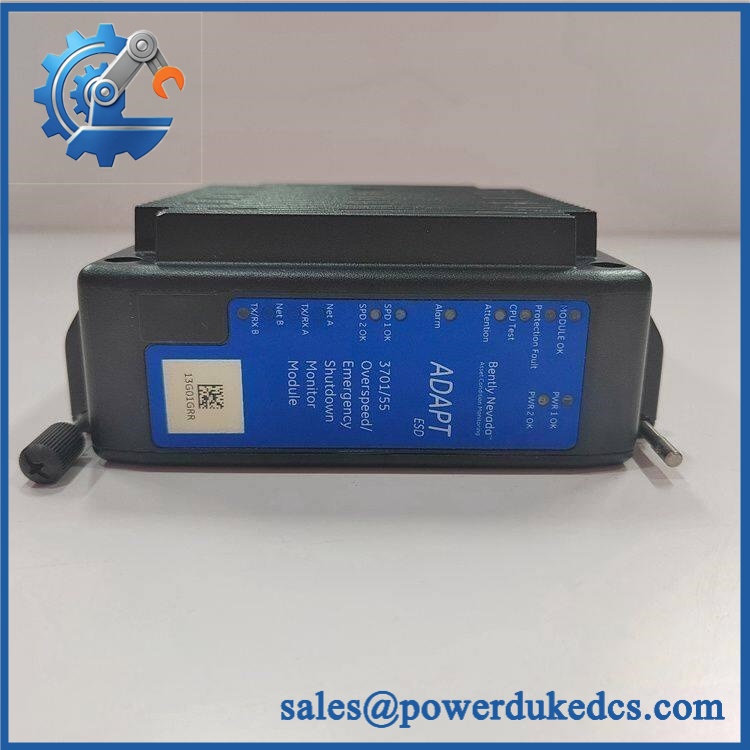
Bently Nevada 3701/55 323174-01 |
Module 4: Compatibility & Replacement Matrix
Replacement Scenario Classification Engineering / Procurement Guidance Exact 323174-01replacing the same installed ADAPT ESD CPUDrop-in Replacement — subject to safety validation Match CPU part number, hardware revision, system configuration, network setup, and TMR arrangement 323174-01installed within the same 3701/55 ADAPT ESD architectureHardware Compatible Verify terminal base, relay modules, power supply, and all three CPU paths Different CPU revision within the 323174 family Software Compatible — Verification Required Confirm embedded code, configuration, and approved safety revision Different 3701/55 CPU hardware Engineering Review Required Verify revision, application configuration, approvals, and TMR compatibility Different emergency-shutdown platform Hardware Modification Requires complete safety-system engineering and validation Estimated switch cost/time: For a tested replacement already staged at the facility, plan approximately 4–8 hours for controlled CPU replacement, configuration transfer, network verification, TMR health checks, and functional shutdown testing. Because this is a safety-related system, actual return-to-service time can be longer when proof testing or management-of-change procedures are required.
Field Traps — Watch Out
- TMR CPU dependency: The 3701/55 uses three CPU modules, with each CPU processing two unique speed channels. Replacing one CPU does not eliminate the need to verify the other two processing paths and the overall TMR state.
- Configuration loss: The CPU receives trip logic from Bently Nevada Monitor Configuration software, with logic capacity of up to 500 logic steps. Preserve the approved configuration before removing the failed CPU.
- Network topology: The system provides six Ethernet interfaces, two per CPU. For redundant communications, separate network paths/subnets should be maintained according to the approved system design.
- Safety relay configuration: The 3701/55 relay architecture supports independent logic and 2oo3 voting. Never release a replacement based only on CPU startup; the configured shutdown logic must be proof-tested.
Module 5: Quality Assurance & Testing SOP
The
323174-01should be qualified as a safety-system processing component. A normal boot sequence is only the first test gate.- Part-number verification: Confirm
3701/55,323174-01, hardware revision, serial number, and manufacturer identification. - OEM anti-counterfeit visual inspection: Inspect Bently Nevada markings, PCB identifiers, processor assembly, connectors, labels, and evidence of unauthorized rework.
- Physical condition inspection: Check the enclosure, PCB, connector interfaces, mounting hardware, thermal areas, and accessible components for corrosion, contamination, impact damage, or overheating.
- Revision verification: Record the complete hardware revision and compare it with the approved replacement specification.
- Configuration backup: Preserve the installed trip-logic configuration, network settings, CPU assignments, and approved application data before replacement.
- Continuity testing: Verify applicable power, ground, communication, and interface paths before energization.
- Power-on self-test (POST): Install the CPU into an approved 3701/55 test assembly and verify startup, processor recognition, and normal health indications.
- Power-input verification: Apply controlled 18–36 VDC input and record voltage and current behavior.
- CPU health test: Verify processor diagnostics and system health reporting under normal conditions.
- Speed-input testing: Apply calibrated simulated speed signals to the applicable CPU inputs and confirm correct acquisition.
- Discrete-input testing: Exercise representative discrete inputs and verify correct state recognition.
- Analog-input testing: Apply representative 4–20 mA process-variable signals to supported channels and verify correct conversion.
- Trip-logic testing: Load the approved application logic and test representative permissive, trip, inhibit, and reset conditions.
- TMR voting test: Simulate individual CPU states and verify the configured 2oo3 voting response where applicable.
- Single-CPU fault test: Remove or simulate failure of one processor path and confirm the remaining architecture behaves according to the approved safety design.
- Relay-interface test: Verify communication from CPU logic to the associated relay modules and confirm expected trip outputs.
- Network testing: Verify all applicable Ethernet ports and confirm expected TCP/IP communication.
- Redundant-network test: Where implemented, verify the two independent communication paths and approved subnet arrangement.
- NTP/time-synchronization test: Verify time synchronization where configured.
- Configuration-access test: Confirm password-protected configuration access through the approved Monitor Configuration software.
- I/O load testing: Exercise representative digital, analog, speed, communication, and trip-logic loads while monitoring CPU stability and thermal behavior.
- Power-failure behavior test: Where permitted by the approved safety procedure, verify configured response to controlled power interruption and restoration.
- Extended observation: Maintain the system under representative operating and communication loads to identify intermittent CPU, network, or TMR faults.
- Final QC release: Record CPU part number, revision, configuration version, firmware/embedded-code revision, network settings, TMR test results, trip-logic results, photographs, condition grade, test date, and QC authorization.
The 3701/55 system is specified at approximately 24 W typical and 35 W maximum power consumption, with an operating range of −30°C to +65°C. The architecture includes three CPUs, six speed channels, 32 discrete inputs, 12 configurable 4–20 mA inputs, and 12 independent trip relays across the system.
Module 6: Procurement & Lifecycle FAQ
Q1. Is the Bently Nevada 3701/55 323174-01 genuinely in stock, and what is the cutoff for emergency shipping?
Physical inventory should be verified against the exact323174-01CPU identification before the PO is accepted. Emergency dispatch depends on QA completion, warehouse location, carrier pickup, and destination. Same-day shipment should only be confirmed after the actual CPU has been identified and cleared for release.Q2. How do you guarantee the condition and authenticity of a 323174-01?
Require exact part-number and revision verification, OEM visual inspection, PCB and connector inspection, controlled 18–36 VDC power testing, CPU health checks, speed and I/O simulation, network testing, and TMR functional testing. For surplus or refurbished stock, retain photographs and the complete test record with the procurement file.Q3. Are there firmware compatibility issues engineers should check before issuing the PO?
Yes. The 323174-01 contains embedded code that can be upgraded without system disassembly, and the CPU receives its configured trip logic from Bently Nevada Monitor Configuration software. Record the existing embedded-code revision, approved logic configuration, network settings, and CPU assignments before replacement.Q4. Can one 323174-01 be installed as a replacement without replacing the other CPUs?
Yes, provided the replacement is compatible with the installed 3701/55 architecture and the remaining CPUs are healthy. The system is designed around three CPU modules operating in TMR, so the replacement must be integrated into the existing configuration and the complete voting architecture must be revalidated.Q5. What warranty and return terms should be written into the PO?
Specify warranty duration, DOA coverage, CPU processing performance, I/O acquisition performance, Ethernet communication, embedded-code conformity, TMR functionality, return authorization, inspection period, and serial-number traceability. For refurbished inventory, require the actual CPU and TMR test record and define whether safety-function failures discovered during commissioning are covered.



 Start Chat