

Description
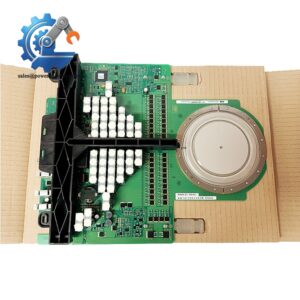
- Model: D1031SH45TS02
- Brand: ABB
- Series: ACS6000 / Medium Voltage Drive Spare Parts
- Core Function: Provides high-power freewheeling and rectification
- Type: High-power semiconductor diode
- Key Specs: 2.8 kV device rating; press-pack power semiconductor; approx. 0.9 kg net weight
- ABB Product ID: 3BHB006457R0001
- Condition: New Original (New Surplus), subject to actual stock confirmation
Product Introduction
ABB D1031SH45TS02, product ID 3BHB006457R0001, is a high-power semiconductor diode used in ABB medium-voltage power-conversion equipment. ABB’s product data identifies it specifically as “DIODE D1031SH45TS02”, with the part listed as a spare for the ACS6000 drive family.
This is not a conventional PLC component. It belongs in the power stage. Published engineering documentation identifies the D1031SH45TS02 as an anti-parallel/freewheeling diode used with ABB IGCT devices, with a 2.8 kV rating in the referenced converter application. ABB’s current product record lists a net weight of approximately 0.9 kg and customs code 85411000.
Key Technical Specifications
| Parameter | Specification |
|---|---|
| Manufacturer | ABB |
| ABB Product ID | 3BHB006457R0001 |
| Type Designation | D1031SH45TS02 |
| Product Description | DIODE D1031SH45TS02 |
| Product Type | Power semiconductor diode |
| Application | Medium-voltage power conversion |
| Associated Drive Family | ACS6000 |
| Device Voltage Rating | 2.8 kV in referenced converter application |
| Mounting Concept | Power semiconductor / press-pack application |
| Net Weight | Approx. 0.9 kg |
| Gross Weight | Approx. 0.99 kg |
| Customs Tariff Number | 85411000 |
| Previous Product ID | HB006457R0001 / 3BHB006457R0010 |
| Current Part Status | New part record |
| Minimum Order Quantity | 1 piece |
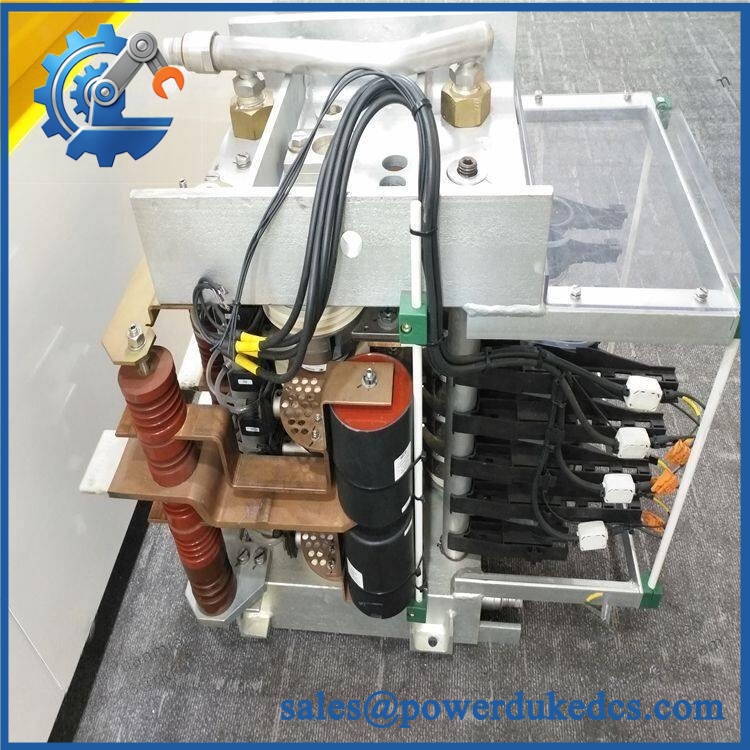
ABB D1031SH45TS02 3BHB006457R0001
ABB’s product record states that the previous type was Typ D 1031 SH 45 T S02, with the type designation changed on April 6, 2016. It also identifies the old product ID as 3BHB006457R0010.
Important specification note: Some third-party pages incorrectly describe this part as a 4,500 V / 150 A IGBT. That conflicts with the available ABB identification and independent engineering literature. The part should be treated as a diode, not an IGBT, unless the physical nameplate or original technical documentation proves otherwise.
Installation & Configuration Guide
Estimated replacement time: 30–60 minutes, excluding equipment discharge and commissioning time.
Stage 1: Pre-Installation — About 15 minutes
⚠️ High-voltage power electronics are involved. Qualified electrical personnel only.
- Notify the production team about the planned shutdown.
- Stop the associated drive system using the approved shutdown procedure.
- Isolate all incoming power sources.
- Apply the site’s lockout/tagout procedure.
- Wait for the manufacturer’s specified discharge period.
- Verify the absence of hazardous voltage with an appropriately rated meter.
- Confirm the DC-link is discharged before opening the power section.
Prepare:
- ESD protection
- Insulated tools
- Calibrated high-voltage-rated multimeter
- Cable/connection labels
- Camera
- Torque tools specified by the drive documentation
- Appropriate PPE
Do not use a generic PLC replacement procedure here. A medium-voltage converter power stage can retain dangerous stored energy even after the main supply has been switched off.
Stage 2: Remove the Existing Diode — About 15 minutes
- Photograph the complete power-stack arrangement.
- Record the diode’s exact marking and serial/lot information.
- Photograph the diode orientation.
- Mark the electrical polarity before removal.
- Record busbar and connection positions.
- Remove the mechanical fastening hardware using the applicable ABB procedure.
- Carefully remove the semiconductor device.
- Inspect the mating surfaces and cooling interface.
Look for:
- Burn marks
- Uneven pressure marks
- Cracked ceramic surfaces
- Discoloration
- Loose busbar connections
- Evidence of overheating
Do not rotate or reverse the diode during installation. Polarity and mechanical clamping are part of the electrical design.
Stage 3: Install the Replacement — About 15 minutes
- Verify / 3BHB006457R0001.
- Compare the physical dimensions with the removed unit.
- Check the diode markings and polarity.
- Inspect the cooling and contact surfaces.
- Clean contact surfaces according to the manufacturer’s procedure.
- Install the replacement in the same orientation.
- Reinstall the busbar connections.
- Apply the specified mechanical pressure or torque.
- Confirm electrical clearance and insulation distances.
- Recheck every connection before closing the cabinet.
Do not substitute an apparently similar diode solely because the voltage rating looks close.
For power semiconductors, reverse-recovery behavior, current rating, thermal characteristics, mechanical interface, and dynamic voltage behavior can all affect the converter.
Stage 4: Power-On & Functional Test — About 15 minutes
Before energizing:
- Correct diode part number verified
- Polarity verified
- Mechanical mounting checked
- Busbar connections checked
- Cooling interface checked
- Insulation test completed according to equipment procedure
- DC-link discharge verified before closing
- Protective covers installed
Then:
- Energize the drive according to the ABB commissioning procedure.
- Monitor converter diagnostic information.
- Check DC-link behavior.
- Start at low load where the process allows.
- Monitor current and voltage.
- Check semiconductor temperature.
- Listen for abnormal electrical or mechanical noise.
- Gradually return the drive to normal operating conditions.
Record the replacement date, diode identification, test result, and any measured operating values.
FAQ
1. What is ABB used for?
It is a high-power diode for power-conversion applications. ABB’s product data identifies it as DIODE and lists it as a spare associated with the ACS6000 medium-voltage drive family.
2. Is an IGBT?
No. The ABB product record identifies it as a diode. Independent power-electronics research also identifies as an anti-parallel/freewheeling diode used with ABB IGCT devices.
3. What is the voltage rating?
The referenced converter engineering documentation identifies the as a 2.8 kV-rated diode. Two such devices were used in series per converter arm in that particular 5 kV DC-DC converter demonstrator.
That does not mean every ACS6000 installation uses the diode in exactly the same circuit arrangement. The actual equipment schematic remains the controlling reference.
4. Can I replace it with another 2.8 kV diode?
Not automatically.
A replacement must match more than blocking voltage. Check:
- Forward current capability
- Reverse-recovery characteristics
- Thermal resistance
- Mechanical dimensions
- Contact interface
- Clamping requirements
- Polarity
- Cooling arrangement
- Converter switching conditions
A similar voltage number is not enough.
5. What is the current ABB part number?
The current ABB product record identifies 3BHB006457R0001 as the product ID for . The record also references older identifiers including 3BHB006457R0010 and HB006457R0001.
For procurement, quote the complete current product ID and the type designation together.
6. Should this diode be kept as a critical spare?
For an ACS6000 or similar medium-voltage converter where a diode failure can stop production, one on-site buffer unit is reasonable.
Suggested inventory:
- Critical drive: Min 1 / Max 1–2
- Multiple identical drives: Centralize one or more units based on failure history
- Short supplier lead time: Min 0–1 / Max 1
- Long lead time: Keep at least 1 on-site
- Aging installation: Review last-time-buy exposure
The unit weighs about 0.9 kg net, so storage space is not the main concern. The bigger issue is replacement lead time and the cost of an unexpected medium-voltage drive outage.
7. What should I verify before purchasing?
Ask for:
- Exact part number: 3BHB006457R0001
- Type:
- Nameplate or marking photograph
- Condition: New Original / New Surplus / Used
- Actual stock location
- Serial or lot information
- Test evidence, where available
- Warranty terms
Do not accept an IGBT description for this part without verification. Current ABB identification and the engineering references both point to a diode.



 Start Chat