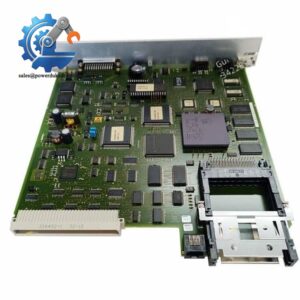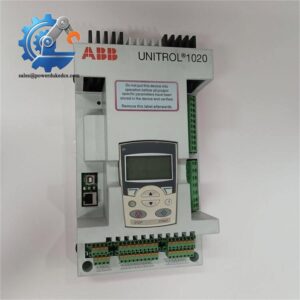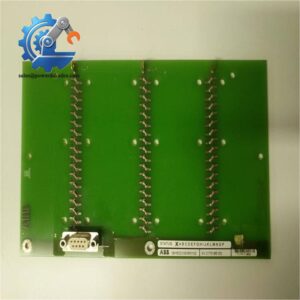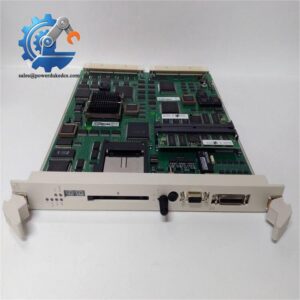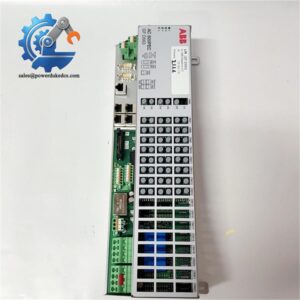
Description
- Brand: DEIF
- Model Number: AWC400 (OEM designation: AWC 400)
- Product Type: Advanced modular wind turbine controller
- Lifecycle Status: Phased out; officially classified as end of life
- Core Function: Wind turbine process control, application execution, and communication with distributed control and I/O modules
- Top 3 Technical Specs:
- Operating temperature: -25°C to +70°C
- PCM 4.3 power input: 18–36 VDC, maximum 6 A
- Communication interfaces on PCM 4.3: 3 CAN channels, RS-422/485, ARCNET, Ethernet 10/100 Mbps, and USB service interface
- Programming: ANSI C/C++ and IEC 61131-3; CoDeSys V2.3 runtime available as an option
- Environmental Protection: IP20 for the documented controller base unit
- Stock and Condition: Physical availability, exact module configuration, revision, and condition require confirmation
- Replacement Status: DEIF states that no direct AWC 400 replacement is currently available
- Procurement Priority: Legacy wind turbine maintenance and approved replacement sourcing
The lifecycle classification and technical references above follow DEIF’s product information and AWC 400 data sheet. Communication and power specifications listed for PCM 4.3 apply to that module, not automatically to every AWC 400 assembly.
Obsolescence & Supply Chain Deep Dive
When an installed wind turbine controller fails, identifying the correct spare can be difficult once the original product line has been discontinued. DEIF officially lists the AWC 400 as phased out and end of life, and its published data sheet carries a spare-parts-only designation. The platform uses a modular architecture that may include a power and control module, distributed I/O, input/output modules, grid protection modules, and serial synchronous interface modules. Consequently, the designation AWC400 alone may not identify the exact assembly required for a repair. Procurement should obtain the complete installed module code, hardware revision, configuration details, and available software information before requesting a quotation.
For an operating turbine, an approved like-for-like replacement can avoid the engineering and outage costs associated with a full controller migration. Total cost of ownership (TCO) should account for the part price, freight, installation labor, application restoration, commissioning, and expected downtime. A move to a different controller family can require application porting, interface mapping, control-sequence validation, and site acceptance testing. DEIF lists the AWC 500 among its current product alternatives but also states that it does not have a direct AWC 400 replacement at present. The AWC 500 must therefore be treated as a possible modernization candidate, not an assumed drop-in substitute.
DEIF AWC400
Compatibility & Replacement Matrix
The correct replacement decision depends on whether the requirement is for a complete AWC 400 configuration, its CPU module, or another module within the platform.
| Evaluation Item | Preliminary Assessment | Required Action |
|---|---|---|
| Replacement classification | Conditional like-for-like replacement within the verified AWC 400 configuration | Match the complete module code, revision, and installed system configuration |
| Direct replacement availability | No direct replacement currently identified by DEIF | Confirm options with DEIF or the responsible system integrator |
| AWC 500 migration | Potential modernization project; not a verified drop-in replacement | Assess control application, I/O allocation, interfaces, and software migration |
| PCM 4.3 power requirements | 18–36 VDC, maximum 6 A | Apply only when PCM 4.3 is the actual module being replaced |
| PCM 4.3 communication | 3 CAN channels, RS-422/485, ARCNET, Ethernet, and USB service interface | Verify the installed ports, protocol configuration, and connected equipment |
| Software compatibility | Application-dependent | Confirm source code, runtime version, libraries, communication drivers, and retained parameters |
| Like-for-like replacement labor | Preliminary planning allowance: 4–8 technician-hours for a straightforward exchange and basic checks | Excludes extensive fault diagnosis, application restoration, and extended commissioning |
| Modernization labor | Project-specific; no reliable estimate without the current configuration | Estimate engineering, hardware, programming, integration testing, outage, and acceptance work |
| Cost comparison | Quotation and site assessment required | Compare spare acquisition and restoration costs with the full migration cost |
Field Traps: Checks Before Purchase
Controller-level model versus individual module
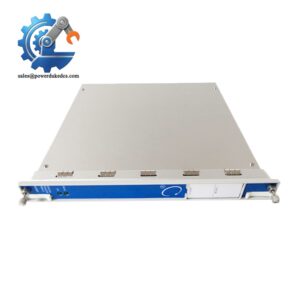
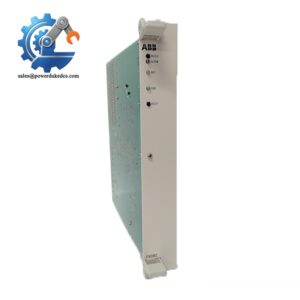
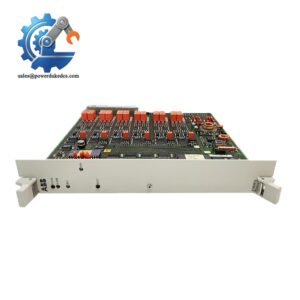
AWC 400 is a controller platform with multiple module types. A complete controller assembly and an individual module are not interchangeable purchasing descriptions. Verify whether the requirement concerns the PCM 4.3 CPU, PCM 4.4 distributed controller, IOM 4.2 I/O module, GPM 4.1 or GPM 4.2 grid protection module, SSI 4.1, or another documented assembly. The installed bill of materials and physical markings should determine the order specification.
deif-cdn-umbraco.azureedge.net
Power supply and communication configuration
For PCM 4.3, the documented DC input range is 18–36 VDC with a maximum current of 6 A. Its interfaces include three independent CAN lines, an RS-422/485 port, ARCNET, Ethernet, and a TTL display port. Confirm the actual module code and terminal assignments before using these values for installation planning. Never transfer the PCM 4.3 specifications to a different module without its own technical documentation.
deif-cdn-umbraco.azureedge.net
Legacy application and controller migration
A replacement controller may not retain the original application’s software environment, runtime behavior, or fieldbus configuration. Before approving an alternative platform, establish the available application source code, programming environment, communication dependencies, and turbine-specific control requirements. Successful hardware startup alone does not establish equivalent control performance.
Quality Assurance & Testing SOP
Pre-shipment inspection should establish the identity, physical condition, and functional status of the actual unit. Because the AWC 400 is modular, the test plan must be matched to the specific module and available approved test equipment.
| QA Stage | Inspection or Test Action | Acceptance Criteria |
|---|---|---|
| Product identification | Perform an OEM anti-counterfeit visual inspection of model labels, module codes, revision markings, connectors, and PCB construction | Markings agree with the quoted configuration; discrepancies are recorded |
| Physical condition | Inspect the housing, PCB, connector contacts, mounting features, solder joints, and visible components | No disqualifying damage, corrosion, contamination, or unexplained modification |
| Documentation review | Compare the installed and proposed module codes against available technical documentation and the system bill of materials | Replacement identity and intended application are documented |
| Electrical pre-check | Inspect for visible component damage and perform specified electrical checks using an approved procedure | No detected fault within the scope of the documented checks |
| Power-on self-test (POST) | Use a compatible test setup; check available power and diagnostic indicators, including ERR/RUN indicators only where fitted and documented | Startup behavior agrees with the applicable module documentation |
| CPU and software verification | For a supported PCM 4.3 test configuration, verify startup, runtime status, and available diagnostic functions | Required startup and diagnostic responses are recorded |
| Communication testing | Test the applicable CAN, RS-422/485, ARCNET, or Ethernet interface using compatible equipment | Expected data exchange or diagnostic responses are obtained |
| I/O load testing | Where the specific unit includes I/O functions, apply suitable simulated inputs and rated test loads | Tested channels meet documented acceptance criteria |
| Application-level verification | Where an approved turbine controller test environment is available, execute the agreed application checks | Results are documented against the authorized test plan |
| Final release inspection | Record the full module designation, revision, physical condition, functional test results, and packaging condition | Unit-specific inspection record is available for buyer review |
Testing limitations: Bench testing must not be represented as complete turbine-level validation. If the original application, compatible rack, or approved test fixture is unavailable, disclose which functions could not be verified. Do not connect an unverified controller directly to an operating turbine merely to demonstrate functionality.
For safety-related control or protection functions, system restoration must follow the approved maintenance procedure and be completed by qualified personnel. Any required application validation, protection checks, or site commissioning should be agreed before purchase.
Procurement & Lifecycle FAQ
Is the DEIF AWC400 genuinely in stock, and what is the emergency shipping cutoff?
Availability must be confirmed against the actual inventory lot. Request the complete module code, hardware revision, quantity, condition, and current photographs before placing the order.
Emergency dispatch depends on order approval, payment terms, inspection requirements, destination, and carrier collection times. Obtain a written dispatch commitment and order cutoff. Same-day shipment should not be assumed without confirmation.
How do you verify the authenticity and condition of legacy AWC 400 equipment?
The inspection process should cover product labels, module identification, revision markings, connector condition, visible components, and functional testing where a compatible test setup is available.
Request photographs of the actual supplied unit and a unit-specific inspection report. The quotation should clearly distinguish new original stock, new surplus, used equipment, and refurbished units. Supporting traceability records should be supplied where available.
Are there software or compatibility issues engineers should review before issuing the purchase order?
Yes. Confirm the module code, hardware revision, original application software, runtime environment, fieldbus configuration, and connected I/O modules. The AWC 400 documentation identifies ANSI C/C++ and IEC 61131-3 programming, with CoDeSys V2.3 available as an option; the installed configuration must determine the applicable software requirements.
deif-cdn-umbraco.azureedge.net
For migration to another controller family, engineering should assess source-code availability, software conversion, communication mapping, I/O behavior, and turbine acceptance requirements. Do not assume that the AWC 500 is a direct replacement.
What warranty and return policies apply?
The warranty period, coverage, exclusions, and return eligibility should be stated in the supplier’s quotation or pro forma invoice before the purchase order is released. Confirm the defect reporting deadline and the procedure for evaluating a defective-on-arrival claim.
Use an agreed return merchandise authorization (RMA) process. Retain the original labels, revision markings, packaging, and test records so the supplied unit can be matched to the order.
What information should procurement provide for an accurate quotation?
Provide the complete installed module code, required quantity, hardware revision, turbine or controller configuration, photographs of the identification labels, destination, and required delivery date.
For a complete controller replacement, include the available bill of materials and software information. Ask for written confirmation of stock, condition, inspection scope, warranty, and dispatch timing. These details enable a more reliable TCO comparison between legacy spare acquisition and a broader controller migration.