Description
-
Brand: DEIF
-
Full Model Number: SCM4.1, also designated SCM 4-1 in DEIF documentation
-
Lifecycle Status: Legacy installed-base component. Confirm current OEM availability and support for the specific system.
-
Core Function: Three-phase electrical measurement, generator protection, and synchronization/breaker control within compatible DEIF control systems.
-
Top 3 Technical Specs:
-
Measurement accuracy: Class 0.5 for specified electrical measurements.
-
Voltage inputs: Two three-phase voltage measurement inputs; direct measurement up to 690 V RMS at 40–70 Hz, subject to the applicable system configuration.
-
Current inputs and relays: Three-phase current measurement using 1 A or 5 A CT secondaries, with separate synchronization-check and protection relay functions.
-
-
Stock & Condition: Current stock, unit condition, hardware revision, and dispatch lead time require confirmation before purchase.
The SCM 4-1 is documented as a 6 TE module for DEIF DM-4 Marine & Offshore systems. DEIF documentation also identifies its measurement and protection functions in Delomatic 400 Gas and DM-4 Hydro applications. Confirm the exact system family before ordering.
Obsolescence and Supply Chain Deep Dive
The DEIF SCM4.1 is a system-specific measurement and protection module, not a generic three-phase transducer. It supplies electrical measurements used by the host application and supports synchronization checks and protective disconnection functions. A replacement decision therefore depends on more than the model marking. Hardware revision, terminal arrangement, rack configuration, application software, current-transformer ratio, voltage-transformer scaling, and protection parameters all require review. DEIF’s DM-4 Hydro datasheet is marked “NOT RECOMMENDED FOR NEW DESIGNS,” making lifecycle planning especially relevant for Hydro installations. That designation should not automatically be applied to every system using an SCM4.1.
For aging generator and power-control installations, sourcing the correct module can help reduce the risk of prolonged downtime while avoiding an unnecessary system-wide migration. The total replacement cost includes the module, engineering checks, shutdown coordination, functional testing, and commissioning. A lower purchase price may not be economical if the unit’s revision or application is unsuitable. Before shipment, request clear label and terminal photographs, confirm the installed unit’s full designation, and establish whether the replacement is new original, new surplus, or used. Do not approve an interchange based solely on similar appearance.
Compatibility and Replacement Matrix
|
Evaluation Item |
Preliminary Assessment |
Planning Allowance |
Field Traps |
|---|---|---|---|
|
Physical fit |
Potentially direct only when the rack, connector layout, and module version match |
30–60 minutes for identification and fit checks |
Confirm the 6 TE format and exact rack arrangement |
|
Electrical measurement |
Compatible only when the voltage and CT input arrangement matches the installation |
1–2 hours for controlled bench verification |
Wrong CT ratio, phase sequence, or voltage-transformer scaling |
|
Application software |
Requires verification against the installed DEIF system and application configuration |
30–90 minutes for documentation and configuration review |
Similar hardware does not prove software or configuration compatibility |
|
Synchronization and breaker control |
Requires functional verification within the intended control architecture |
1–2 hours for isolated functional testing |
Incorrect synchronism settings or breaker-feedback logic |
|
Protection and trip functions |
Requires confirmation of the applicable protection configuration and output wiring |
1–2 hours for approved simulation tests |
An unverified trip path can cause unsafe operation or failure to disconnect |
|
Installed replacement |
Conditional on confirmed compatibility and approved commissioning procedures |
2–4 hours for a straightforward replacement and validation |
Excludes permit-to-work, lockout/tagout, extended fault-finding, and system-specific commissioning |
These are preliminary planning allowances, not DEIF service-time specifications. Activities may overlap. An installed replacement cannot be classified as a drop-in replacement until the exact hardware and application are verified.
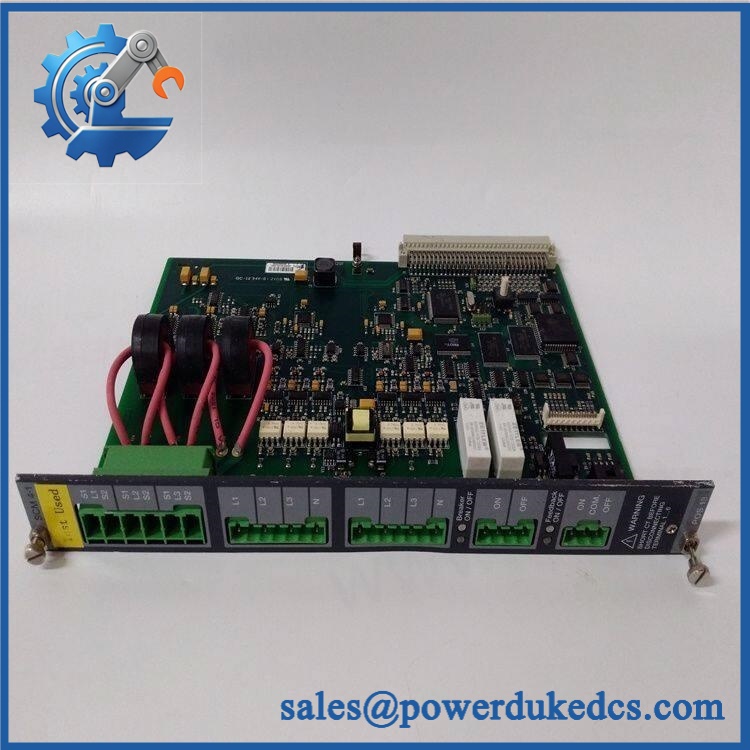
DEIF SCM4.1
Quality Assurance and Testing SOP
The SCM4.1 should be evaluated against the installed system requirements and applicable DEIF documentation. The following checks define a proposed incoming-inspection and bench-validation process; they do not represent tests already performed on a particular unit.
Incoming inspection
-
Record the module designation, serial number, hardware revision, and any available traceability information.
-
Inspect the enclosure, connectors, terminal interfaces, and mounting features for impact damage, corrosion, contamination, or unauthorized repair.
-
Compare the terminal arrangement with the documentation for the intended system.
-
Record the supplied condition and photograph any discrepancies before installation.
Electrical and functional verification
-
Use a compatible rack or an approved test fixture. Confirm host-system recognition and check for reported module faults.
-
Apply calibrated, isolated AC test signals within the documented input ratings. Verify phase voltage, current, frequency, active and reactive power, and phase-angle readings against the test reference.
-
Where the test setup permits, exercise synchronization-check logic, protection logic, relay operation, and breaker-feedback supervision using simulated signals.
-
Record test conditions, measured values, acceptance criteria, and results. Published Class 0.5 performance should not be treated as proof that an individual unit has passed testing.
-
Do not connect an unverified module directly to an operating generator or live breaker circuit.
Handling and release
Before disconnecting current-transformer wiring, follow the approved isolation procedure and short the CT secondary as required. DEIF documentation explicitly warns users to short the CT before disconnecting the relevant terminals. Use qualified personnel for all work involving hazardous voltages.
Release the unit for installation only after inspection and agreed testing are complete. A passing bench test does not replace site commissioning or verification of the complete protection chain.
Procurement and Lifecycle FAQ
How can I confirm availability for the DEIF SCM4.1?
Provide the required quantity, destination, installation system, and urgency. Request confirmation of physical stock, unit condition, hardware revision, and dispatch lead time before issuing the purchase order.
Is the SCM4.1 suitable for a direct replacement?
Not automatically. Confirm the existing module designation, rack format, terminal layout, application configuration, and input scaling. A matching part number is necessary but may not be sufficient for an older or customized installation.
What condition should I specify when requesting a quotation?
State whether you require new original, new surplus, or used equipment. Request current label photographs, condition disclosure, traceability information where available, warranty terms, and the return procedure for a demonstrably incorrect or defective unit.
Can the module be used across DM-4 and Delomatic systems?
DEIF documentation references the SCM 4-1 in multiple system families, but this does not establish universal interchangeability. Verify the exact host system and applicable hardware and software revisions before ordering.
What information is needed for an urgent replacement quotation?
Supply the full module marking, installed-system model, hardware revision, quantity, shipping destination, and clear photographs of the label and terminals. Include any existing fault report and required delivery date. This information supports faster compatibility screening and reduces the risk of ordering an unsuitable module.