

Description
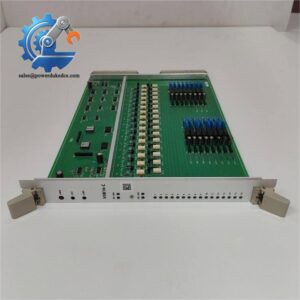
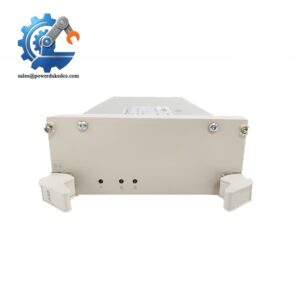
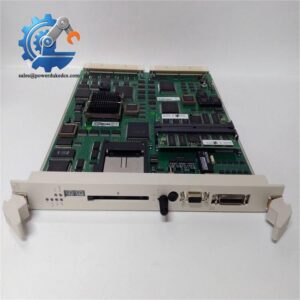
- Model & Brand: Emerson A6110 Shaft Relative Vibration Monitor
- System: AMS 6500 Machinery Health Monitor
- Physical Dimensions: Approx. 30.0 W × 128.4 H × 160.0 D mm; 1.181 × 5.055 × 6.300 in
- Card Format: DIN 41494 / 3U EURO card, 6 TE width
- Net Weight: Approx. 320 g / 0.705 lb
- Gross Shipping Weight: Approx. 450 g / 0.992 lb with standard packaging
- Packing Volume: Approx. 2.5 dm³ / 0.08 ft³
- Rack Occupancy: 1 slot; up to 14 modules in a 19-inch rack
- What’s in the Box: A6110 monitor module; standard protective packaging; configuration/accessories only when specifically included in the purchase order
- Handling Class: ESD-sensitive electronic assembly; preserve the original connector and front-panel protection during storage
Emerson’s published AMS 6500 documentation gives the A6110’s 30 mm × 128.4 mm × 160 mm dimensions, approximately 320 g net mass, approximately 450 g packaged mass, and one-slot rack requirement.
Product Introduction
Compliance Hook
For machinery-protection applications, the exact monitor card matters because the protection architecture is tied to defined measurement functions and alarm behavior. Emerson identifies the A6110 as a dual-channel shaft relative vibration monitor for the AMS 6500 Machinery Health Monitor, intended for critical rotating machinery including steam turbines, gas turbines, compressors, and hydro turbomachinery. The module is specified as API 670 compliant and supports hot-swappable installation within the AMS 6500 architecture.
From an asset-management standpoint, physical identity should be preserved through every transaction. The A6110 accepts differential eddy-current inputs from Emerson sensor families including 6422, 6423, 6424, and 6425, while the module provides front and rear signal outputs and self-checking of power, sensor, cable, module, temperature, overload, and watchdog conditions. —That makes serial traceability and exact configuration records worth retaining alongside the spare itself.
Core Technical Specifications
| Parameter | Value |
|---|---|
| Manufacturer | Emerson |
| Model | A6110 |
| Product Type | Shaft Relative Vibration Monitor |
| System | AMS 6500 Machinery Health Monitor |
| Channels | 2 independent or combined |
| Sensor Type | Differential eddy-current displacement sensors |
| Compatible Sensor Families | 6422, 6423, 6424, 6425 |
| Sensor Power | Nominal -26.7 V; 20 mA nominal, 35 mA maximum |
| Input Resistance | >100 kΩ |
| Input Voltage Range | 0 to -22 VDC |
| Measurement Range | Continuously adjustable; 0–400 mV minimum to 0–8000 mV maximum |
| Frequency Range | Lower cutoff 1 or 5 Hz; upper cutoff 50–2000 Hz adjustable |
| Front Buffered Output | ±10 V, >100 kΩ load |
| Rear Current Output | 0/4–20 mA per channel; <500 Ω load |
| Rear Voltage Output | 0–10 VDC per channel; >10 kΩ load |
| Rear Buffered Output | Raw AC/DC signal; 0.1–16 kHz range |
| Gap Output | 0–10 VDC proportional to shaft position |
| Output Accuracy | ±1% of full scale for current outputs |
| Alert/Danger Delay | 0–5 seconds per channel |
| Operating Temperature | 0 to 65°C |
| Storage Temperature | -30 to 85°C |
| Relative Humidity | 5–95%, non-condensing |
| Power Consumption | Maximum 6 W; 250 mA at 24 VDC |
| Protection Standard | API 670 compliant |
| Mounting | 3U EURO/DIN 41494, 1-slot plug-in |
| Module Width | 30.0 mm / 6 TE |
| Module Height | 128.4 mm / 3 HE |
| Module Depth | 160.0 mm |
| Net Weight | Approx. 320 g |
| Gross Weight | Approx. 450 g |
| Front Protection | IP21 |
| Module Enclosure Rating | IP00 |
Emerson specifies the ‘s operating environment, power consumption, dimensions, and one-slot installation requirement in its AMS 6500 Classic protection-card documentation.
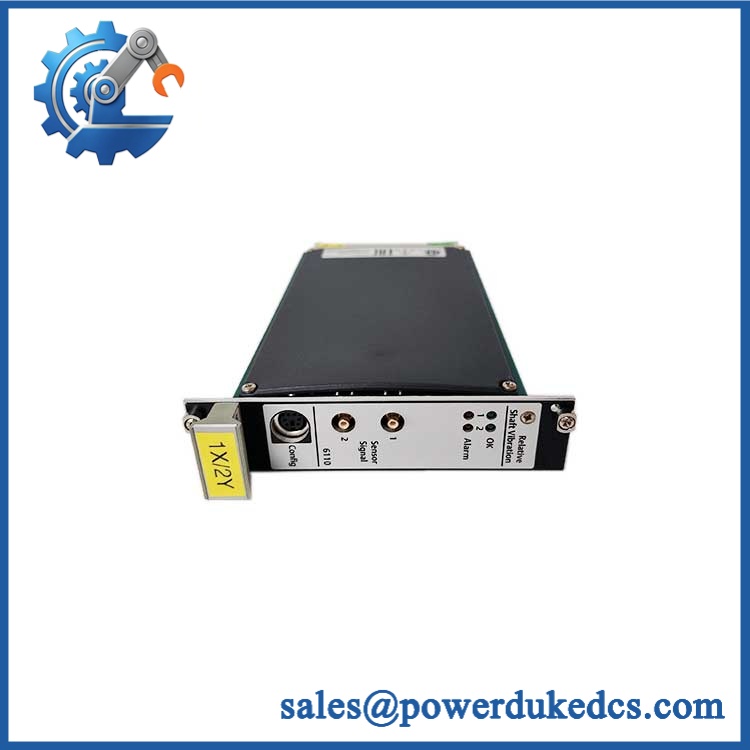
Emerson A6110
🚨 Global Compliance & Industry Certifications
- API 670: Emerson identifies the as API 670 compliant, which is directly relevant to machinery-protection applications where vibration monitoring and shutdown logic form part of the protection scheme.
- CE / EMC: The published documentation specifies EN50081-1 / EN50082-2 EMC resistance. This provides an important electromagnetic-compatibility reference for control-cabinet installations.
- Environmental Qualification: The documented vibration test references include IEC 68-2 Part 6, while shock testing references IEC 68-2 Part 29. These ratings matter where the rack is installed around rotating equipment.
- UL / cUL: Do not assume a universal UL or cUL approval solely from the model number. Certification can depend on the complete AMS 6500 assembly and applicable installation configuration.
- ATEX / IECEx: Do not classify the itself as intrinsically safe or hazardous-area certified without an applicable Emerson certificate covering the exact assembly and installation arrangement.
- Marine / DNV GL: Emerson currently identifies DNV GL certification on its modern AMS 6500 ATG machinery-protection platform, but that should not be transferred automatically to an older card.
Audit control: Verify specific lot certifications with OEM. Retain the certification record with the asset file rather than relying on a supplier’s generic product description.
🚨 Long-Term Storage & Asset Preservation Guide
Keep the module in its ESD shielding bag until installation. The is a compact PCB-based protection card with exposed electrical interfaces, so repeated handling outside controlled ESD conditions creates avoidable risk. Use the original antistatic packaging where available, and never place the card directly on conductive or untreated bench surfaces.
Control humidity aggressively. Emerson specifies 5–95% relative humidity, non-condensing for operation, but warehouse storage should be substantially drier and stable; a practical target is below 60% RH to reduce oxidation risk at contacts and connector surfaces. Store it away from condensation cycles, roof leaks, washdown areas, and unconditioned outdoor containers.
Respect the storage-temperature envelope. The published storage range is -30 to 85°C, but repeated thermal cycling is less desirable than stable storage. Keep the card in a controlled warehouse whenever practical, and inspect long-held units for connector oxidation, discoloration, packaging breakdown, or evidence of moisture ingress before test-rack installation.
Physical Installation Prerequisites
Mount the only in a compatible AMS 6500/IMR-series rack position designed for the 3U, 6 TE, one-slot card. Emerson identifies the card as a 30 mm-wide plug-in module and specifies up to 14 modules per 19-inch rack.
Allow enough cabinet clearance for airflow around the rack and avoid placing heat-producing equipment directly above or below the protection rack. The itself dissipates up to 6 W, equivalent to approximately 20.5 BTU/h, so cabinet thermal calculations should include the complete rack population rather than treating the module in isolation.
Grounding must follow the AMS 6500 rack installation instructions and plant protective-earth design. Keep sensor cables properly routed and separated from high-energy switching conductors; the relies on low-level displacement-sensor signals where induced electrical noise can become a measurement problem.
Before insertion, isolate the rack according to the approved maintenance procedure and protect the card-edge connector from contamination. Emerson identifies the as hot-swappable within the AMS 6500 architecture, but plant procedures, machine state, trip-bypass controls, and the specific protection-system design remain governing requirements.
Buyer’s FAQ — Logistics & Compliance Focus
Q1. What HS tariff code should be used for an Emerson shipment?
The exact HS classification depends on the importing country’s tariff schedule and how customs authorities interpret the module’s function. A likely heading may fall within electrical apparatus for measuring or checking electrical quantities or other measuring/checking instruments, but an exact code should not be asserted from the model number alone. For commercial shipping, have the broker validate the HS code against the destination country’s tariff database and the product’s technical function.
Q2. Does Country of Origin affect the customs entry even when the module is Emerson branded?
Yes. Brand ownership does not establish COO. The commercial invoice and COO documentation should reflect the actual manufacturing origin applicable to the specific unit or lot. For audit control, maintain the nameplate, serial number, supplier declaration, and COO evidence together (especially when preferential tariff treatment is being claimed).
Q3. Should shipping insurance cover the full replacement value?
For a legacy , yes. The physical card is only about 320 g, but its economic replacement exposure can be much higher because sourcing delays can affect a machinery-protection system. Document the declared value, packaging condition, serial number, and pre-shipment photographs before handing the module to the carrier.
Q4. Does the ship with the latest firmware pre-loaded?
Do not assume that an inventory unit contains the latest software revision. The is a configurable protection module, and Emerson documents password-protected configuration as well as configuration through the module interface. Record the installed hardware identity and configuration before replacement; verify the target AMS 6500 system revision before commissioning.
Q5. Is “new original” enough for a compliance release?
No. For an asset-controlled spare, the receiving inspection should establish exact model identity, serial traceability, physical condition, ESD packaging status, certification evidence where applicable, and functional test results. A supplier’s condition label should never replace those records.


 Start Chat