

Description
- Model & Brand: Emerson A6740 / CSI Machinery Health
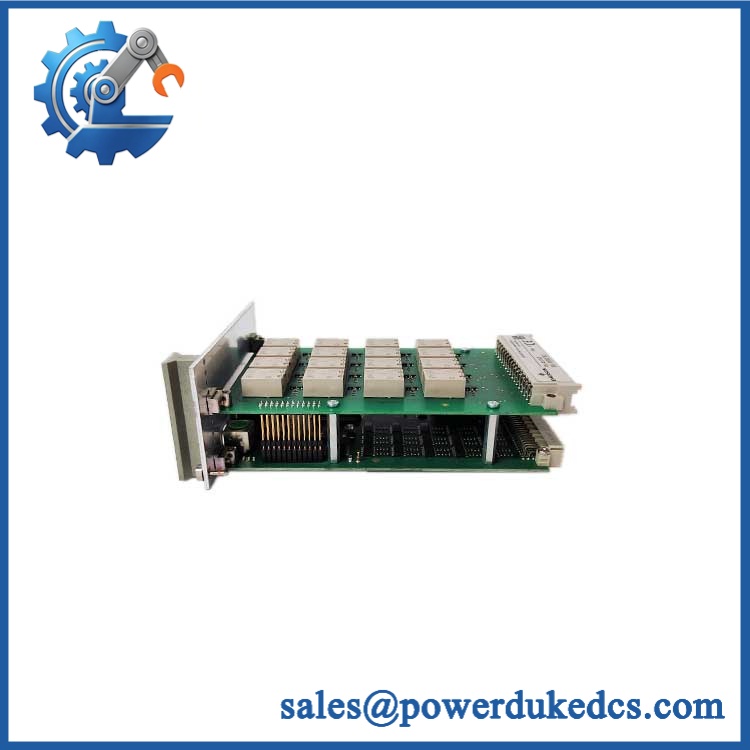
- Product Type: 16-channel output relay module for AMS 6500 machinery health monitoring
- Physical Dimensions: Approx. 60 × 128.4 × 160 mm (W × H × D)
- Net Weight: Approx. 320 g
- Estimated Shipping Weight: Approx. 450 g gross, before outer export carton and cushioning
- Module Format: DIN 41494 PCB/Eurocard format; 3U, 12 TE
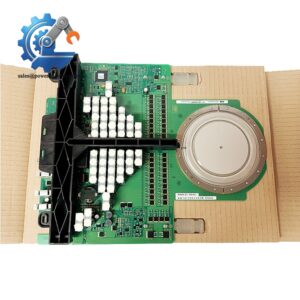
- What’s in the Box: A6740 module; protective packaging; configuration/identification materials as supplied
- Cabinet Interface: 2-slot plug-in module for the applicable AMS 6500 / IMR6000 rack
- Storage Environment: -40 to +70°C, 5–95% RH non-condensing
- Shipping Note: Actual freight weight depends on export packaging and shock protection
The published A6740/A6740-10 data identifies the A6740 as a 60 mm × 128.4 mm × 160 mm module weighing approximately 320 g net and 450 g gross.
Product Introduction
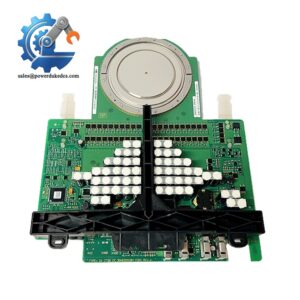
For critical rotating machinery, the physical relay layer is part of the protection chain. A6740 is the 16-channel output relay module used with the AMS 6500 Machinery Health Monitor to provide machinery-protection relay outputs from configured vibration, position, speed, and alarm logic. The module accepts up to 60 logical inputs, including channel clear, Alert, and Danger states, and provides 16 relay outputs. Its configuration is password protected.
Mechanically, this is a compact plug-in assembly rather than a standalone field enclosure. The occupies a 3U × 12 TE Eurocard format and is intended for the applicable AMS 6500/IMR6000 rack architecture (which is important when estimating cabinet space and replacement labor). The published environmental envelope is 0 to 65°C operating, -40 to 70°C storage/transport, with 5–95% RH non-condensing.
Core Technical Specifications
| Parameter | Value |
|---|---|
| Model | |
| Manufacturer | Emerson / CSI Machinery Health |
| Product Type | 16-channel output relay module |
| System | AMS 6500 Machinery Health Monitor |
| Relay Outputs | 16 |
| Inputs | 60 logical inputs |
| Input Types | Channel Clear, Alert, Danger, including channel-related signals |
| Relay Logic | Up to 30 configurable logical expressions |
| Relay Time Delay | 0–30 seconds |
| Module Format | DIN 41494 PCB/Eurocard |
| Width | 60 mm |
| Height | 128.4 mm |
| Depth | 160 mm |
| Rack Space | 3U, 12 TE |
| Net Weight | Approx. 320 g |
| Gross Weight | Approx. 450 g |
| Operating Temperature | 0 to 65°C |
| Storage/Transport Temperature | -40 to 70°C |
| Relative Humidity | 5–95%, non-condensing |
| Vibration Resistance | 0.15 mm at 10–55 Hz; 19.6 mm/s² at 55–150 Hz |
| Shock Resistance | 98 m/s² peak, 16 ms |
| EMC | EN50081-1 / EN50082-2 |
| Configuration | Password protected |
| Application Standard | API 670 machinery protection architecture |
The published specification lists 16 relay outputs, 60 logical inputs, up to 30 logic expressions, 0–30 second delay capability, and the stated 0–65°C operating range.
Emerson A6740
🚨 Global Compliance & Industry Certifications
For an used inside a machinery-protection rack, the compliance file should be tied to the actual hardware revision and system assembly, not just the generic product name.
- CE Mark: May apply to the complete Emerson/CSI equipment configuration under the applicable European directives. Confirm the declaration for the supplied revision.
- UL/cUL: May apply to the complete AMS 6500/IMR rack configuration rather than necessarily to the as an individually listed field product.
- API 670: Relevant machinery-protection architecture standard. Published product information identifies the module as part of an AMS 6500 solution used to build an API 670 machinery protection monitor.
- ATEX / IECEx: Do not assume hazardous-area certification for the bare module. Hazardous-area suitability normally depends on the complete monitoring system, barriers, enclosure, and installation arrangement.
- Marine approvals: DNV/ABS/LR approval should not be claimed without documentation for the exact equipment configuration.
Why it matters: API 670 is directly relevant to machinery protection because relay outputs may initiate trips or alarms following abnormal machine conditions. A relay module that is physically similar but not approved for the intended protection architecture can create a compliance gap.
Verify specific lot certifications with OEM.
🚨 Long-Term Storage & Asset Preservation Guide
Keep the in its original ESD shielding bag. The relay board contains exposed electronic assemblies and connector contacts; repeated handling outside controlled ESD conditions creates avoidable damage risk. Store it inside the original protective packaging, with the card supported so the edge connector and front handle are not carrying impact loads.
Control humidity before the part reaches the cabinet. The specified operating/storage humidity is 5–95% RH non-condensing, but warehouse preservation should be substantially more conservative. Aim for a dry, stable storage area below 60% RH where practical, particularly when the module will sit for years. Avoid condensation caused by moving a cold package directly into a warm control room.
Inspect long-term stock before installation. Check relay contacts, card-edge contacts, connector plating, screws, the front identification handle, and the PCB surface for oxidation or contamination. Do not power an aged card immediately after moving it from cold storage; allow the package to reach room temperature and stabilize before opening it (especially during winter freight).
The published transport/storage range is -40 to +70°C with non-condensing humidity, while the operating range is 0 to 65°C.
Physical Installation Prerequisites
- Rack Installation: Install only in the compatible AMS 6500 / IMR6000 rack or approved rack architecture. The is a plug-in Eurocard-style module, not a standalone DIN-rail device.
- Mechanical Envelope: Allow adequate access to the front extraction handle and rear rack connections. The module itself is approximately 160 mm deep.
- Cooling: Maintain the rack manufacturer’s required airflow path. Do not block rack ventilation with cable bundles or adjacent retrofit hardware. Where the complete cabinet drawing specifies clearances, follow the cabinet requirement rather than applying a generic clearance value.
- Grounding: The rack/chassis protective-earth arrangement must be completed before energized testing. Maintain clean, secure chassis and signal reference connections.
- ESD: Wear a grounded wrist strap and use an ESD-safe work surface during insertion/removal.
- Connector Condition: Inspect the backplane connector before insertion. A damaged contact can create intermittent relay or logic failures that resemble software problems.
- Relay Wiring: Verify external trip/alarm wiring against the approved wiring diagram before energization. A relay contact error on a machinery-protection system can have immediate process consequences.
- Thermal Check: Keep ambient conditions within the documented 0–65°C operating range.
Buyer’s FAQ
Q1. What HS tariff code should we use for international shipment?
Do not assign a definitive HS code from the model number alone. The appropriate classification can depend on the product’s electrical function, whether it is imported as a relay module or as part of a machinery-monitoring system, and the destination country’s tariff schedule. A broker should validate the final classification using the commercial invoice description, technical datasheet, and intended function. Avoid copying a supplier’s code without a customs review.
Q2. What should I require for Country of Origin documentation?
Request the Country of Origin (COO) stated by the supplier and supporting manufacturer documentation when available. COO is not determined by the shipping warehouse location. For audit purposes, retain the commercial invoice, packing list, COO statement or certificate where required, and the serial/part-number record tying the shipped to the procurement file.
Q3. Do I need shipping insurance for a 320 g module?
Usually, yes for high-value emergency spares despite the low physical weight. The published module weight is only about 320 g net, but the business impact of damage can be much larger than the freight value because the relay module may support machinery-protection functions.Use rigid packaging, connector protection, ESD shielding, shock protection, and insurance based on the commercial replacement value.
Q4. Does include the latest firmware pre-loaded?
Do not assume it does. is a relay/output module, and its critical characteristics are hardware configuration and password-protected logic rather than a controller-style firmware version. For a New Original or surplus unit, record the exact hardware revision and verify configuration compatibility with the installed AMS 6500 system before shipment and commissioning.


 Start Chat