

Description
- Model & Brand: GE IC693MDL655E, GE Fanuc Series 90-30 discrete input module. Revision E is also identified as IC693MDL655-E / IC693MDL655 revision E.
- Physical Dimensions: Approximately 17.8 × 17.8 × 5.1 cm (7.0 × 7.0 × 2.0 in). These dimensions are reported as shipping/product-envelope information and should be checked against the actual packed unit before freight booking.
- Estimated Shipping Weight: Approximately 0.60 kg / 1.31 lb for the module-level shipment estimate. Actual gross weight will increase with ESD packaging, cushioning, carton, and documentation.
- What’s in the Box: The normal spare is the IC693MDL655E module itself. The module uses two male 24-pin Fujitsu-type connectors; compatible pre-wired cable assemblies are identified separately as IC693CBL327 and IC693CBL328, so they should not be assumed to be included.
- Packaging Check: For a factory-sealed unit, retain the original anti-static packaging and external labels as part of the asset record. Open-package or surplus inventory should be documented separately because package condition can affect audit traceability.
Product Introduction
The GE IC693MDL655E is physically installed as a single I/O module in a GE Fanuc Series 90-30 PLC baseplate, including 5-slot and 10-slot configurations. It can occupy an available I/O position on CPU, expansion, or remote I/O baseplates, which makes panel compatibility a cabinet-level question rather than simply a signal-level one.
From an asset-control perspective, revision identity matters. The E suffix identifies a specific hardware revision, while the broader IC693MDL655 family includes several revisions. Keep the exact suffix in the ERP, warehouse label, purchase order, and incoming inspection record (this avoids a common audit problem where a generic family number is recorded instead of the actual supplied revision).
Core Technical Specifications
| Parameter | Value |
|---|---|
| Manufacturer | GE / GE Fanuc |
| Product Series | Series 90-30 |
| Exact Part Number | IC693MDL655E |
| Hardware Type | 24VDC discrete input module |
| Number of Inputs | 32 |
| Input Arrangement | 4 groups × 8 points |
| Logic | Positive / Negative logic |
| Nominal Input Voltage | 24VDC |
| Input Voltage Range | 0–30VDC |
| ON-State Voltage | 11.5–30VDC |
| OFF-State Voltage | 0–5VDC |
| Typical Input Current | 7.0 mA at 24VDC |
| Minimum ON-State Current | 3.2 mA |
| Maximum OFF-State Current | 1.1 mA |
| Typical Response Time | 2 ms ON / 2 ms OFF |
| Isolation | Optical isolation; field-to-logic isolation reported at 1500V |
| Field Connectors | Two male 24-pin connectors |
| Compatible Cable Assemblies | IC693CBL327 / IC693CBL328 |
| Backplane Consumption | Up to 195 mA from +5V bus |
| Isolated / User Supply Consumption | Approximately 224 mA typical from +24V supply |
| Operating Temperature | 0°C to 60°C |
| Storage Temperature | -40°C to 85°C |
| Mounting | Single I/O slot on Series 90-30 baseplate |
| Module Status Indication | Individual LED indication for all 32 points |
| Enclosure Concept | Open industrial module; cabinet installation required |
| Approx. Shipping Weight | 0.60 kg / 1.31 lb |
| Approx. Product/Shipping Envelope | 17.8 × 17.8 × 5.1 cm |
The electrical values above are consistent across multiple technical listings for the IC693MDL655 family, including its 32-point architecture, 24VDC nominal input, four isolated groups, current draw, temperature range, and connector arrangement.
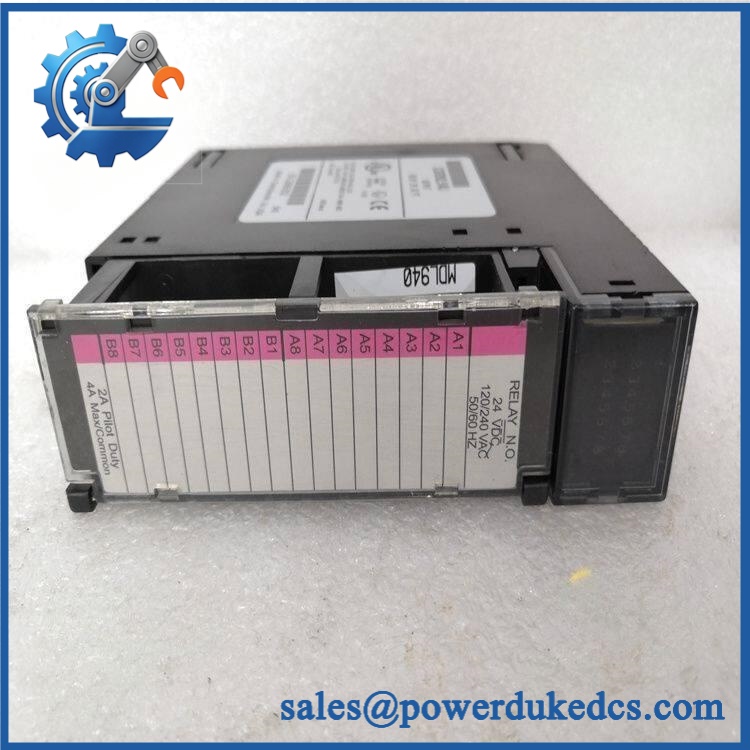
GE IC693MDL655E
🚨 Global Compliance & Industry Certifications
The IC693MDL655E is an older GE Fanuc industrial PLC module, so certification should be handled by exact catalog number, revision, date/lot information, and applicable installation environment rather than assumed from the product family alone.
- CE Mark: Third-party technical listings identify CE compliance for the IC693MDL655E family.
- cULus: The same technical source identifies cULus certification for this module family.
- ATEX / IECEx: Do not assume hazardous-area certification for this standalone PLC module. A normal Series 90-30 I/O card should not be represented as ATEX- or IECEx-certified unless the specific OEM documentation and installation assembly establish that approval.
- Marine Approval: DNV or other marine approvals should be treated the same way. They require exact evidence for the applicable product configuration; they should not be inferred from the presence of a CE or UL-related marking.
For plant safety, a valid hazardous-location certification can determine whether electrical equipment is permitted in a classified area. The certification must apply to the complete installation and its operating conditions, not merely to a similar-looking spare.
Verify specific lot certifications with OEM.
🚨 Long-Term Storage & Asset Preservation Guide
Keep the in its original ESD-safe packaging whenever practical. The front connectors, electronic assemblies, and exposed electrical interfaces should not be left loose on open warehouse shelving. For long-term storage, use sealed anti-static protection with clean cushioning and keep the package away from condensation.
Control the storage environment. The published storage temperature range is -40°C to 85°C, while the operating range is 0°C to 60°C. Those are not interchangeable limits; a warehouse can tolerate a wider temperature range than an operating cabinet, but moisture condensation still needs to be prevented.
Do not apply battery-maintenance procedures to this module. The is a discrete input card, not a battery-backed memory module. The more relevant preservation controls are ESD protection, connector cleanliness, carton condition, humidity control, and periodic visual inspection. Record date code and packaging condition during each warehouse cycle count.
A practical warehouse rule: do not remove an unopened ESD bag merely to photograph a serial label unless the inspection process requires it. Photograph the external packaging first, then open under controlled ESD conditions when traceability demands internal inspection.
Physical Installation Prerequisites
The is designed for single-slot installation in a Series 90-30 baseplate. It is not a standalone DIN-rail device. The module mates with the PLC backplane and receives its logic-side power through that architecture.
Before installation:
- Confirm the receiving baseplate is a compatible Series 90-30 unit and that the selected position is an available I/O slot.
- Verify that the two 24-pin field connectors match the existing wiring arrangement. Connector A/B and C/D grouping should be checked against the cabinet drawings before disconnection or reconnection.
- Maintain cabinet airflow around the PLC assembly. Do not pack wiring ducts, cable bundles, or unrelated heat-generating hardware directly against the module face or ventilation path.
- Provide protective grounding and cabinet bonding in accordance with the plant’s electrical design and the Series 90-30 installation requirements.
- Use ESD precautions during extraction and insertion. Avoid touching connector contacts or exposed circuit surfaces.
- The module is intended for cabinet-mounted industrial use, not exposed field installation.
The published sources do not establish a universal 50 mm top-and-bottom clearance requirement specifically for the . Use the actual Series 90-30 baseplate/cabinet installation drawing rather than inserting a generic clearance figure into an approved engineering standard.
Buyer’s FAQ
Q1. What HS tariff code should be used for international shipment?
A commonly published U.S. tariff classification for the is 8538907080, covering parts suitable for use with electrical switching/protection/control apparatus.
Treat this as an indicative classification, not a binding customs ruling. The final HS/HTS code can depend on the importing country’s tariff schedule, product description, and customs interpretation. For controlled shipments, have the importer or customs broker validate the classification before filing.
Q2. What is the Country of Origin?
One industrial automation listing identifies the Country of Manufacture as the United States.
For a formal COO statement, use the actual unit’s traceability and commercial documentation. Do not infer origin solely from the GE brand name, especially when the inventory has changed hands internationally. The COO shown on a commercial invoice should agree with the evidence retained in the procurement file.
Q3. Should I insure an shipment?
For obsolete or difficult-to-replace Series 90-30 spares, shipment insurance is generally sensible when the declared replacement cost is material. Packaging photographs, serial-number records, and pre-shipment inspection evidence are useful when a freight damage claim must be established.
For high-value orders, record gross shipping weight, carton dimensions, package count, declared value, and condition at dispatch. The approximately 0.60 kg module weight is not the same as chargeable shipment weight after packing.
Q4. Does the include the latest firmware?
This is not normally handled like a modern networked I/O node with a separately advertised application firmware package. The is a Series 90-30 discrete input module, and its primary identity is its hardware catalog/revision designation.
For replacement control, match the exact hardware revision and system configuration required by the installed PLC. Do not accept a generic statement such as “latest firmware” as proof of interchangeability. For an audit-controlled spare, record the exact part number , revision, serial/date information where available, and incoming inspection status.


 Start Chat