

Description
- Model: IC694ALG392
- Brand: GE / GE Fanuc
- Series: PACSystems RX3i
- Part Type: 8-channel analog current/voltage output module
- Physical dimensions: Approximately 122 × 82 × 60 mm for shipping/reference purposes; published supplier measurements vary by revision and packaging, so use the actual packed unit for freight quotation.
- Estimated module weight: Approximately 0.3 kg / 0.66 lb.
- Estimated shipping weight: Allow approximately 1.0–1.5 kg for protective packaging and export packing; confirm against the actual shipment.
- Typical contents: IC694ALG392 module, terminal/interface hardware as supplied with the specific unit, and manufacturer packaging when sold as factory-sealed stock. Do not assume a manual, software media, or removable accessories are included unless they are listed on the commercial packing list.
- Identification check: Record the complete catalog number and hardware suffix before warehouse receipt. The ALG392 family has several hardware revisions with different firmware histories.
Product Introduction
Within a GE PACSystems RX3i cabinet, the IC694ALG392 mounts in an I/O slot and converts CPU commands into field-level analog signals. Eight single-ended channels can be configured for current or voltage output, allowing one module to serve control loops for valves, drives, actuators, and other analog devices.
From an asset-control perspective, revision identity deserves attention. Hardware changes occurred across the ALG392 production history, including processor and D/A-converter updates and later firmware corrections. A 2020 release record identifies IC694ALG392-FG, firmware 2.01, while also documenting an earlier 2.00 release intended to address hardware obsolescence. Keep the suffix and firmware information attached to the warehouse record rather than treating every IC694ALG392 as an indistinguishable spare.
Core Technical Specifications
| Parameter | Value |
|---|---|
| Manufacturer | GE / GE Fanuc / Emerson |
| Catalog Number | IC694ALG392 |
| Product Family | PACSystems RX3i |
| Module Type | Analog output module |
| Number of Channels | 8 single-ended, selectable 1–8 |
| Current Output | 0–20 mA; 4–20 mA |
| Voltage Output | 0 to +10 VDC; −10 to +10 VDC |
| Resolution | 15–16 bit, range dependent |
| 4–20 mA Resolution | 0.5 µA per count |
| 0–20 mA Resolution | 0.625 µA per count |
| Voltage Resolution | 0.3125 mV per count |
| Channel Update Rate | Approximately 8 ms for all eight channels in later documentation |
| User Supply | 20–30 VDC, nominal 24 VDC |
| External Supply Ripple | 10% maximum |
| Backplane Supply | +5 VDC |
| Backplane Current | 110 mA |
| External 24 VDC Current | 315 mA |
| Field-to-Backplane Isolation | 250 VAC continuous; 1,500 VAC for 1 minute |
| Current-Mode User Load | Up to 850 Ω at 20 VDC; up to 1,350 Ω at 30 VDC |
| Current-Mode Load Capacitance | 2,000 pF maximum |
| Current-Mode Load Inductance | 1 H maximum |
| Operating Temperature | 0 to 60°C |
| Relative Humidity | 5–95%, non-condensing |
| Mounting | RX3i backplane I/O slot |
| Approximate Module Weight | 0.3 kg |
| Open-Wire Detection | Available in current-output mode |
| Power-Loss Behavior | Configurable hold-last-state or reset-to-zero behavior |
The published GE/PACSystems documentation specifies the electrical supply, isolation, output ranges, loading limits, and power consumption above.
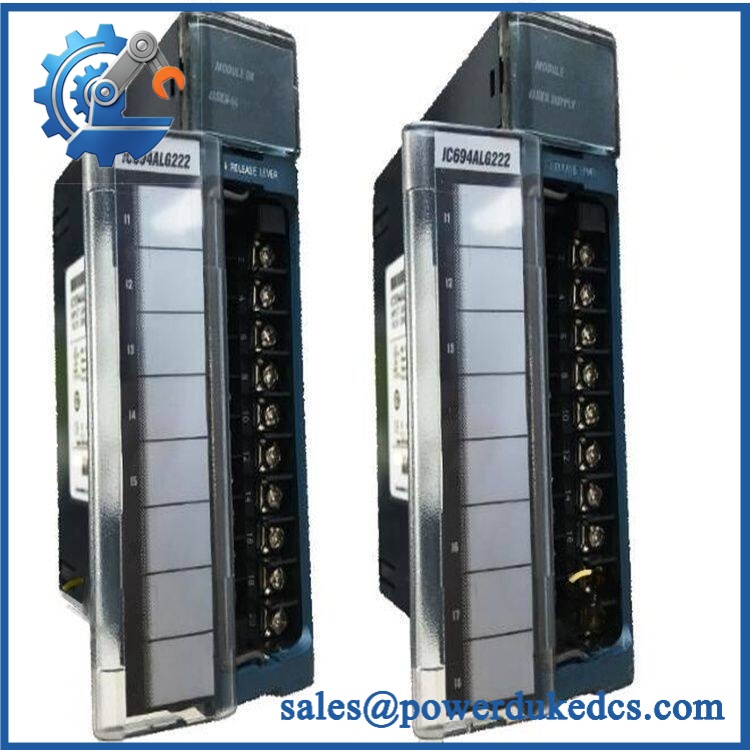
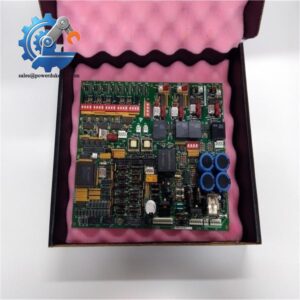
GE IC694ALG392
🚨 Global Compliance & Industry Certifications
The ALG392 family has documented regulatory history, but certification should be tied to the exact hardware revision and manufacturing lot rather than inferred solely from the base catalog number.
- CE: The ALG392 family documentation records CE certification beginning with the related IC693ALG392-B release.
- ATEX: The product history records ATEX approval for Group 2, Category 3 applications beginning with the IC693ALG392-C revision. This is particularly important where equipment is installed in classified hazardous-area applications.
- UL / hazardous-location listings: Secondary technical references associate later ALG392 variants with UL and hazardous-location approvals, but the applicable marking must be checked on the actual product label and certification documentation.
- Marine approvals: Some commercial databases associate ALG392-family variants with marine approvals such as DNV/GL; do not treat this as universal approval for every revision or installation.
- IEC/EMC considerations: GE documentation states that, to achieve the specified RF-susceptibility performance, the system should be installed in a metal enclosure.
Verify specific lot certifications with OEM. For an audit file, retain the product nameplate photograph, certificate or declaration applicable to that revision, purchase documentation, and Country of Origin statement.
🚨 Long-Term Storage & Asset Preservation Guide
Keep the module inside its original ESD shielding bag whenever it is not being tested. Do not leave the exposed PCB or connector area on an open warehouse shelf; airborne dust, conductive contamination, and repeated handling create avoidable risk.
Control humidity. Store the in a dry indoor environment, ideally below 60% RH, with no condensation or rapid temperature cycling. The published operating specification allows 5–95% non-condensing humidity, but that operating envelope should not be interpreted as permission for uncontrolled long-term storage.
Preserve the hardware/revision evidence. Attach the original packaging label, date code, serial information where available, and photographs to the asset record. That matters when a replacement is requested years later and the engineering team needs to distinguish an older AA/BB/BC device from a later CE/CG/FG revision.
For long shelf periods, inspect packaging integrity periodically. Do not repeatedly open a factory-sealed bag merely to “check” the module; document the seal condition instead.
Physical Installation Prerequisites
The is designed for installation in an RX3i I/O slot, with electrical connections interfacing through the associated backplane/terminal arrangement. GE documentation states that the module can be installed in any I/O slot of an RX3i system.
Cabinet preparation should account for three practical items:
- Cooling: Maintain the rack manufacturer’s required spacing and provide clear airflow around adjacent modules. Do not place cable bundles directly against ventilation openings or trap the module between heat-producing devices.
- Grounding: Verify the rack, backplane, enclosure, and protective-earth system before applying external 24 VDC. Field-to-backplane isolation does not eliminate the requirement for a correctly bonded cabinet.
- EMC enclosure: For the documented RF-susceptibility performance, GE specifies a metal enclosure when this module is installed.
Before insertion, isolate the applicable power sources and inspect the backplane connector and retaining hardware. A damaged connector can produce intermittent faults that look like an electronic module failure.
Buyer’s FAQ
What HS tariff code should be used for ?
A commonly quoted tariff classification for this type of industrial control module is 8537.10, with the final national tariff subheading depending on the importing country and the customs authority’s interpretation. One current commercial listing uses 8537101190, but this should not be copied automatically onto every shipment. The correct code depends on the declared function, configuration, destination country, and current tariff schedule.
Does the Country of Origin affect the customs file?
Yes. Product-origin information must correspond to the actual unit and the applicable origin rules. Some current commercial records identify USA as the Country of Origin for -family stock, but the warehouse should verify the physical nameplate, supplier COO declaration, and transaction documents before issuing a certificate or customs declaration.
Should I insure a 0.3 kg module separately during international shipping?
For a critical automation spare, cargo value matters more than gross weight. A small analog module can have a high downtime value even when its physical weight is low. For international shipments, specify the commercial value accurately, use suitable ESD and impact protection, and confirm whether the transport insurance covers concealed damage discovered after delivery.
Does include the latest firmware?
Not necessarily. The family has multiple hardware and firmware revisions. Emerson’s release documentation identifies -FG with firmware 2.01, following earlier revisions such as EF and DE, so the base catalog number alone does not establish the firmware version. Request the actual suffix, hardware revision, and firmware identification from the physical unit before making a firmware-dependent replacement decision.
For controlled spare-parts inventory, record catalog number + hardware suffix + firmware revision + COO + certification evidence + package condition as one asset record.



 Start Chat