

Description
- Full Model Number: IS200AEPCH1ABC
- Lifecycle Status: Legacy / Obsolete Support
- Core Function: Alternative Energy Pitch Control / Pitch Center board for GE Mark VI turbine control systems
- Top 3 Technical Specs: Mark VI IS200 series; AEPC functional acronym; A/B/C revision and artwork configuration
- Stock & Condition: New Surplus / Tested Refurbished; Physical stock confirmation required; Emergency dispatch subject to cutoff
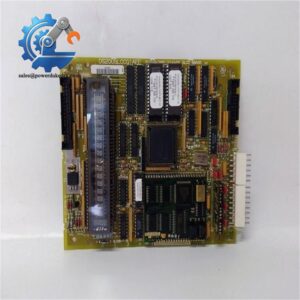
GE references identify IS200AEPCH1ABC as an AEPC board associated with the Mark VI IS200 platform. The corresponding IS200AEPCH1A assembly is described as an Alternative Energy Pitch Center Module, with an auxiliary board mounted to the primary PCB.
Module 3: Obsolescence & Supply Chain Deep Dive
When an installed GE Mark VI pitch-control assembly fails, sourcing the exact PCB can become the limiting factor for turbine restoration. The IS200AEPCH1ABC is associated with GE’s Mark VI turbine-control hardware and is identified by the AEPC functional acronym. Its construction includes a primary PCB with a mounted auxiliary card, multiple connectors, terminal strips, integrated circuits, and fuses. For legacy installations, locating the matching board assembly can therefore avoid an extended outage while the engineering team searches for a compatible alternative.
The TCO argument centers on preserving the installed architecture. A verified matching board can avoid cabinet redesign, new interface hardware, application redevelopment, and extensive turbine-control commissioning. That is particularly important when the failure is isolated to one PCB rather than the wider Mark VI system. The board is also reported as a non-VME-style PCB with factory mounting holes, so physical installation should be checked against the exact existing assembly before approval.
Module 4: Compatibility & Replacement Matrix
| Purchase Approval Item | Assessment |
|---|---|
| Replacement Classification | Conditional Drop-in Replacement |
| System Family | GE Mark VI IS200 |
| Software Compatibility | Existing Mark VI application; verify board configuration and system function |
| Hardware Modification | Normally not required for an exact same-assembly replacement |
| Estimated Physical Changeover | 1–4 hours |
| Commissioning / Validation | Additional time for pitch-control and system checkout |
| Cost Exposure | Generally substantially lower than a full control-system migration |
Field Traps — Watch Out
- Full identification matters: Verify IS200AEPCH1ABC, not merely the base IS200AEPCH1A designation. Secondary references distinguish the ABC configuration from the base A revision.
- Auxiliary-board configuration: The primary board carries a mounted auxiliary PCB. Confirm its connector arrangement, mounting hardware, and installed configuration before approving a visually similar replacement.
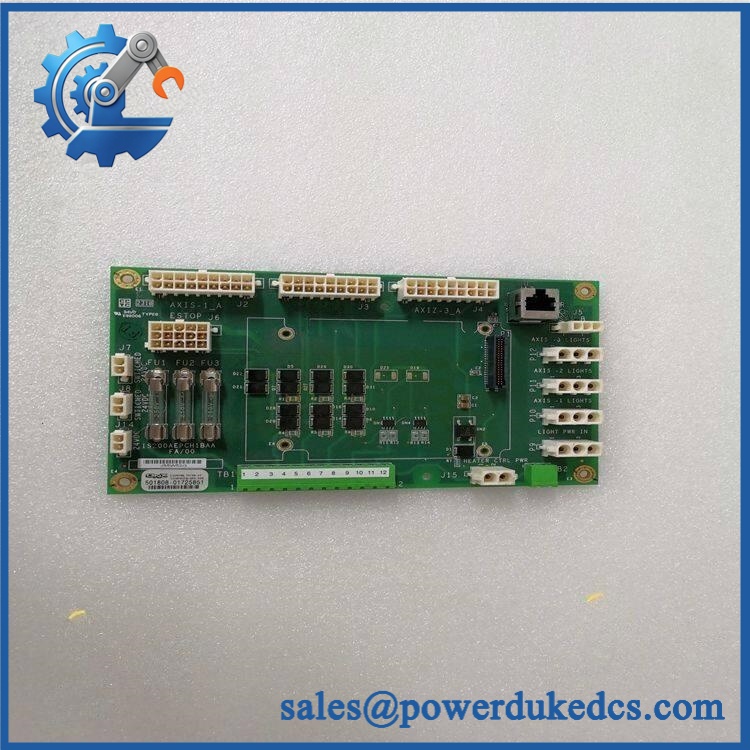
GE IS200AEPCH1ABC
Module 5: Quality Assurance & Testing SOP
The board should pass controlled inspection before entering critical-spares inventory.
- Incoming traceability: Record GE markings, complete IS200AEPCH1ABC identifier, serial information, revision data, and available date codes.
- OEM anti-counterfeit visual inspection: Check PCB markings, labels, barcode identifiers, component placement, connector construction, solder quality, and evidence of rework.
- Mechanical inspection: Verify the PCB body, factory mounting holes, auxiliary-board standoffs, screws, terminal strips, and connectors.
- Power-on self-test (POST): Apply controlled test power and verify expected startup response and applicable diagnostic indications.
- Electrical inspection: Check supply paths, fuses, grounding continuity, connector condition, and abnormal current draw.
- Auxiliary-board inspection: Confirm secure mechanical attachment and inspect the FPGA, integrated circuits, and connector interfaces on the mounted auxiliary card.
- Functional simulation: Exercise applicable pitch-control interface signals using an approved Mark VI-compatible test setup.
- I/O verification: Confirm relevant input/output paths, signal conditioning, and diagnostic response.
- Extended operation: Run representative loads while monitoring temperature, supply stability, and intermittent faults.
- Final QC release: Document part number, revision, serial information, test results, inspection date, and technician approval.
Module 6: Procurement & Lifecycle FAQ
1. Is the GE IS200AEPCH1ABC genuinely in stock, and what is the cutoff for emergency shipping?
Availability must be confirmed against the , including revision and auxiliary-board arrangement. Current supplier listings show this exact part number being offered, but an online listing should not replace physical warehouse confirmation. Emergency dispatch depends on order approval, payment clearance, warehouse cutoff, and carrier collection.
2. How do you guarantee the condition and authenticity of an obsolete GE board?
The correct process combines identification and testing. Inspect the GE markings, barcodes, PCB construction, connectors, components, mounting hardware, and auxiliary card, then conduct controlled electrical and functional testing. The is reported to carry two barcodes and multiple identifying codes, which can support traceability during receiving inspection.
3. Are there firmware compatibility issues engineers should check before issuing the PO?
This is primarily a hardware-configuration issue rather than a conventional standalone firmware question. Engineers should compare the installed board’s complete part number, revision, auxiliary-board configuration, connectors, and Mark VI application requirements. A base-model match without the correct ABC configuration should not be treated as sufficient.
4. Can the be installed without cabinet modification?
An exact replacement is generally intended to preserve the existing physical installation. The board uses factory mounting holes rather than a typical VME rack mounting arrangement, so procurement should confirm the physical mounting scheme and auxiliary-board arrangement against the installed unit before shipment.
5. What warranty and return terms should procurement require?
The PO should specify , exact revision, condition, testing status, warranty duration, and return conditions. For an obsolete turbine-control spare, warranty coverage should clearly address DOA and verified functional failure, with exclusions for incorrect installation, wiring faults, unsuitable power, and site-induced damage.



 Start Chat