

Description
- Model & Brand: IS200TSVCH2AED | GE
- Series: Mark VI Speedtronic
- Part Type: Servo Terminal Board
- GE Material Reference: MRP246517
- Primary Application: Electro-hydraulic servo valve interface for steam or fuel valve control
- Physical Dimensions: Approx. 3.5 × 13 × 13.6 cm according to current supplier records; verify the actual board and mounting carrier before cabinet planning.
- Estimated Net Weight: Approx. 0.34 kg according to current supplier records
- Estimated Shipping Weight: Approx. 0.8–1.2 kg with ESD protection and rigid packaging
- What’s in the Box: IS200TSVCH2AED board; ESD shielding protection; protective packaging; terminal blocks, cables, and mounting hardware only when explicitly included
- Input Power: Three 28 VDC supplies associated with the R, S, and T functions
- LVDT Interface: Two non-isolated LVDT excitation sources for the S and T channels
- Control Architecture: Simplex, dual, and TMR
- Compatible I/O Architecture: PSVO I/O pack / WSVO servo driver
- Important Restriction: Not intended for use with the VSVO processor
Product Introduction
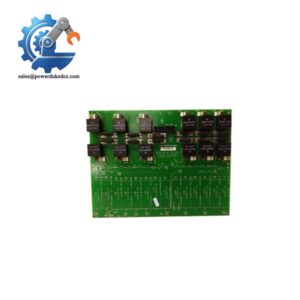
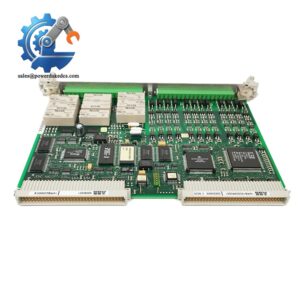
The IS200TSVCH2AED sits at the physical interface between Mark VI servo electronics and the turbine valve actuator circuit. GE identifies this board as a TSVC Servo Terminal Board, used to interface electro-hydraulic servo valves that position steam or fuel valves. Valve position feedback is obtained through LVDT devices, allowing the control system to compare commanded valve position with actual mechanical position. The documented architecture supports simplex, dual, and TMR configurations.
The board is associated with the PSVO I/O pack and WSVO servo-driver architecture, rather than the VSVO processor. Three 28 VDC supplies are connected through J28 for the R, S, and T board functions, while two non-isolated LVDT excitation sources are brought to TB3 and TB4 for the S and T channels. That makes exact interface identification critical. A board that matches the general TSVC family but uses a different I/O architecture should not be treated as a drop-in substitute (the error can remain hidden until valve commissioning).
Core Technical Specifications
| Parameter | Value |
|---|---|
| Manufacturer | GE |
| Part Number | IS200TSVCH2AED |
| Material Reference | MRP246517 |
| Series | Mark VI |
| Functional Acronym | TSVC |
| Product Type | Servo Terminal Board |
| Primary Function | Servo-valve and valve-position feedback interface |
| Application | Steam/fuel turbine valve control |
| Control Architecture | Simplex / Dual / TMR |
| Compatible I/O Pack | PSVO |
| Associated Driver | WSVO servo driver |
| VSVO Compatibility | Not supported |
| Board Power | Three 28 VDC supplies for R/S/T functions |
| Power Connector | J28 |
| LVDT Excitation | Two non-isolated sources |
| LVDT Terminations | TB3 and TB4 |
| Valve Feedback | LVDT |
| Board Dimensions | Approx. 3.5 × 13 × 13.6 cm from supplier data |
| Reported Weight | Approx. 0.34 kg |
| Processor | None as a standalone board |
| Firmware | None as a standalone termination board |
| Lifecycle | Legacy Mark VI spare |
| Installation | Internal Mark VI turbine-control cabinet |
The PSVO/WSVO compatibility, 28 VDC power arrangement, LVDT interfaces, and control-redundancy options are consistently identified in current technical records for IS200TSVCH2AED. 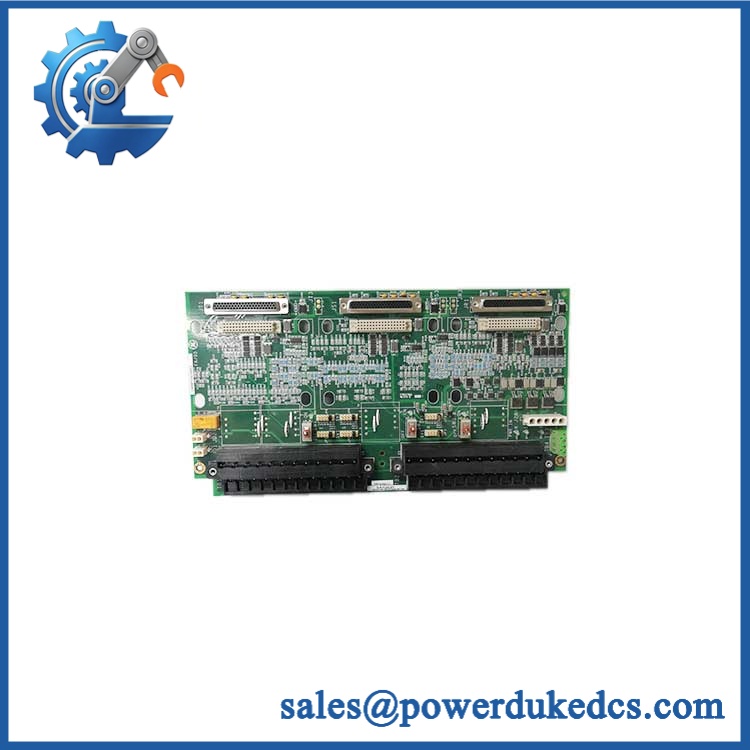
- GE IS200TSVCH2AED
🚨 Global Compliance & Industry Certifications
is an internal turbine-control interface board. Compliance should therefore be documented against the complete Mark VI installation, not inferred from the PCB alone.
- CE Mark: No standalone CE declaration specific to was established from the records reviewed.
- UL/cUL: No independent UL/cUL certificate specific to this exact board was established.
- ATEX/IECEx: No standalone ATEX or IECEx certification was established for .
- Marine Approvals: No board-specific DNV, ABS, or Lloyd’s Register approval was established.
- EMC: The completed Mark VI cabinet determines applicable EMC performance through grounding, shielding, cable routing, and installation practices.
- Safety Application: Because the board interfaces with turbine valve positioning, unauthorized substitution can affect the validated servo-control architecture.
The board’s hazardous-area suitability, where applicable, must be assessed together with the Mark VI cabinet, field wiring, associated I/O pack, servo driver, enclosure, and site installation conditions.
Verify specific lot certifications with OEM.
🚨 Long-Term Storage & Asset Preservation Guide
Keep inside an ESD shielding bag until installation. The board contains signal-conditioning electronics, connectors, transformers, and LVDT interface circuitry. Repeated exposure to static discharge or contaminated contacts can produce intermittent feedback problems.
Control humidity below approximately 60% RH where practical. Store the board in a clean, temperature-stable environment without condensation cycles. Before opening a cold package, allow it to reach ambient temperature while still sealed.
Protect the terminal blocks and connector assemblies from impact. The LVDT terminals are especially important; mechanical damage can create an open feedback circuit that may be misdiagnosed as a failed position transducer.
Record the board configuration before shelving. Photograph the nameplate, board revision, connector positions, terminal wiring, and any visible configuration links. Keep this information with the warehouse asset record.
Do not invent a capacitor-reforming interval. No exact reforming schedule was established in the reviewed documentation. Controlled electrical and functional testing before deployment is the preferred release method.
Physical Installation Prerequisites
The is an internal Mark VI servo terminal board, not a DIN-rail module.
Before installation:
- Confirm the host system uses the correct Mark VI TSVC/PSVO/WSVO architecture.
- Verify on the existing board.
- Confirm that the installed system uses the PSVO I/O pack, not a VSVO processor.
- Isolate the turbine-control and servo circuits according to the approved site procedure.
- Verify absence of hazardous DC voltage before touching the board or field terminals.
- Photograph all connectors and terminal wiring before removal.
- Confirm the three 28 VDC supplies at J28 against the approved wiring diagram.
- Inspect TB3 and TB4 for damaged terminals, loose conductors, or oxidation.
- Verify the two LVDT excitation circuits and their associated valve-position sensors.
- Inspect all board connectors for bent, recessed, or contaminated contacts.
- Preserve the original grounding and shield connections.
- Maintain the original routing of LVDT and servo wiring.
- Keep low-level position-feedback wiring away from high-current switching conductors where practical.
- Do not impose a generic 50 mm clearance around the PCB. Follow the Mark VI cabinet’s actual mechanical and ventilation arrangement.
- Confirm that the mechanical carrier and mounting points match the original installation.
- Perform point-to-point continuity testing before energization.
- Complete a controlled servo-valve position test and LVDT feedback verification before returning the turbine to service.
Buyer’s FAQ
Q1. What HS tariff code should be used for ?
A: Final classification depends on the importing country’s tariff schedule and the customs description. As a dedicated printed-circuit component used within electrical turbine-control equipment, HS heading 8538 may be considered, but the final national tariff code should be confirmed by the importer or customs broker.
Q2. Does Country of Origin equal the country where the spare is shipped?
A: No. COO is determined under the applicable origin rules for the physical board, not the export warehouse. Keep the board identification, manufacturer or supplier origin evidence, commercial invoice, and Certificate of Origin when required for the customs file.
Q3. How should I package and insure for international freight?
A: Use an ESD shielding bag, protect TB3/TB4 and all connectors with rigid cushioning, immobilize the board inside a shock-resistant carton, and add moisture protection appropriate to the transit route. One current supplier record reports a board weight of approximately 0.34 kg, while another supplier quotes significantly heavier shipping weight; use the actual packed weight for freight booking. For a turbine servo spare, insurance should cover the full declared replacement value.
Q4. Does include the latest firmware pre-loaded?
A: No. This is a servo terminal interface board, not a standalone processor. There is no normal firmware package associated with the board itself. The controlling software and processing reside in the associated Mark VI/PSVO architecture.
A: No, not as a routine maintenance procedure. The board interfaces with 28 VDC supplies, LVDT circuits, and electro-hydraulic servo-valve control wiring. Isolate the relevant control and valve circuits, verify zero energy, document all connections, install the replacement under ESD controls, and perform LVDT and servo-valve functional testig before restoring the turbine to operation.


 Start Chat