

Description
- Brand: Honeywell
- Full Model Number: CC-PCNT02 51454551-275
- Lifecycle Status: Legacy Support — effective July 1, 2026
- Core Function: Experion PKS C300 control processor
- Top 3 Technical Specs: 2 I/O links; 375 / 750 kbaud I/O link rates; 50 ms base execution period
- Processor Role: C300 controller executing Honeywell Control Execution Environment
- Redundancy: Supported
- System: Honeywell Experion PKS Series C
- I/O Capacity: Two controller I/O links
- Stock & Condition: New Surplus / Tested Refurbished — physical stock confirmation required
Honeywell’s 2025 lifecycle notice states that the CC-PCNT02 C300 Controller is entering Legacy Support, with off-process migration to CC-PCNT05 already available and heterogeneous on-process migration planned from Experion R540. Honeywell technical material also distinguishes the CC-PCNT02 architecture from CC-PCNT05, particularly around the external CF9 Control Firewall arrangement.
Module 3: Obsolescence & Supply Chain Deep Dive
A failed CC-PCNT02 is not a normal PLC spare swap. It is the control processor at the center of a Honeywell Experion PKS C300 control node, so an unavailable processor can hold up controller redundancy restoration, process control recovery, or a planned maintenance turnaround. The module supports two I/O links, 375 or 750 kbaud link speeds, and a documented 50 ms base execution period. Redundant C300 controller operation is also supported. Honeywell’s lifecycle notice is the critical procurement signal: CC-PCNT02 was scheduled to enter Legacy Support by Q2 2026, and the current support model is replacement-oriented rather than representing a continuing new-system product cycle.
The economic case for a verified CC-PCNT02 spare is strongest when the plant needs to restore an existing C300 architecture without immediately undertaking a controller migration. Honeywell identifies CC-PCNT05 as the migration direction, but moving to that platform can involve controller, network, firewall, configuration, testing, and commissioning work rather than a simple board exchange. Honeywell’s architecture documentation specifically shows CC- using an external CF9 Control Firewall, while CC-PCNT05 incorporates the control-firewall function into the controller architecture. For a single hardware failure, sourcing a validated replacement can therefore carry materially lower TCO than accelerating a plant-wide migration. —The real constraint is configuration compatibility and available inventory, not merely whether the CC- part number can still be found.
Module 4: Compatibility & Replacement Matrix
| Approval Question | Assessment for CC- 51454551-275 |
|---|---|
| Replacement Type | Drop-in replacement for a matching CC- installation, subject to controller configuration and system release |
| Platform | Honeywell Experion PKS |
| Controller Execution | Honeywell Control Execution Environment (CEE) |
| I/O Links | 2 |
| I/O Link Rate | 375 / 750 kbaud, system dependent |
| Base Execution Period | 50 ms |
| Redundancy | Supported |
| Firmware / Software | Version-sensitive; verify Experion release and controller software compatibility before replacement |
| Hardware Modification | Normally none for like-for-like CC- replacement |
| Typical Field Replacement | 4–8 hours, assuming controller redundancy, configuration backups, and cabinet access are available |
| Migration to CC-PCNT05 | Engineering migration, not a simple spare-part substitution |
| Migration Effort | Medium to high, depending on Experion release, network architecture, redundancy arrangement, and site procedures |
Honeywell’s lifecycle documentation identifies migration from CC-PCNT01/02 to CC-PCNT05, while the technical architecture differs between the two controller generations.
Field Traps — Watch Out
- Firmware / Experion release mismatch: Do not treat identical model numbers as proof of system compatibility. Confirm the installed Experion release, CEE/controller software requirements, controller configuration, and approved replacement procedure before powering up the spare. The lifecycle migration itself is tied to specific Honeywell system releases and migration methods.
- CF9 architecture mismatch: CC- installations may rely on the external CF9 Control Firewall. CC- has an embedded control-firewall function, so substituting for changes the network architecture and should not be approved as a field-level drop-in replacement.
- Redundancy configuration: Where redundant controllers are installed, verify the controller pair, synchronization state, configuration backup, and failover procedure before removing the failed unit. CC- supports redundant configurations.
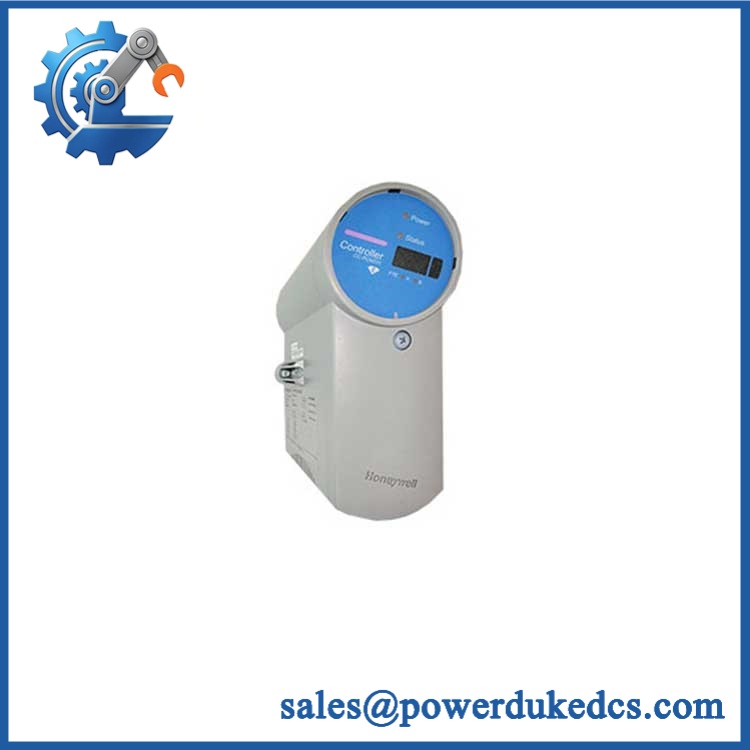
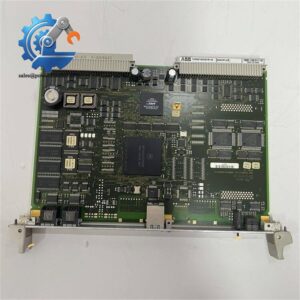
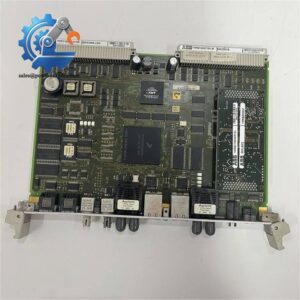
Honeywell CC-PCNT02 51454551-275
Module 5: Quality Assurance & Testing SOP
Controller processors require a significantly stricter inspection regime than passive I/O accessories.
1. Identity & Authenticity Verification
- Verify Honeywell CC- and 51454551-275 against the purchase specification.
- Perform OEM anti-counterfeit visual inspection of labels, chassis, connector geometry, PCB markings, fasteners, memory components, and Ethernet/network interfaces.
- Record serial number, date code, and visible revision information.
- Photograph both sides of the module before testing.
2. Physical Condition Inspection
- Inspect the connector interface for bent or recessed contacts.
- Check PCB and housing for corrosion, contamination, cracked components, heat discoloration, unauthorized rework, or mechanical impact.
- Inspect network interfaces and retaining hardware.
- Verify the board is suitable for controlled insertion into a test chassis.
3. Power-On Self-Test
- Install the controller in a calibrated compatible test environment.
- Apply the approved supply through controlled test equipment.
- Execute the controller’s power-on self-test (POST).
- Check startup status, controller diagnostics, and fault indications.
- Record abnormal LED states, boot failures, watchdog behavior, or unexpected resets.
4. Controller Functional Test
- Confirm the controller initializes correctly within the test environment.
- Verify controller diagnostics and CEE execution.
- Establish communication with the test I/O environment.
- Test both supported I/O links at the applicable system rate.
- Verify controller response at the documented 50 ms base execution period where the test configuration permits.
- Confirm redundancy behavior using a controlled paired-controller test where applicable.
5. Communications & Load Testing
- Exercise controller-to-I/O communications under representative traffic.
- Monitor communication stability, diagnostic counters, CPU behavior, and controller temperature.
- Test controlled failover behavior for redundant configurations.
- Confirm no unexpected communication loss or processor watchdog activity during extended operation.
6. Final QC Release
- Maintain a serial-number-specific test record.
- Record firmware/software revision detected during testing.
- Attach a QC Passed identification label.
- Issue a Test Report documenting power-on, diagnostics, communications, I/O, and stability results.
- Package the controller in appropriate ESD protection with mechanical protection around the connector assembly.
The technical basis for this test structure is consistent with the CC-‘s documented role as a controller, its two I/O links, 375/750 kbaud communication rates, 50 ms base execution period, and redundancy support.
Module 6: Procurement & Lifecycle FAQ
Q1. Is Honeywell CC- 51454551-275 genuinely in stock, and what is the emergency-shipping cutoff?
Physical stock should be verified against the exact 51454551-275 part number, serial number, condition, and available revision before the PO is released. For an outage requirement, obtain written confirmation of quantity, test status, dispatch date, and same-day carrier cutoff. Do not treat an online availability indicator as proof of physical inventory.
Q2. How do you verify the condition and authenticity of a legacy CC-?
Require part-number and serial-number verification, OEM marking inspection, connector inspection, controlled chassis power-up, POST/diagnostic checks, CEE initialization, I/O communication testing, and an extended stability test. A photographed label alone is not enough for a critical controller processor.
Q3. Are there firmware compatibility issues engineers should check before issuing the PO?
Yes. The hardware part number is only one part of the compatibility decision. Verify the site’s Experion PKS release, controller/CEE software requirements, existing configuration, redundancy arrangement, and approved replacement procedure. Honeywell’s lifecycle documentation also ties the PCNT01/02-to- migration path to specific system releases.
Q4. Can CC- directly replace CC-?
Not as a simple like-for-like assumption. Honeywell positions as the migration target, but its architecture differs from , including the treatment of the Control Firewall. A migration therefore requires engineering review rather than merely exchanging the processor module.
Q5. What warranty and return protection should apply to a surplus CC-?
The quotation should clearly state the warranty period, functional-failure coverage, return authorization procedure, and exclusions. For a legacy controller, require that the supplied serial-numbered unit passes documented pre-shipment testing and that the firmware/software revision observed during QA is disclosed before shipment.


 Start Chat