

Description
- Brand: Honeywell
- Full Model Number: CC-TDOB01
- Lifecycle Status: Legacy / Lifecycle availability requires verification
- Core Function: Series C digital output I/O termination assembly (IOTA) for CC-PDOB01
- Top 3 Technical Specs: 32 digital output channels; 24 VDC bussed output; 0.5 A maximum per channel
- Stock & Condition: New Surplus / Tested Refurbished; stock confirmation before PO; emergency dispatch subject to cutoff
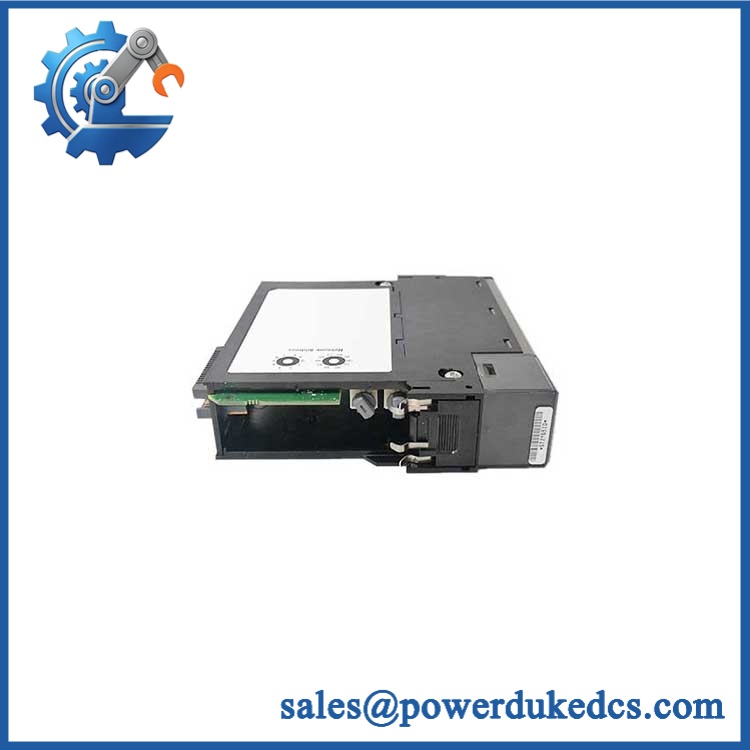
Honeywell’s Series C documentation identifies CC-TDOB01 as the non-redundant 9-inch IOTA associated with the CC-PDOB01 24 V digital output module. The documented output architecture is source-type, with short-circuit protection and 1500 VAC RMS or ±1500 VDC isolation.
Module 3: Obsolescence & Supply Chain Deep Dive
A failed CC-TDOB01 can stop an otherwise serviceable Series C output point group from being restored quickly, particularly when the plant cannot obtain the matching termination assembly through its normal maintenance channel. This part is not the active electronics by itself; it is the I/O termination assembly that interfaces field wiring with the CC-PDOB01 digital output module. Honeywell’s own Series C guide specifically pairs CC-TDOB01 with CC-PDOB01 and identifies the assembly as the non-redundant 9-inch configuration.
From a TCO standpoint, sourcing the exact IOTA is usually preferable to redesigning a working C300 I/O installation. Keeping the existing CC-PDOB01, field wiring, cabinet arrangement, and control configuration avoids engineering hours that do not add process capability. The CC-TDOB01 supports 32 source-type digital outputs, with up to 0.5 A per channel and integrated protection against output short conditions. —For an aging plant, a tested spare can therefore carry meaningful economic value even when the component itself is relatively simple.
Module 4: Compatibility & Replacement Matrix (Crucial for Buyers)
| Purchase / Migration Case | Compatibility Assessment | Typical Switch Effort |
|---|---|---|
| Replace CC-TDOB01 with the same CC- on an existing compatible Series C installation | Drop-in Replacement | 30–90 minutes for isolation, physical change, wiring check, and I/O verification |
| Replace CC- while retaining the existing CC-PDOB01 | Drop-in Replacement, provided connector, wiring, and IOTA revision are compatible | 30–90 minutes |
| Replace CC- with redundant CC-TDOB11 | Hardware / Architecture Change | 2–6+ hours, with redundancy and cabinet design review |
| Substitute a different Series C DO termination assembly | Hardware Modification / Engineering Approval Required | 2–8+ hours depending on wiring and configuration |
| Replace the complete DO channel assembly rather than the IOTA alone | Hardware and Configuration Review Required | 4–16+ hours depending on commissioning scope |
Honeywell’s published function matrix associates CC- → CC- for the non-redundant 24 V digital output configuration, while CC-TDOB11 is the redundant IOTA. CC- is therefore not a universal substitute for every Series C digital-output termination assembly.
Field Traps — Watch Out
IOTA/IOM Pairing: Verify that the installed active I/O module is . CC- is the termination assembly, not the electronic I/O module itself. Treating the two part numbers as interchangeable can result in an incomplete spare.
24 VDC Polarity: Honeywell’s Series C guide warns that external power must not be reversed when wiring the 24 V digital-output IOTA, because incorrect polarity can damage the I/O module. Verify the field-power connection before energization.
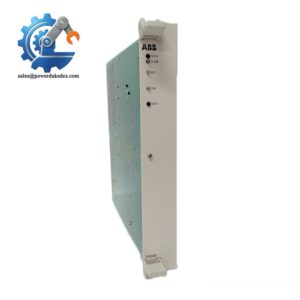
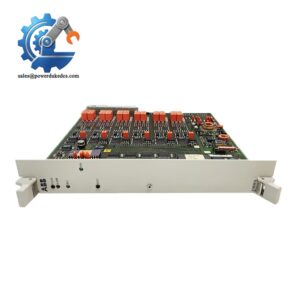
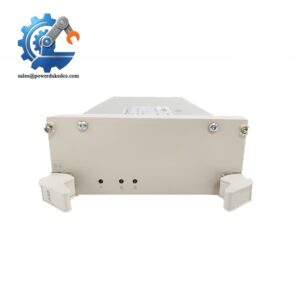
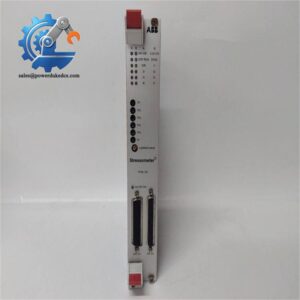
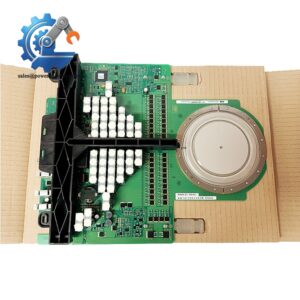
Honeywell CC-TDOB01
Module 5: Quality Assurance & Testing SOP
1. Part Identity Verification
Record the exact identifier, manufacturer markings, revision information, and available serial or lot information. Confirm that the supplied hardware matches the requested IOTA configuration.
2. OEM Anti-Counterfeit Visual Inspection
Inspect labeling, connector geometry, terminal arrangement, PCB markings, fasteners, housing construction, and manufacturer identification. Reject units with inconsistent labels, unauthorized modifications, corrosion, or mechanical damage.
3. Mechanical Inspection
Check the IOTA body, terminal interfaces, mounting points, connector alignment, insulation barriers, and cable-entry areas. Verify that no terminals are bent, cracked, contaminated, or loose.
4. Electrical Continuity Check
Verify relevant wiring paths and connector continuity against the documented Series C termination arrangement. Pay particular attention to the external 24 VDC supply path.
5. Power-On Verification
Install the CC- with a compatible on a controlled Series C test setup. Energize the system using the specified supply arrangement and check for abnormal diagnostic indications.
6. Digital Output Functional Test
Command representative output points through the test system. Verify correct switching behavior across representative channels and confirm that the associated I/O module recognizes the termination assembly correctly.
7. Protection Test
Where the test environment permits, verify the expected response to a controlled output fault condition. Honeywell documents short-circuit protection that removes power from the affected output point and generates an over-current soft failure; unaffected channels remain available.
8. Final QC Record
Record part identity, condition, test rack used, channel-test results, power verification, inspection findings, and QC disposition. Package the assembly with suitable ESD and mechanical protection before shipment.
Module 6: Procurement & Lifecycle FAQ
Q1. Is the Honeywell CC- genuinely in stock, and what is the cutoff for emergency shipping?
Current independent supplier listings show CC- inventory, but availability can change quickly for legacy Series C components. One current listing reports the part as in stock, while another identifies a 1–10 working day estimated lead time. Physical stock confirmation should therefore precede an emergency PO, with same-day dispatch dependent on the confirmed order cutoff and carrier schedule.
Q2. How do you guarantee the condition and authenticity of obsolete or surplus parts?
Require exact part-number inspection, manufacturer marking verification, mechanical inspection, connector checks, continuity testing, and a powered functional test with a compatible Series C I/O setup. For a termination assembly, confirming the electrical interface is just as important as inspecting the enclosure.
Q3. Are there firmware compatibility issues engineers should check before issuing the PO?
The primary compatibility concern with CC- is hardware pairing and I/O architecture, not the termination assembly itself carrying application firmware. Confirm that the installation uses the compatible CC- 24 V digital output module and that the project is configured for the non-redundant CC- arrangement.
Q4. Is CC- interchangeable with CC-TDOB11?
No. Honeywell identifies CC- as the non-redundant 9-inch IOTA and CC-TDOB11 as the redundant 12-inch IOTA for the same CC- digital-output family. Substitution changes the hardware architecture and requires engineering review.
Q5. What warranty and return terms should procurement require?
Specify a written functional warranty, a defined RMA procedure, and a clear coverage period on the quotation and PO. For surplus or refurbished Series C hardware, the return condi


 Start Chat