

Description
- Brand: Honeywell / Novar Controls
- Full Model Number: ETI-B B1G LOG13.9.99
- Lifecycle Status: Discontinued / obsolete control-card hardware
- Core Function: PCB control card / machine-control module
- Top 3 Technical Specs: ETI-B control card | PCB board assembly | Approx. 0.61 kg listed weight
- Stock & Condition: New surplus / refurbished; exact B1G LOG13.9.99 marking requires physical-unit verification
Module 3: Obsolescence & Supply Chain Deep Dive
A failed Honeywell ETI-B creates a sourcing problem that is less about replacing a generic circuit board and more about preserving an older control architecture. Available technical inventory records identify ETI-B as a Honeywell Novar Controls Corp control card / PCB board module, while the manufacturer status is listed as discontinued. The listed unit weight is approximately 0.61 kg. The additional B1G LOG13.9.99 marking supplied with your part number should therefore be treated as a revision or identification string that must be matched against the actual PCB and machine documentation.
For an installed Novar control system, sourcing the exact board is generally a lower-TCO maintenance strategy than replacing the entire control assembly merely because one legacy card is unavailable. The major savings come from avoiding panel redesign, field rewiring, software re-engineering, commissioning and extended production interruption. Since public technical documentation for the complete ETI-B B1G LOG13.9.99 combination is limited, procurement should not assume electrical compatibility from the ETI-B base code alone — the safest approach is an exact-part-number, revision and connector match supported by a bench test before shipment.
Module 4: Compatibility & Replacement Matrix
| Approval Point | Assessment |
|---|---|
| Replacement Class | Conditional drop-in replacement for an existing ETI-B position when the complete board revision and interface match |
| Software Compatibility | Configuration verification required; installed controller architecture must be confirmed |
| Revision Compatibility | Critical — verify B1G LOG13.9.99 marking against the installed board |
| Hardware Modification | Normally none for an exact ETI-B replacement |
| Connector Compatibility | Must be physically verified before installation |
| Estimated Switch Time | ~1–3 hours for controlled exchange and functional verification |
| Engineering Effort | Moderate because authoritative documentation for this exact revision is limited |
| TCO Position | Typically favorable versus replacing the complete legacy control system |
Available inventory documentation identifies ETI-B specifically as a control card / PCB board module and marks the Honeywell/Novar version as discontinued.
Field Traps — Watch Out
Revision mismatch: Do not purchase a generic ETI-B without confirming the complete board marking. The supplied B1G LOG13.9.99 string should be photographed and compared with the replacement before the PO is approved.
Connector and firmware/configuration mismatch: A visually identical PCB may still carry a different connector arrangement, component revision or control-program revision. Before installation, record the existing board’s connector layout, jumper/DIP settings and any visible revision labels.
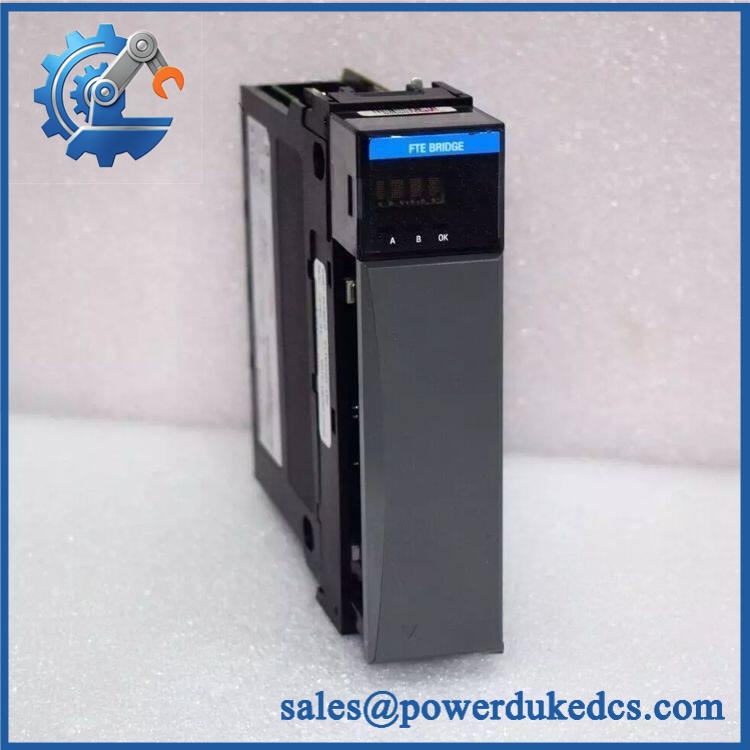
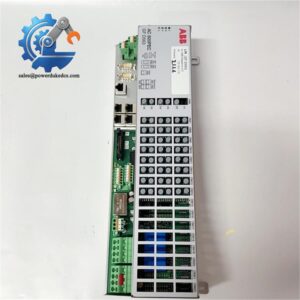
Honeywell ETI-B B1G LOG13.9.99
Module 5: Quality Assurance & Testing SOP
Because this is discontinued control-card hardware with limited public technical data, inspection should be centered on exact identification and controlled functional testing.
- Part identity verification: Record ETI-B, B1G, , serial/lot information and all board revision markings.
- OEM anti-counterfeit visual inspection: Inspect PCB silkscreen, manufacturer markings, component references, connectors, solder workmanship and evidence of unauthorized board repair.
- Mechanical inspection: Check PCB mounting points, edge contacts, plugs, terminal interfaces and enclosure hardware for cracking, oxidation or bent contacts.
- Component condition inspection: Look for damaged capacitors, overheated resistors, discoloration, corrosion and signs of previous component replacement.
- Continuity testing: Check critical power and ground paths before energization.
- Power-up test: Apply the correct controlled supply only after the customer’s machine documentation or matching-unit measurements establish the permitted voltage.
- Power-on self-test: Verify normal startup behavior, status indicators and absence of diagnostic faults.
- I/O function testing: Exercise all accessible inputs and outputs through an approved test fixture or representative controller configuration.
- Communication/interface test: Verify all applicable board-to-controller interfaces and confirm stable operation under representative traffic or signal conditions.
- Load testing: Operate representative outputs under controlled load and monitor current draw, relay behavior where applicable, and temperature rise.
- Configuration record: Photograph jumper/DIP positions and record any firmware or configuration identifier available from the controller.
- Final QC release: Attach the serial/part-number record, test results and photographs; package in ESD-safe material with impact protection.
The available inventory specification lists ETI-B as a PCB control-card assembly rather than a complete controller, so the test procedure should be matched to the customer’s actual system architecture before applying power.
Module 6: Procurement & Lifecycle FAQ
1. Is Honeywell ETI-B B1G .9.99 genuinely in stock, and what is the emergency-shipping cutoff?
Current commercial inventory records show ETI-B units available in new and refurbished conditions, including a listed low-stock quantity for one inventory location. That does not independently confirm the exact B1G .9.99 revision. For emergency procurement, require actual-unit photographs, complete board marking, physical quantity, condition and same-day shipping cutoff before PO release.
2. How do you verify the condition and authenticity of an obsolete ETI-B?
Require exact part-number and revision verification, PCB inspection, connector examination, continuity checks, controlled power-up, I/O testing and representative load testing. For this part, the physical board should be treated as the primary identification reference because public documentation for the complete revision string is limited.
3. Are there firmware or revision compatibility issues engineers should check before issuing the PO?
Yes. The B1G .9.99 designation should be treated as a required matching identifier until engineering confirms otherwise. Compare the existing board revision, jumper/DIP configuration, connectors and controller software environment before approving a substitute ETI-B revision.
4. Is ETI-B a complete controller?
No. Available technical records identify ETI-B as a control card / PCB board module, so procurement should not describe it as a complete standalone control system.
5. What warranty and return terms should procurement require?
The PO should specify the complete Honeywell ETI-B B1G .9.99 identification, accepted condition, functional-test requirements, warranty duration, DOA definition and return period. Actual-unit photographs should form part of the acceptance record, particularly where the exact revision is difficult to establish from public documentation.



 Start Chat