

Description
- Brand: Honeywell
- Full Model Number: SAI-1620M CCV1.4
- Lifecycle Status: Obsolete / legacy hardware revision; V1.4 identified in Honeywell’s historical Safety Manager documentation, with later V1.5 hardware appearing in secondary inventory records
- Core Function: Safety Manager safe high-density analog input module
- Top 3 Technical Specs: 16 analog input channels | 0–4.1 V module-side input range | 12-bit A/D converter, ±1 LSB inaccuracy
- Stock & Condition: New surplus / tested refurbished; exact CCV1.4 revision and physical stock require lot-level verification
Module 3: Obsolescence & Supply Chain Deep Dive
A failed Honeywell SAI-1620M CCV1.4 can create a disproportionate sourcing problem in a Safety Manager installation because the card is a safety-rated, high-density analog input module rather than a generic PLC analog board. Honeywell’s hardware reference specifies 16 safe analog inputs, SIL3 compliance under IEC 61508, isolated analog 0 V common, a 12-bit A/D converter, and module inaccuracy below 0.25%. Importantly, the SAI-1620m itself expects a 0–4 V-class converted signal; field 0–20 mA or 4–20 mA signals require the appropriate conversion hardware such as TSAI-1620m, TSHART-1620m, TSGAS-1624, TSFIRE-1624, or BSAI-1620mE. Honeywell’s 2019 system bulletin specifically lists SAI-1620M revisions V1.1 through V1.4, confirming that the CCV1.4 revision belongs to the established Safety Manager I/O hardware family.
For an installed Safety Manager system, sourcing an exact replacement normally has a much lower TCO than redesigning the I/O architecture around a different platform. Existing field termination assemblies, channel assignments, engineering documentation, and safety validation work can remain applicable when the replacement matches the installed hardware revision and system configuration. The financial comparison should account for engineering review, loop checks, safety-function testing, panel work, and production downtime—not just the card purchase price. A later V1.5 revision is visible in current surplus inventory, so procurement should not assume that every SAI-1620M offered today is identical to CCV1.4.
Module 4: Compatibility & Replacement Matrix
| Approval Point | Assessment |
|---|---|
| Replacement Class | Drop-in replacement when the replacement is the same SAI-1620M hardware family and satisfies the installed Safety Manager configuration |
| Software Compatibility | Configuration verification required; confirm the Safety Manager release, I/O configuration and hardware revision before commissioning |
| Revision Compatibility | Critical check — CCV1.4 should not automatically be treated as identical to later V1.5 hardware |
| Hardware Modification | Normally none for a like-for-like SAI-1620M replacement |
| Signal Interface | Requires existing signal-conversion architecture; field 0–20 mA / 4–20 mA signals are converted before reaching the SAI-1620m input |
| Estimated Switch Time | ~1–3 hours for controlled card replacement, configuration verification and channel checks; safety-function validation may extend the maintenance window |
| Engineering Effort | Low–Moderate for exact-revision replacement; higher if the revision or conversion hardware changes |
| TCO Position | Generally favorable versus re-engineering an installed Safety Manager I/O architecture |
Honeywell documents the SAI-1620m as a 4 TE, 3 HE module with 16 channels, 12-bit A/D conversion, and a module-side input range of approximately 0–4.1 V. The field signal interface therefore depends on the associated termination/conversion assembly.
Field Traps — Watch Out
Revision mismatch: The exact marking matters. Honeywell’s historical documentation identifies V1.4 as one of the revisions, while secondary inventory records also show V1.5 units. Do not substitute a later board simply because the base model number is the same without engineering approval.
Signal-conversion mismatch: Do not connect a raw 4–20 mA field loop directly to the SAI-1620m input without confirming the installed termination/conversion arrangement. Honeywell explicitly states that field current signals must be converted to a suitable voltage level for the module.
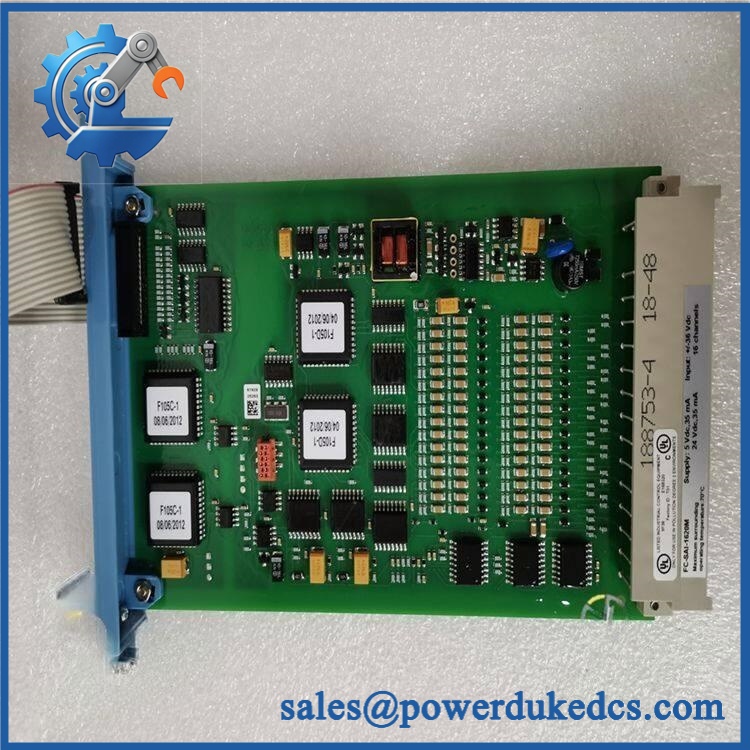
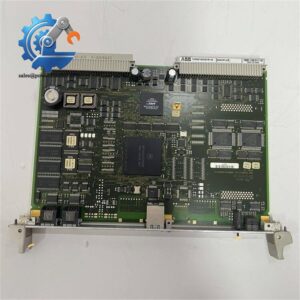
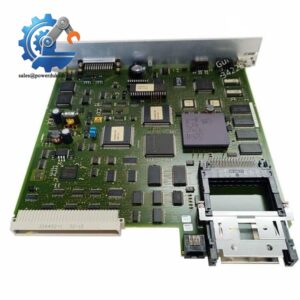
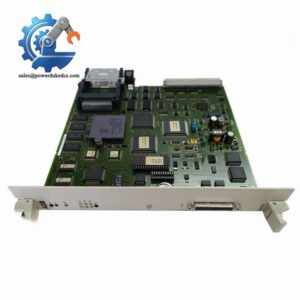
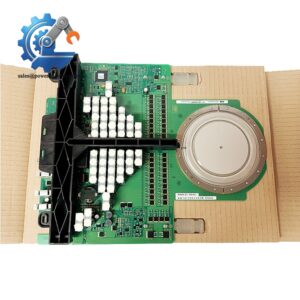
Honeywell SAI-1620M CCV1.4
Module 5: Quality Assurance & Testing SOP
For safety-related I/O, a board that powers up is not automatically acceptable. Pre-shipment inspection should establish revision identity, electrical integrity and representative channel performance.
- Part identity verification: Record Honeywell markings, , , board identifiers, serial/lot information and all visible revision codes.
- OEM anti-counterfeit visual inspection: Inspect PCB markings, component references, connector construction, labels, solder workmanship and evidence of unauthorized component substitution.
- Mechanical inspection: Check the card edge, mounting hardware, connector coding, front bracket and ribbon-cable interface for damage, contamination or deformation.
- Power-rail verification: Apply the specified supply conditions and measure the expected supply behavior before connecting signal sources.
- Power-on self-test: Verify startup diagnostics and module status behavior in an appropriate Safety Manager/FSC test environment.
- Input-channel test: Exercise representative channels across the specified module-side voltage range and verify stable A/D conversion.
- 12-bit conversion check: Compare measured input values against calibrated reference points and verify conversion error remains within the applicable acceptance limit.
- Cross-talk test: Exercise multiple adjacent channels and check that one active channel does not introduce abnormal response into another. The published specification identifies cross-talk performance greater than 60 dB.
- Signal-conversion verification: Where the customer’s architecture uses TSAI/BSAI or another approved conversion stage, verify the complete signal path from simulated field current through the converter to the SAI-1620m input.
- Safety-channel verification: Confirm the module responds correctly to representative fault or out-of-range conditions supported by the test procedure.
- Final QC release: Record revision, serial information, supply measurements, channel test results and photographs; package the PCB in ESD-safe protection with mechanical cushioning.
Honeywell classifies the SAI-1620m inputs as SIL3 safety channels, so the acceptance procedure should be treated as a controlled instrumentation test rather than a basic PLC card power-up.
Module 6: Procurement & Lifecycle FAQ
1. Is Honeywell .4 genuinely in stock, and what is the emergency-shipping cutoff?
Physical availability must be confirmed against the exact .4 revision. Current market records show units in new and used inventory, but some listings specify V1.5 rather than V1.4. For emergency procurement, request photographs of the actual board marking, quantity physically available, test status and carrier cutoff before the PO is released.
2. How do you guarantee the condition and authenticity of an obsolete .4?
Require verification of the full board marking, revision code, serial/lot information, PCB construction and connector condition, followed by controlled electrical and channel testing. For a safety application, acceptance should include documented test results rather than a visual-condition statement alone.
3. Are there firmware or hardware-revision compatibility issues engineers should check before issuing the PO?
Yes. .4 is a specific hardware revision, and Honeywell’s historical notification identifies revisions through V1.4. Later V1.5 inventory also exists. Engineering should therefore confirm the installed Safety Manager release, I/O configuration and approved replacement revision before accepting another revision.
4. Does this module accept a standard 4–20 mA signal directly?
Not at the SAI-1620m module input itself. Honeywell specifies a 0–4 V-class analog input and states that field 0–20 mA or 4–20 mA signals must first pass through the appropriate conversion hardware. This is one of the most important checks before replacing the card.
5. What warranty and return terms should procurement require?
The PO should specify the exact revision, accepted condition, electrical-test coverage, warranty duration, DOA definition, return window and required failure evidence. For safety-system spares, require the supplier’s test record and actual-board photographs as part of the acceptance package.



 Start Chat