

Description
- Brand: Honeywell
- Full Model Number: SC1
- Lifecycle Status: Unverified — exact Honeywell product identification required
- Core Function: Not reliably identifiable from “SC1” alone
- Top 3 Technical Specs: Manufacturer-specific; configuration-dependent; insufficient public identification
- Product Family: Unconfirmed
- System Compatibility: Unconfirmed
- Firmware: Unconfirmed
- Stock & Condition: New Surplus / Tested Refurbished — physical stock confirmation required
Module 3: Obsolescence & Supply Chain Deep Dive
The SC1 designation alone is not sufficient to identify a specific Honeywell industrial automation product. Current Honeywell documentation covers multiple product families, while broad web searches also return unrelated SC1 products from other manufacturers. Treating the code as a controller, I/O card, sensor interface, or gas-detection component without a complete Honeywell part number would create a serious procurement risk. Honeywell’s current automation portfolio spans process control, PLCs, remote I/O, sensing, and safety equipment, so the prefix alone cannot establish the product family.
That uncertainty matters for TCO. A wrong identification can result in an incorrect PO, incompatible hardware, delayed commissioning, or a return dispute. For a legacy spare, confirming the exact ordering code before sourcing is considerably cheaper than discovering a mismatch at the panel. —A clear photograph of the nameplate, label, or PCB marking would allow the exact Honeywell series and replacement status to be established.
Module 4: Compatibility & Replacement Matrix
| Approval Question | Assessment for Honeywell SC1 |
|---|---|
| Replacement Type | Not determinable from SC1 alone |
| Product Family | Unconfirmed |
| Electrical Specification | Unconfirmed |
| I/O Configuration | Unconfirmed |
| Communication Protocol | Unconfirmed |
| Firmware Requirement | Unconfirmed |
| Hardware Modification | Cannot be assessed safely |
| Drop-in Replacement | Do not approve until exact part identification is confirmed |
| Typical Replacement Time | Not determinable |
| Engineering Effort | Pending exact identification |
Field Traps — Watch Out
- Model-number ambiguity: “SC1” is too short to establish a Honeywell ordering configuration. Do not approve a replacement based on the generic designation alone.
- Wrong product family: Public search results for SC1 include unrelated industrial products from other manufacturers, so manufacturer name plus the exact Honeywell ordering number must be verified before technical substitution.
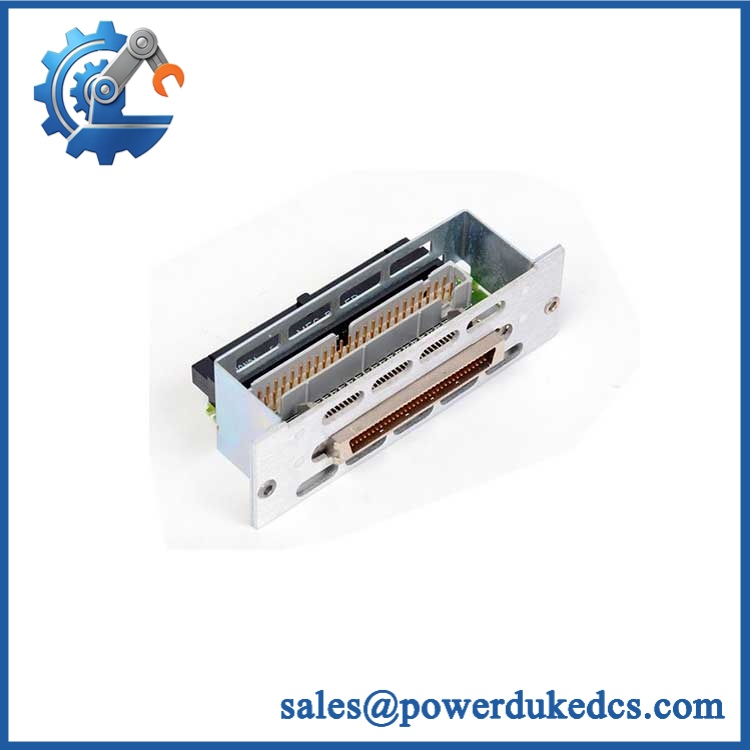
Honeywell SC1
Module 5: Quality Assurance & Testing SOP
Until the exact Honeywell product is identified, the QA laboratory should not invent a functional test procedure. The test method must correspond to the actual hardware function.
1. Identity & Authenticity Verification
- Verify Honeywell branding and complete nameplate data.
- Record the full part number, serial number, date code, and revision.
- Perform OEM anti-counterfeit visual inspection.
- Photograph labels, connectors, PCB markings, and enclosure.
2. Physical Inspection
- Check connectors for bent or recessed contacts.
- Inspect PCB assemblies for corrosion, contamination, burn marks, cracked components, and unauthorized repair.
- Verify mounting hardware and mechanical interfaces.
3. Electrical Safety Check
- Determine the actual supply-voltage specification from the OEM documentation.
- Do not apply power based solely on the designation “SC1.”
- Verify grounding and insulation requirements once the exact product is established.
4. Functional Testing
- Determine whether the item is a controller, I/O module, interface, sensor-related device, or another Honeywell component.
- Build the corresponding test fixture.
- Perform power-on self-test where applicable.
- Verify LEDs, communication interfaces, I/O channels, alarm functions, or control functions according to the exact OEM specification.
5. Extended Stability Testing
- Run representative functional loads where applicable.
- Monitor temperature, supply stability, communications, and fault diagnostics.
- Record all results by serial number.
6. Final QC Release
- Match the tested hardware against the purchase-order part number.
- Attach a QC identification label.
- Issue a serial-number-specific Test Report.
- Package using appropriate ESD and mechanical protection.
Module 6: Procurement & Lifecycle FAQ
Q1. Is Honeywell SC1 genuinely in stock, and what is the emergency-shipping cutoff?
Stock should not be confirmed until the complete Honeywell part number is established. For emergency procurement, require a photograph of the physical label, available quantity, condition, test status, and dispatch cutoff.
Q2. How do you verify the condition and authenticity of an SC1?
Verify the complete ordering number and serial information, then perform OEM marking inspection, physical inspection, electrical testing, and function-specific testing. The designation SC1 alone is insufficient for a meaningful acceptance test.
Q3. Are there firmware compatibility issues?
Potentially, but the answer depends entirely on the actual Honeywell product represented by SC1. Firmware should not be specified until the exact series and hardware revision are known.
Q4. Is SC1 a drop-in replacement?
That cannot be confirmed from the designation alone. Procurement should first verify the complete part number, installed system, electrical specifications, mechanical interface, and communications requirements.
Q5. What warranty and return protection should apply?
The quotation should state the exact part number, tested condition, warranty period, functional-failure coverage, and return procedure. For this designation, requiring clear nameplate photographs before PO release is particularly important because SC1 is not sufficiently specific for compatibility approval.


 Start Chat