

Description
- Brand: Honeywell
- Full Model Number: XPR-A FST/N/04
- Associated Hardware Number: HW-XPRAY-3
- Lifecycle Status: Legacy / Obsolete
- Core Function: XPR-A CPU / process-control processor module
- Top 3 Technical Specs: HW-XPRAY-3 processor; XPR-A platform; FST/N/04 configuration
- Stock & Condition: New Surplus / Tested Refurbished; physical stock confirmation required; emergency dispatch subject to cutoff
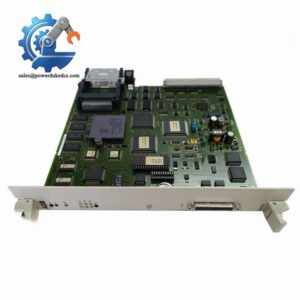
Available technical and inventory references identify Honeywell XPR-A HW-XPRAY-3 FST/N/04 specifically as a CPU/processor module. Current listings also associate XPR-A with Honeywell’s Measurex-related process-control hardware.
Module 3: Obsolescence & Supply Chain Deep Dive
A failed XPR-A CPU creates a much more serious sourcing problem than a routine I/O replacement. The processor is the control element at the heart of the legacy XPR-A architecture, so an unavailable spare can force a plant into an engineering-intensive migration rather than a simple component exchange. Current references consistently identify HW-XPRAY-3 FST/N/04 as the XPR-A CPU module, but detailed OEM technical documentation for this exact ordering combination is now difficult to locate.
From a TCO standpoint, preserving an operational legacy system with a verified CPU spare can be substantially less expensive than redesigning the control platform. The avoided costs extend beyond hardware: application conversion, wiring changes, commissioning, validation, operator retraining, and planned or unplanned process downtime can quickly outweigh the acquisition price of a legacy processor. —Because public documentation for this exact configuration is limited, engineering should verify the installed XPR-A revision and application before approving a substitute.
Module 4: Compatibility & Replacement Matrix (Crucial for Buyers)
| Purchase / Migration Case | Compatibility Assessment | Typical Switch Effort |
|---|---|---|
| Replace existing XPR-A CPU with the exact HW-XPRAY-3 FST/N/04 | Drop-in Replacement, subject to revision and configuration verification | 1–3 hours |
| Replace with another XPR-A CPU carrying a different hardware/firmware revision | Software Compatible — Verification Required | 2–6 hours |
| Substitute a different XPR processor family | Hardware Modification | 1–3 days |
| Migrate the XPR-A control application to a modern controller | Hardware Modification + Software Conversion | Several days to weeks |
Field Traps — Watch Out
Hardware Revision: Do not approve a CPU solely because the front label says XPR-A. The searchable inventory record identifies the requested configuration as HW-XPRAY-3 FST/N/04, so the complete hardware designation should be matched before shipment.
Application / Firmware Dependency: CPU substitutions can affect the stored control application, communication interfaces, and startup behavior. A spare with a different firmware revision should therefore be treated as a controlled engineering change until the installed system version is confirmed.
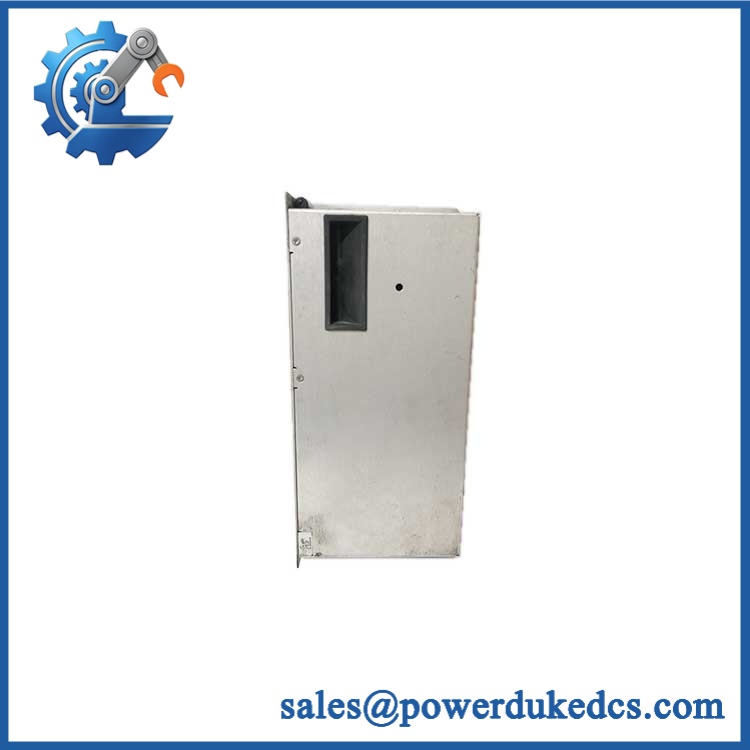
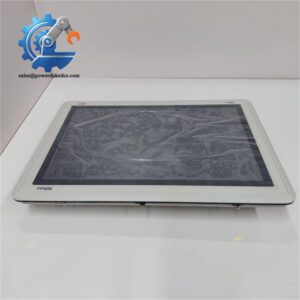
Honeywell XPR-A HW-XPRAY-3 FST/N/04
Module 5: Quality Assurance & Testing SOP
1. Part Identity Verification
Record XPR-A FST/N/04, , serial number, revision markings, manufacturer labels, and PCB identifiers. Photograph all identification markings before testing.
2. OEM Anti-Counterfeit Visual Inspection
Compare the PCB layout, processor assembly, connectors, labels, fasteners, component markings, and manufacturing details against known Honeywell XPR-A hardware. Any inconsistent marking triggers secondary inspection.
3. Mechanical Inspection
Inspect the PCB for cracked solder joints, bent pins, corrosion, contamination, overheated components, damaged edge connectors, and evidence of unauthorized repair.
4. Electrical Pre-Test
Check supply-path continuity, ground continuity, connector condition, and unintended shorts before installing the CPU into a test platform.
5. Power-On Self-Test (POST)
Install the processor in a compatible XPR-A test environment and apply controlled power. Verify startup sequence, processor status indicators, memory initialization, and absence of immediate diagnostic faults.
6. CPU / Memory Test
Run processor diagnostics where supported. Verify memory recognition, execution stability, watchdog behavior, and repeatable startup after controlled power cycling.
7. Communication Test
Connect the CPU to the appropriate test communications interface. Confirm expected processor communication, interface recognition, and stable data exchange with representative system components.
8. Application / Logic Verification
Where a suitable test environment is available, load a controlled test application or approved diagnostic image. Verify processor execution, I/O scanning behavior, fault handling, and restart behavior without altering customer application data.
9. Extended Burn-In
Operate the CPU continuously under representative processor and communication load. Monitor temperature, processor status, intermittent resets, communication errors, and diagnostic events.
10. Final QC Record
Record the exact hardware designation, serial number, revision, power-up result, diagnostics, communication-test result, burn-in outcome, and final QC disposition. Package in ESD-safe material for shipment.
Module 6: Procurement & Lifecycle FAQ
Q1. Is the Honeywell XPR-A FST/N/04 genuinely in stock, and what is the cutoff for emergency shipping?
Current independent inventory references show Honeywell XPR-A HW- FST/N/04 as an available CPU-module listing, including a used unit with a stated 450 g weight. Because this is legacy hardware, physical stock confirmation should be completed before releasing an emergency PO.
Q2. How do you guarantee the condition and authenticity of an obsolete or surplus CPU?
Require verification of the complete XPR-A/HW- identification, PCB markings, serial information, connector condition, controlled power-up, CPU diagnostics, communication testing, and documented burn-in results. For legacy processors, the test report is essential.
Q3. Are there firmware compatibility issues I should warn my engineers about before issuing the PO?
Yes. CPU modules can be revision-dependent even when the family designation is identical. The procurement specification should require the supplier to disclose the hardware revision and any available firmware information, while engineering confirms compatibility with the installed XPR-A application and communications environment.
Q4. Is HW- FST/N/04 a direct replacement for every XPR-A CPU?
No. The available listing specifically identifies HW- FST/N/04 as one XPR-A CPU configuration. Other XPR-A revisions should not be assumed equivalent without checking hardware revision, firmware, memory configuration, and application compatibility.
Q5. What warranty and return terms should procurement require?
The PO should specify a written functional warranty, RMA procedure, inspection period, and coverage limitations. For a legacy CPU, require coverage for processor startup, memory operation, communication functionality, and documented test conditions, while excluding damage caused by incorrect installation, incompatible firmware, or customer-side power faults.



 Start Chat