

Description
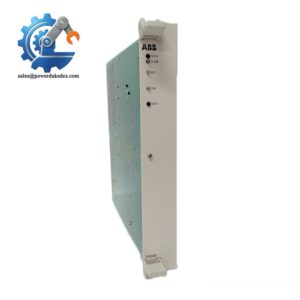
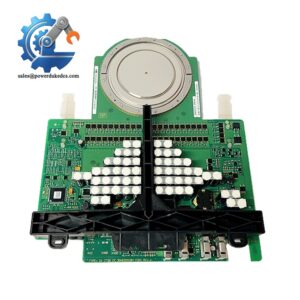
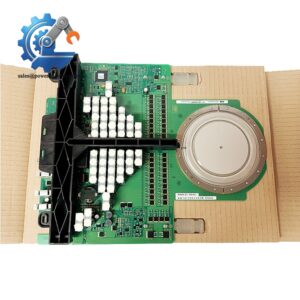
- Model & Brand: ICS Triplex T8471C
- Series: Trusted TMR
- Part Type: 120 VDC Trusted TMR Digital Output Module
- I/O Configuration: 40 digital output channels
- Architecture: Triple Modular Redundancy (TMR)
- System Supply: 20–32 VDC
- Field/Output Voltage: 35–130 VDC for pre-build-revision-J35 units; 35–150 VDC for J35 and later revisions
- Channel Rating: 0.5 A continuous per channel
- Power Group Rating: 2 A continuous per group
- Physical Dimensions: Approx. 31 W × 266 H × 303 D mm
- Estimated Shipping Weight: Approx. 1.34 kg net; allow additional packaging weight for freight calculations
- Installation: Trusted chassis plug-in module
- Protection: Electronic short-circuit protection
- What’s in the Box: T8471C module and ESD protective packaging; terminal assemblies, field cables, retaining hardware, and manuals only when specifically included on the PO
- Handling Class: ESD-sensitive safety I/O hardware; protect the connector assembly and module housing from impact and contamination
Current technical references identify T8471C as a Trusted 120 VDC digital output module with 40 channels, TMR architecture, and a 1.342 kg module weight. The published electrical data distinguishes earlier and J35-or-later build revisions by field-voltage capability.
Product Introduction
Environmental Hook
The T8471C is intended for critical industrial control environments where output availability and fault detection matter at the same time. Its TMR architecture, electronic short-circuit protection, and 40-channel output structure are suited to applications involving shutdown valves, solenoids, interlock relays, and other field actuators. Independent specifications report an operating temperature range up to 60°C, while other T8471C inventory references report a wider -40 to +85°C range; the exact environmental rating should therefore be tied to the hardware revision and applicable certification record.
For asset management, revision control is particularly important. T8471C supports a high-voltage field-output range, but the specified maximum differs by build revision: 130 VDC before J35 and 150 VDC from J35 onward. A receiving team should therefore record the actual revision before classifying a spare as interchangeable (the label is part of the engineering record, not just an inventory identifier).
Core Technical Specifications
| Parameter | Value |
|---|---|
| Manufacturer | ICS Triplex |
| Model | |
| Product Type | Trusted TMR Digital Output Module |
| Output Type | 120 VDC nominal class |
| Output Channels | 40 |
| Architecture | Triple Modular Redundancy |
| System Supply Range | 20–32 VDC |
| Field Voltage, Pre-J35 | 35–130 VDC |
| Field Voltage, J35 and Later | 35–150 VDC |
| Output Current, Per Channel | 0.5 A continuous |
| Output Current, Per Power Group | 2 A continuous |
| Output Groups | 4 groups |
| Minimum On-State Load | 20 mA |
| Output-Off Resistance | 330 kΩ |
| Output-On Resistance | 0.8 Ω |
| Output Short-Circuit Protection | Electronic, latching |
| Maximum Output Measurement Range | 150 VDC |
| Maximum Withstand Voltage | 200 VDC |
| Channel-to-Channel Isolation | 250 V basic |
| Power-Group-to-Power-Group Isolation | 150 V reinforced |
| Operating Temperature | 0–60°C in one published technical specification* |
| Non-Operating Temperature | -25 to 70°C in one published technical specification* |
| Relative Humidity | 10–95%, non-condensing* |
| Module Dimensions | 266 × 31 × 303 mm |
| Module Weight | Approx. 1.342 kg |
| SOE Resolution | 1 ms |
| Timestamp Accuracy | ±0.5 ms |
| Self-Test Interval | 5 minutes |
| Lifecycle | Legacy / availability dependent |
*Environmental figures vary across independent T8471/ records. Use the exact hardware revision, applicable Trusted system specification, and certification documentation as the final engineering basis.
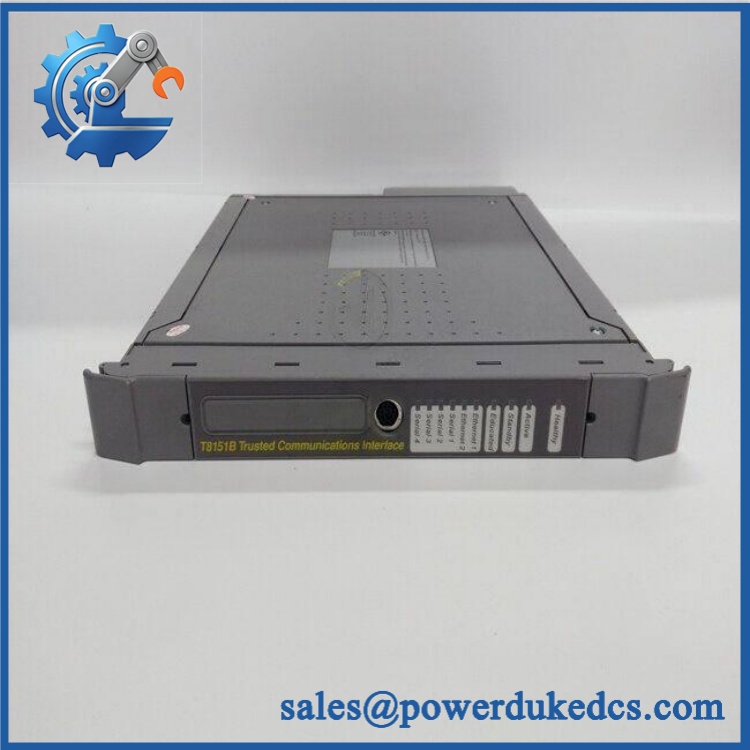
ICS Triplex T8471C
🚨 Global Compliance & Industry Certifications
- SIL Capability: belongs to the Trusted TMR safety-control architecture, which is intended for high-integrity industrial applications. A module’s presence in a Trusted system does not by itself establish a site-level SIL claim; the complete safety lifecycle and validation remain controlling.
- CE Mark: CE status should be verified against the applicable Trusted system declaration and exact hardware revision.
- UL / cUL: Do not enter a standalone UL/cUL claim into the asset register without a certificate covering the precise hardware and installation scope.
- ATEX / IECEx: Do not assume hazardous-area suitability from the module’s high-voltage output rating. The complete certified equipment arrangement, enclosure, field wiring, and installation method must satisfy the applicable certification requirements.
- Marine Approvals: No -specific DNV/ABS certificate was independently verified from the current technical material reviewed. Obtain the exact certificate when marine installation is involved.
- RoHS / Environmental Documentation: Verify the exact product revision and supplier declaration before entering environmental compliance status in a controlled asset database.
For plant safety, correct certification scope matters as much as the marking itself. A module can be suitable for a certified control system without being independently approved for every field installation.
Verify specific lot certifications with OEM.
🚨 Long-Term Storage & Asset Preservation Guide
Keep in an ESD shielding bag with the original connector protection intact. This module contains high-density electronics and safety-output circuitry; exposed contacts should not be handled with bare hands or placed directly on conductive surfaces.
Keep warehouse humidity below 60% RH where practical. The published operating environment allows substantially higher non-condensing humidity, but long-term spare preservation benefits from a narrower range. Avoid condensation cycles and store away from washdown areas, roof leaks, and uncontrolled outdoor containers.
Preserve the hardware revision and build information. This is not optional for . The field-voltage ceiling changed by build revision, with pre-J35 hardware specified at 130 VDC and J35-or-later hardware specified at 150 VDC. Record the revision together with the serial number, date code, and incoming inspection photographs.
Do not impose a generic capacitor-reforming interval. No -specific manufacturer instruction establishing a two-year reforming cycle was verified. For long-held stock, visual inspection, ESD-controlled handling, and controlled functional testing are the appropriate preservation controls.
Physical Installation Prerequisites
Install only in the appropriate ICS Triplex Trusted chassis position and with the associated field termination hardware. It is not a general-purpose high-voltage digital-output module.
The documented module envelope is approximately 266 mm high × 31 mm wide × 303 mm deep. Provide enough cabinet depth for the complete module, connector engagement, cable bend radius, and retaining hardware.
No verified universal 50 mm clearance requirement was established for the standalone module. Do not place an arbitrary clearance number on the cabinet drawing. Follow the Trusted chassis installation arrangement and provide adequate ventilation and service access for the complete populated rack.
Grounding and bonding must follow the Trusted system installation design. Route 120 VDC field-output wiring separately from low-level instrumentation and communication wiring where required by the cabinet design.
Check the field-output voltage before installation. The is not a generic 24 VDC output card; its applicable field range begins around 35 VDC, and the maximum differs by build revision.
Before replacement, verify the field termination arrangement and output-channel grouping. The module uses four power groups, each with a 2 A continuous group rating; load distribution therefore matters even when no individual channel exceeds its 0.5 A rating.
Buyer’s FAQ — Logistics & Compliance Focus
Q1. What HS tariff code should be used for ICS Triplex ?
Do not assign a final global HS code from the model number alone. A dedicated safety-system digital output module may be classified differently depending on the importing country’s tariff schedule and customs interpretation. Use a precise description such as “ICS Triplex Trusted TMR 40-channel 120 VDC digital output module”, then have the destination-country broker validate the applicable HS classification.
Q2. What should be declared as Country of Origin?
Do not infer COO from the brand name or current warehouse location. One current supplier listing reports USA as product origin, but that statement should be supported by shipment-specific documentation before being entered on a commercial invoice.Retain a COO declaration tied to the actual unit or lot.
Q3. Should the shipment be insured based on the module’s 1.342 kg weight?
No. The reported 1.342 kg is a net module weight, while insurance exposure should reflect the declared replacement value and downtime consequences. Record actual gross weight, package dimensions, serial number, condition, and pre-shipment photographs before carrier handoff.
Q4. Does a New Original include the latest firmware pre-loaded?
Do not assume that an unused legacy module carries the newest system software revision. is a safety I/O module operating within the Trusted architecture rather than a standalone application controller. Hardware revision, system software compatibility, module identity, and application configuration should be checked before commissioning.
Q5. What should receiving inspection verify before releasing to controlled spare stock?
Record the complete identity, serial number, hardware/build revision, certification markings, physical condition, connector condition, field-voltage classification, COO evidence, and actual shipping measurements. Where the spare will support a safety-critical system, the incoming QC file should also document a controlled rack test covering module startup, channel output behavior, diagnostics, and applicable TMR health status.


 Start Chat