

Description
- Reliance DSA-MTR12A2 | DDS-TLII Servo Drive Spare
- Reliance DSA-MTR12A2 | OEM Drive Compliance Record
- Reliance DSA-MTR12A2 | Factory-Sealed Servo Drive
- Reliance DSA-MTR12A2 | Exact Part Identity & Weight
- Reliance DSA-MTR12A2 | Industrial Motion-Control Spare
2. Unboxing & Physical Snapshot
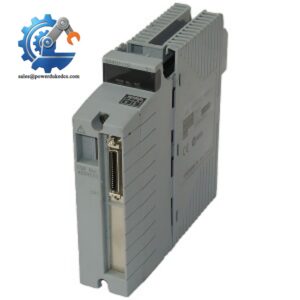
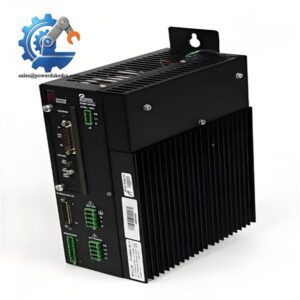
- Model & Brand: Reliance Electric DSA-MTR12A2, identified in available equipment listings as a DDS-TLII AC servo drive.
- Physical Dimensions: Exact W × H × D dimensions could not be verified from a primary OEM mechanical drawing. Do not populate the ERP dimensional field with an estimated chassis size.
- Estimated Shipping Weight: Allow approximately 3–5 kg gross for provisional freight planning until the actual packed drive is weighed. This is a planning allowance, not a manufacturer specification.
- What’s in the Box: DSA-MTR12A2 drive, protective ESD packaging, and documentation if supplied with the original unit. Motor cables, feedback cables, mounting hardware, and manuals should not be assumed included.
- Identification: Record the complete DSA-MTR12A2 designation, DDS-TLII family marking, serial number, board revision, and nameplate electrical ratings.
- Condition Control: Available market records show this model in new, used, surplus, refurbished, and repair-service channels; condition must therefore be documented separately from part identity.
3. Product Introduction
Architecture Hook
The DSA-MTR12A2 is associated with Reliance Electric’s DDS-TLII AC servo-drive platform, placing it within a closed-loop motion-control architecture rather than the general-purpose variable-frequency-drive category. Available equipment records specifically cross-reference DSA-MTR12A2 with DDS-TLII.
That distinction matters during spare replacement. The drive must be evaluated against the connected servo motor, feedback device, controller, power configuration, and application parameters; a physically matching drive is not necessarily a commissioning-ready substitute (especially on legacy motion systems where parameter backups may be difficult to recover).
4. Core Technical Specifications
| Parameter | Value |
|---|---|
| Manufacturer | Reliance Electric |
| Model | DSA-MTR12A2 |
| Associated Platform | DDS-TLII |
| Product Type | AC servo drive / servo amplifier |
| Application | Closed-loop industrial motion control |
| Motor Interface | AC servo motor |
| Nominal Current Class | Approximately 12 A, based on available secondary product documentation |
| Peak Current | Approximately 24 A, based on available secondary product documentation |
| Input Supply | Approximately 230 VAC configuration reported by secondary sources |
| Control Modes | Torque, speed, and position reported by secondary sources |
| Feedback | Motor feedback/encoder interface |
| Communications | Configuration-dependent; secondary sources report serial interfaces |
| Cooling | Natural or fan-assisted, configuration-dependent |
| Mounting | Vertical cabinet installation |
| Protection Functions | Overcurrent, overvoltage, undervoltage, overtemperature, and feedback fault protection reported |
| Dimensions | OEM mechanical drawing required |
| Weight | OEM/physical verification required |
| Firmware / Parameters | Revision and application dependent |
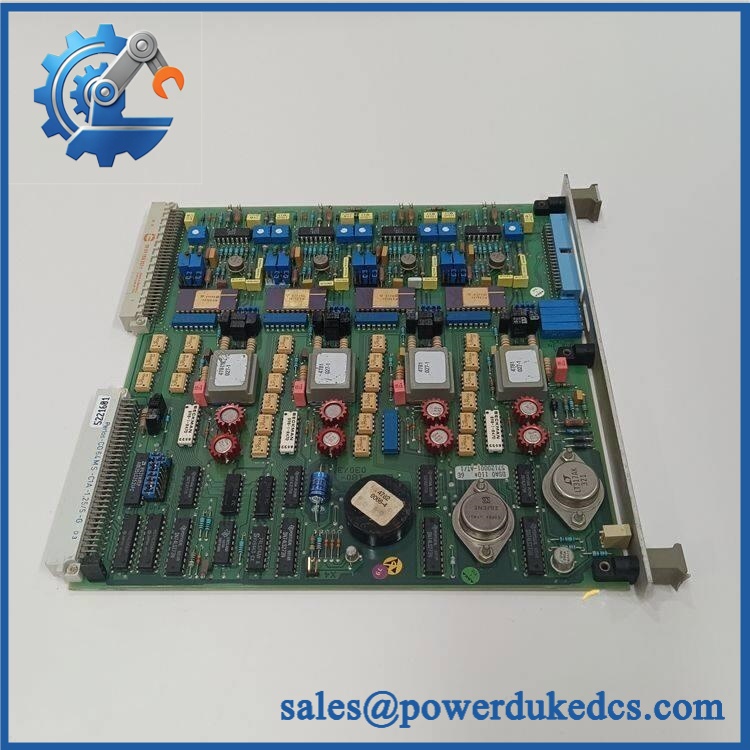
Reliance DSA-MTR12A2
Technical confidence warning: Several detailed electrical values available online are from secondary reseller documentation rather than an OEM Reliance manual. For an audited asset master, treat the 12 A current class and DDS-TLII association as provisional engineering data until the nameplate and original technical documentation confirm them.
Do not use the 230 VAC figure for procurement or replacement approval without checking the actual nameplate. DDS-TLII listings also show other current-rated variants, including DSA-MTR-20A and DSA-MTR-30A, demonstrating why the suffix must remain under strict material control.
5. ? Global Compliance & Industry Certifications
- CE Mark: Verify CE conformity from the actual drive label and applicable Reliance documentation. Do not infer certification from the product family alone.
- UL/cUL: Confirm whether the exact DSA-MTR12A2 assembly carries UL/cUL recognition or Listing. The certification should correspond to the actual hardware revision.
- ATEX/IECEx: No hazardous-area certification should be assumed. A servo drive without an applicable ATEX/IECEx certificate must remain outside the classified area or be installed within an appropriately certified system.
- Marine Approval: DNV or other marine approvals must be confirmed against the exact drive and installation configuration before offshore deployment.
- EMC: Servo drives are switching-power equipment and can generate conducted and radiated emissions. Correct grounding, motor-cable shielding, and cabinet installation are part of EMC compliance.
- Machine Safety: Drive-level fault protection does not establish complete machine functional safety. Emergency-stop, safe torque removal, guarding, and motion-interlock functions require separate engineering validation.
- Audit Record: Retain the nameplate photograph, serial number, hardware revision, applicable conformity declaration, and any certification documents with the asset.
Verify specific lot certifications with OEM.
6. ? Long-Term Storage & Asset Preservation Guide
- Keep the drive sealed in ESD-protective packaging. Power electronics contain semiconductor devices and control electronics that should not be exposed to uncontrolled static discharge or warehouse contamination.
- Control humidity and condensation. Maintain a clean, dry storage environment, preferably below 60% RH, and avoid large temperature swings. Moisture contamination around high-voltage terminals can become an insulation problem when the drive is eventually energized.
- Inspect the DC-link and electrolytic capacitor section before long-dormant energization. A legacy servo drive that has spent several years unpowered should not automatically be connected to full line voltage. Follow the applicable OEM service procedure for capacitor condition and controlled energization.
- Preserve the motor/drive parameter set separately. Record the original drive’s configuration, motor identification, feedback type, current limits, acceleration/deceleration settings, and tuning parameters where available. Hardware replacement without the correct parameter set can produce unstable or unsafe motion.
7. Physical Installation Prerequisites
- Mounting Orientation: Use the vertical cabinet orientation specified for the applicable DDS-TLII hardware. Maintain mechanical support for the drive; do not allow power cables to carry connector or terminal loads.
- Cooling Clearance: Maintain the OEM-specified airflow path and keep ventilation openings unobstructed. A practical 50 mm minimum service/airflow clearance should be treated as a planning allowance only until the exact mechanical drawing confirms the requirement.
- Heat Sources: Keep the drive away from braking resistors, transformers, contactors, and other high-temperature components. Calculate cabinet heat dissipation from the complete drive system.
- Grounding: Bond the drive chassis and cabinet protective earth according to the installation documentation. Grounding must support both personnel safety and high-frequency EMC performance.
- Motor Cabling: Separate motor power and feedback cables from sensitive control wiring. Use the specified shield termination arrangement.
- Power: Verify input voltage, phase configuration, current rating, and protective-device requirements directly from the nameplate before energization.
- Feedback: Confirm encoder/resolver compatibility and wiring before enabling the drive. An incorrect feedback interface can cause uncontrolled motor behavior.
- Commissioning: Perform a controlled no-load test first, then verify motor direction, current feedback, following error, limits, and emergency-stop response before reconnecting the production load.
8. Buyer’s FAQ
Q1. What HS tariff code should be used for the DSA-MTR12A2?
There is no defensible universal HS code that should be assigned solely from the model number. The item is identified as an AC servo drive, but the final tariff classification depends on its precise electrical function and the importing country’s tariff schedule.
Have the customs broker validate the classification before the commercial invoice is issued. Avoid describing it merely as an “electronic module”; AC servo drive is the technically meaningful product description.
Q2. Does Country of Origin affect customs treatment?
Yes. COO can affect duty, preferential tariff eligibility, origin declarations, and trade-compliance screening.
For a legacy Reliance Electric unit, obtain origin information from the physical nameplate, OEM documentation, or supplier Certificate of Origin where available. Do not equate the seller’s warehouse location with the manufacturing country.
Q3. Should shipping insurance be purchased?
For this type of motion-control spare, insurance is reasonable when replacement cost and production downtime exposure are significant. The drive’s electronics and power terminals are susceptible to impact and moisture damage even when the enclosure looks intact.
Before shipment, photograph the nameplate, serial number, terminal covers, enclosure, and packaging. Use ESD shielding and impact-resistant cushioning rather than relying on a standard thin carton.
Q4. Does the DSA-MTR12A2 include the latest firmware or motor parameters?
Do not assume it does. Available market records identify the DSA-MTR12A2 as a DDS-TLII servo drive, but they do not establish a universal factory firmware or application-parameter state.
For receiving inspection, document the hardware revision and any accessible firmware/configuration information. Before commissioning, compare the replacement drive’s motor and feedback parameters with the machine’s approved configuration.
Asset-control note: Maintain RELIANCE DSA-MTR12A2 as the primary material identity and cross-reference DDS-TLII as the associated platform. Do not substitute DSA-MTR12A2 with another DSA-MTR current rating without engineering approval; available listings show materially different 20 A and 30 A variants within the same DDS-TLII family.

 Start Chat