

Description
- Brand Triconex / Invensys
- Full Model Number 3623T / Model 3623T
- System/Series Family Tricon Safety Instrumented System
- Core Function TMR supervised digital output switching for 16 commoned 120 VDC field circuits
- Top 3 Hardcore Specs 16 commoned outputs | 90–150 VDC recommended range | 0.8 A maximum per point
- Stock Status New Surplus — verify hardware revision, external termination panel, field wiring, and load compatibility before shipment
Module 3: Technical Product Introduction
A conventional digital output card can prove that its logic command changed state without proving that the field circuit actually responded. Triconex 3623T addresses that gap as a TMR Supervised Digital Output module for nominal 120 VDC applications. It provides 16 commoned outputs and uses voted redundant output control together with voltage and current loopback circuitry to monitor the output switch, field circuit, and presence of the connected load. The Tricon v9–v11 planning documentation identifies 3623T specifically as the higher-isolation version of the 3623 supervised output module.
The electrical envelope is precise: 90–150 VDC recommended operating range, 160 VDC maximum, and up to 0.8 A per output, with a 4 A surge for 10 ms. The minimum required load is 30 mA, maximum leakage current to the load is 4 mA, and each field output uses a 1 A fast-acting fuse in the termination assembly. The key distinction from 3623 is point isolation: 3623T is specified at 2,500 VDC minimum, versus 1,500 VDC for 3623.
Module 4: Application Scenarios & Field Realities
- For long-duration safety outputs, the 3623T is intended for applications where an output may remain in one state for extended periods. Its supervision circuitry checks not only the command path but also field voltage, load presence, and certain wiring faults.
- At a 120 VDC shutdown cabinet, the 16 commoned outputs can drive suitable relays, solenoid interfaces, annunciators, and other approved field loads. Each point must remain within the specified current and minimum-load requirements; a very small electronic load may not satisfy the supervision circuit.
- Where field cables run more than 100 meters, compatibility testing deserves special attention. Triconex specifically recommends compatibility testing for 3623T when field wiring exceeds 328 ft (100 m), when the cable is not twisted pair, or when unusual loads such as smart devices, strobes, or klaxons are involved.
- During fault diagnosis, the load/fuse indicators provide useful field evidence. A missing field voltage, blown fuse, or missing load can generate a field alarm without necessarily meaning the 3623T electronics have failed. The correct troubleshooting sequence starts at the output termination and field load.
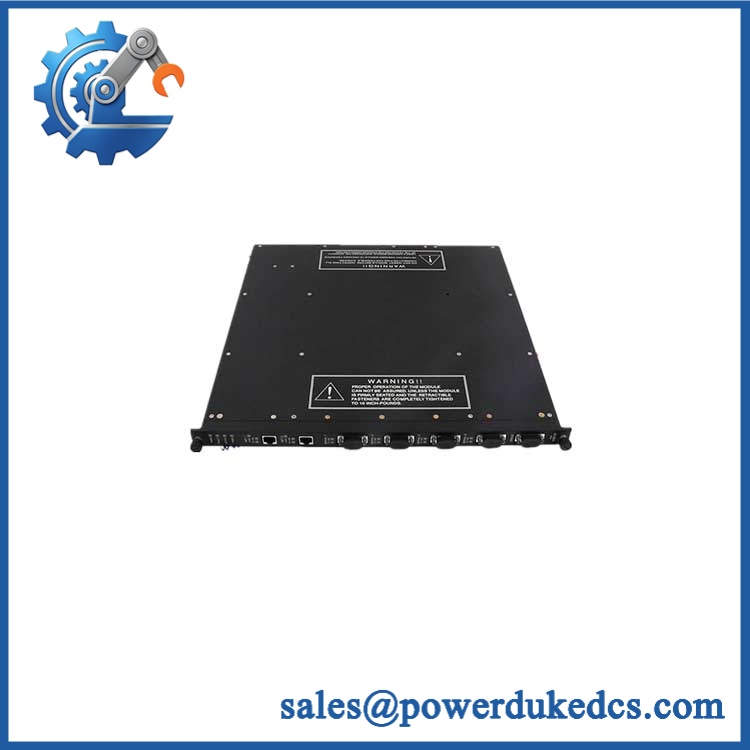
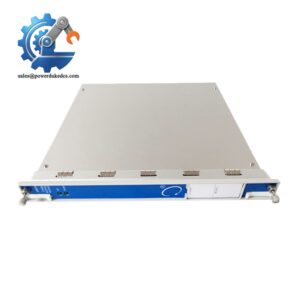
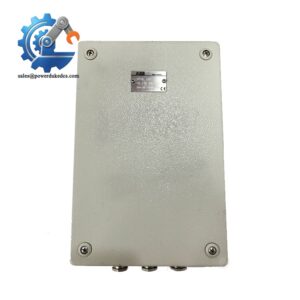
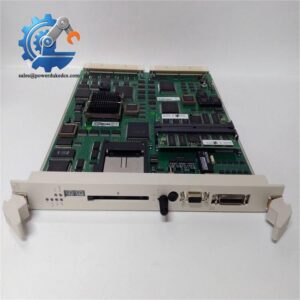
Triconex 3623T
Module 5: Migration, Compatibility & Installation Traps
Replacement Matrix
| Replacement Status | Engineering Assessment |
|---|---|
| Drop-in Replacement | Yes, for a like-for-like 3623T installation in a compatible Tricon chassis with the approved external termination panel, field voltage, load, and hardware revision. |
| Software Compatible | Generally yes for an exact replacement, but the Tricon configuration, output assignments, diagnostic settings, hardware revision, and approved controller baseline must be verified. |
| Hardware Modification Required | Normally no for an exact 3623T replacement. Hardware changes may be required when moving to 3623, 3624, another supervised-output family, or a different field-termination architecture. |
⚠️ Field Traps: Watch Out
Do not substitute 3623 for 3623T when isolation requirements matter. Both are 120 VDC, 16-point supervised output modules, but the specified point isolation is different: 1,500 VDC for 3623 versus 2,500 VDC for 3623T.
Respect the 30 mA minimum load. The supervision circuit expects a meaningful connected load. A low-current electronic interface may produce a persistent load alarm even though the commanded output voltage is present.
Check field cable construction and length. Triconex explicitly calls for compatibility testing in installations with wiring longer than 100 m, non-twisted-pair cable, or atypical loads. This is not a generic recommendation; it is specifically documented for 3623T.
Verify the termination-panel fuse. The documented field termination uses one 1 A fast-acting fuse per output. Replacing it with a larger fuse defeats the intended branch protection and can mask a downstream fault.
Do not omit the external termination panel. The Tricon supervised-output architecture uses an external termination panel with a cable interface to the Tricon backplane. A processor-side module test without the correct ETP does not validate the complete field circuit.
Module 6: Quality Assurance SOP
A surplus 3623T should be tested as a supervised 120 VDC safety-output module, including the field-load monitoring path. A simple output-voltage test is insufficient.
- OEM anti-counterfeit visual inspection: Verify Triconex/Invensys identification, exact 3623T designation, steel-blue identification stripe, PCB revision, front-panel indicators, connector geometry, and manufacturing identifiers against controlled references.
- Part-number and traceability check: Record the exact model, hardware revision, serial number, date code, and associated external termination panel.
- Mechanical inspection: Examine the backplane connector, ejector hardware, PCB, enclosure, front-panel indicators, and field-interface components for bent contacts, corrosion, contamination, cracking, or unauthorized repair.
- Power-on self-test (POST): Install the module in an approved Tricon test chassis and verify the expected PASS, FAULT, ACTIVE, POWER, and LOAD/FUSE status indications.
- 120 VDC supply verification: Apply a controlled DC source within the verified 90–150 VDC operating range and monitor module behavior and logic power consumption. The absolute maximum field voltage is 160 VDC.
- 16-channel functional test: Exercise all 16 outputs independently and verify clean On/Off operation into controlled loads.
- Output-current test: Verify representative loads below the 0.8 A maximum per point rating and confirm stable operation without abnormal temperature rise.
- Surge verification: Where the approved laboratory fixture permits, evaluate controlled inrush conditions against the documented 4 A surge for 10 ms characteristic.
- Minimum-load verification: Confirm representative loads satisfy the 30 mA minimum required load for supervised operation.
- Leakage-current test: Measure Off-state leakage under the prescribed conditions and verify it remains within the documented 4 mA maximum.
- Output voltage-drop test: Verify representative loaded outputs against the documented voltage-drop characteristics, accounting for the external termination and cable length used in the test fixture.
- Loopback diagnostic test: Execute the approved voltage/current loopback test and verify detection of field-voltage loss, missing load, and permitted field-fault conditions.
- Fuse-path verification: Confirm the external termination contains the specified 1 A fast-acting fuse for each output and verify continuity and correct fuse identification.
- Isolation verification: Test point-to-point isolation using the approved procedure and verify the 2,500 VDC minimum point-isolation requirement applicable to 3623T.
- Long-cable compatibility test: Where required by the application, test the actual field cable type and length, especially above 100 m, and document the connected load characteristics.
- TMR verification: Test the module in the complete three-channel Tricon architecture and verify voted output behavior and controlled single-channel fault diagnostics.
- System recognition test: Verify module identification, output addressing, status reporting, and communication with the Tricon processors through the approved I/O architecture.
- Communication handshake verification: Confirm successful output-command transfer and diagnostic exchange between the Tricon processors and 3623T. The module itself is not a standalone Ethernet or Modbus interface.
- Fault-injection verification: Use approved controlled faults to test load-loss, field-voltage-loss, and output-switch diagnostic coverage without applying uncontrolled high-energy faults.
- Extended-run test: Operate representative outputs under continuous load while monitoring field current, output voltage, diagnostic indicators, fuse status, temperature, and intermittent alarms.
- Final QC record: Document hardware revision, 120 VDC test level, all 16 output results, load current, leakage, voltage drop, fuse condition, loopback diagnostics, isolation result, TMR test, cable/load compatibility, extended-run observations, traceability, and packaging status.
Technical Identification Note: Tricon documentation identifies 3623T as a 16-point, commoned TMR Supervised Digital Output Module with a nominal 120 VDC application. The documented recommended voltage range is 90–150 VDC, maximum voltage 160 VDC, maximum current 0.8 A per point, minimum required load 30 mA, and field termination protection of 1 A fast-acting fuse per output. The defining distinction from 3623 is 2,500 VDC minimum point isolation for 3623T. Triconex also specifically recommends application compatibility testing for long field wiring, non-twisted-pair cable, and atypical loads.


 Start Chat