

Description
- Brand: TRICONEX
- Full Model Number: 3704E
- System/Series Family: Tricon TMR I/O System
- One-Sentence Core Function: 64-channel high-density TMR analog input module for 0–5 VDC or 0–10 VDC field signals
- Top 3 Hardcore Specs: 64 commoned inputs; 12-bit resolution; 75 ms input update rate
- Stock Status: New Surplus / Fully Tested Refurbished — verify voltage configuration, termination panel, and Tricon revision before shipment
Module 3: Technical Product Introduction
Cabinet space becomes a real constraint when a Tricon installation needs dozens of continuous-voltage measurements. The TRICONEX 3704E addresses that requirement as a 64-point high-density TMR analog input module, accepting either 0–5 VDC or 0–10 VDC signals. The voltage range is selected through the Tricon configuration environment, and all 64 inputs are commoned and DC-coupled. Tricon technical documentation identifies the 3704E specifically as the high-density differential analog-input module in the Tricon family.
The conversion architecture provides 12-bit resolution, a 75 ms input update rate, and accuracy better than 0.25% of full scale from 0 to 60°C. Input resistance is at least 30 MΩ DC, while input overrange protection is specified for 150 VDC or 115 VAC continuous. For current-loop applications, the module can accommodate 0–20 mA signals through the appropriate 250 Ω shunt for 5 V or 500 Ω shunt for 10 V termination arrangement.
Module 4: Application Scenarios & Field Realities
- In a Tricon cabinet with a large number of voltage transmitters, the 3704E can collect up to 64 analog channels in one module slot. That density is useful where additional rack positions are scarce and the application already uses voltage-based instrumentation.
- When a field transmitter reads correctly on a multimeter but the DCS value is wrong, check the configured input range before replacing the card. A 0–5 V signal connected to a channel configured for 0–10 V will produce a valid electrical reading but an incorrect engineering value.
- For 4–20 mA instrumentation, the 3704E can be used with the documented shunt arrangement to convert loop current into an analog voltage measurement. The correct 250 Ω or 500 Ω shunt depends on the configured 5 V or 10 V measurement range.
- During brownfield replacement, inspect the termination panel together with the AI module. The 3704E is not electrically isolated point-to-point; its 64 inputs are commoned, so common wiring, shielding, and termination practices can materially affect multiple channels.
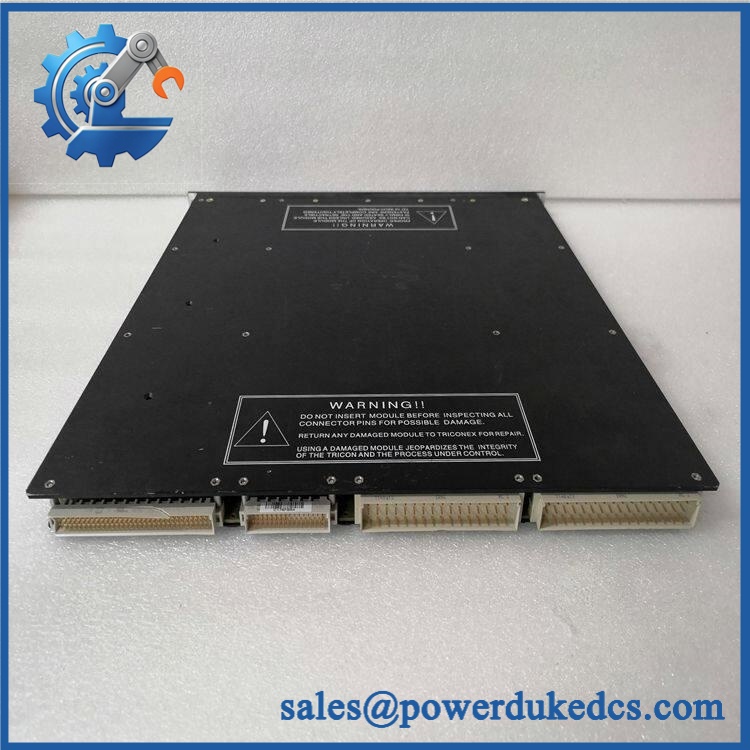
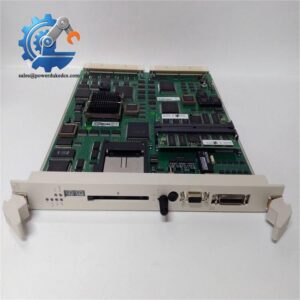
TRICONEX 3704E
Module 5: Migration, Compatibility & Installation Traps
Replacement Matrix
| Replacement Type | Assessment |
|---|---|
| Drop-in Replacement | Yes, for an exact 3704E replacement in a compatible Tricon I/O configuration |
| Software Compatible | Conditional — verify TriStation voltage configuration, I/O database, channel scaling, and system revision |
| Hardware Modification Required | Normally no for an exact replacement; termination panel, shunt configuration, field wiring, and rack slot must match |
⚠️ Field Traps — Watch Out
1. The input voltage range must match the software configuration.
The 3704E supports 0–5 VDC or 0–10 VDC, and the selected range is configured through TriStation. Replacing the module without confirming that setting can produce systematic scaling errors across the affected channels.
2. Do not mistake a 0–20 mA shunt arrangement for a native current-input module.
The 3704E’s current measurement is implemented through a resistor at the termination interface: 250 Ω for the 5 V range and 500 Ω for the 10 V range. Verify the installed termination hardware before commissioning.
3. Commoned inputs require careful grounding and wiring.
The 64 channels are commoned and DC-coupled, rather than individually isolated. A wiring or reference-potential problem can therefore influence multiple channels.
4. Do not substitute 3703E simply because both accept 0–5/0–10 V.
The 3703E provides 16 isolated channels, while the 3704E provides 64 commoned channels. The electrical architecture and termination requirements are different.
Module 6: Quality Assurance SOP
- OEM anti-counterfeit visual inspection — inspect TRICONEX identification, 3704E model marking, label, front-panel indicators, connector interfaces, housing, and visible manufacturing details.
- Exact part-number verification — confirm 3704E character-for-character against the purchase order and physical module label.
- System-family verification — confirm the target installation is a compatible Tricon TMR I/O system and identify the corresponding termination arrangement.
- Input-range verification — record whether the application is configured for 0–5 VDC or 0–10 VDC and verify the corresponding TriStation configuration.
- Termination and shunt inspection — verify the appropriate termination hardware and, where current inputs are used, confirm the required 250 Ω or 500 Ω shunt configuration.
- Mechanical inspection — inspect the backplane connector, field termination interface, locking hardware, PCB surfaces, housing, and mounting features for bent contacts, contamination, corrosion, cracks, or impact damage.
- Power-on self-test (POST) — energize the module in an approved Tricon test chassis and record PASS, FAULT, and ACTIVE indications, current behavior, and abnormal temperature rise.
- Analog simulation test — apply calibrated voltage inputs at representative points such as 0%, 25%, 50%, 75%, and 100% of full scale for the confirmed 5 V or 10 V configuration.
- 64-channel verification — where the laboratory fixture permits, exercise all 64 input channels and record applied value, measured value, channel identification, and diagnostic result.
- Resolution and accuracy verification — evaluate representative channels against the documented 12-bit resolution and <0.25% FSR accuracy from 0 to 60°C.
- Update-rate verification — verify representative channel updates against the documented 75 ms input update rate, using calibrated timing equipment where required.
- Current-loop simulation where applicable — for installations using shunts, apply controlled 0–20 mA signals and verify the resulting input values for the confirmed 250 Ω or 500 Ω termination arrangement.
- Common-reference verification — inspect and verify the commoned input architecture, signal reference, shield termination, and grounding arrangement before release for field installation.
- TMR verification — integrate the module with compatible Tricon processors and confirm triplicated analog acquisition, diagnostics, and stable channel data exchange.
- Communication handshake verification — verify the module through the complete Tricon I/O architecture and approved controller test environment. This is a system-level I/O test rather than a direct Ethernet or serial test.
- Final QC and packaging — document model number, hardware revision, voltage configuration, termination/shunt arrangement, 64-channel test results, diagnostic status, photographs, ESD protection, and packaging condition.
Engineering note: The TRICONEX 3704E is documented as a 64-point high-density TMR analog input module supporting 0–5 VDC or 0–10 VDC, with 12-bit resolution, 75 ms input update rate, and accuracy better than 0.25% of full scale from 0 to 60°C. Its inputs are commoned and DC-coupled, and 0–20 mA signals can be measured through the appropriate 250 Ω or 500 Ω shunt termination arrangement.




 Start Chat