

Description
- Brand: TRICONEX / Invensys
- Full Model Number: 3706A
- System/Series Family: Tricon v9–v11
- One-Sentence Core Function: 32-channel TMR thermocouple input module for J, K, and T temperature sensors
- Top 3 Hardcore Specs: 32 differential DC-coupled inputs; 50 ms maximum input update rate; 22 MΩ typical DC input resistance
- Stock Status: Stock condition and hardware revision to be confirmed
Module 3: Technical Product Introduction
Temperature measurement becomes a control-system reliability issue when a single input fault can distort several process decisions at once. TRICONEX 3706A is a 32-point Triple Modular Redundant thermocouple input module for Tricon systems. It accepts differential thermocouple signals, with three independent processing paths supporting the Tricon TMR architecture. Supported sensor types are J, K, and T, and open-circuit detection is selected at the associated termination module. The module supports online replacement through the Tricon hot-spare architecture.
The published technical specification defines a 50 ms maximum input update rate, 22 MΩ typical DC input resistance, and a ±10 VDC maximum common-mode range channel-to-channel or channel-to-ground. Reference-junction compensation is specified from 0°C to 60°C, while the module provides common-mode noise rejection of at least 85 dB from 0 to 60 Hz. Logic power consumption is below 10 W. Accuracy depends on thermocouple type, temperature range, and termination-module conditions, so those values should be evaluated together rather than using one generic accuracy figure.
Module 4: Application Scenarios & Field Realities
- On turbine and compressor temperature-monitoring systems, the 3706A can collect multiple bearing, casing, exhaust, or process temperatures within one I/O position. The 50 ms update specification is useful for many thermal protection applications, but the actual trip logic must still be checked against the complete cause-and-effect design.
- For furnace, heater, and reactor applications, selecting the correct thermocouple type is critical. The module supports J, K, and T sensors, and the sensor type must agree with the TriStation configuration and field termination. A physically correct sensor with incorrect software linearization can produce a credible but wrong temperature.
- Where thermocouple cables enter a control cabinet from noisy equipment areas, common-mode voltage deserves particular attention. The module is differential and DC-coupled, but it is not individually isolated, with a specified maximum common-mode range of ±10 VDC. Cable routing, shielding, and grounding should therefore be reviewed before troubleshooting the input electronics.
- During online maintenance, the module supports the Tricon hot-spare architecture. A spare insertion can temporarily freeze the thermocouple inputs for approximately 1 second, so any temperature signal participating directly in sequencing, permissive logic, or protective action should be reviewed for that temporary condition before a live replacement.
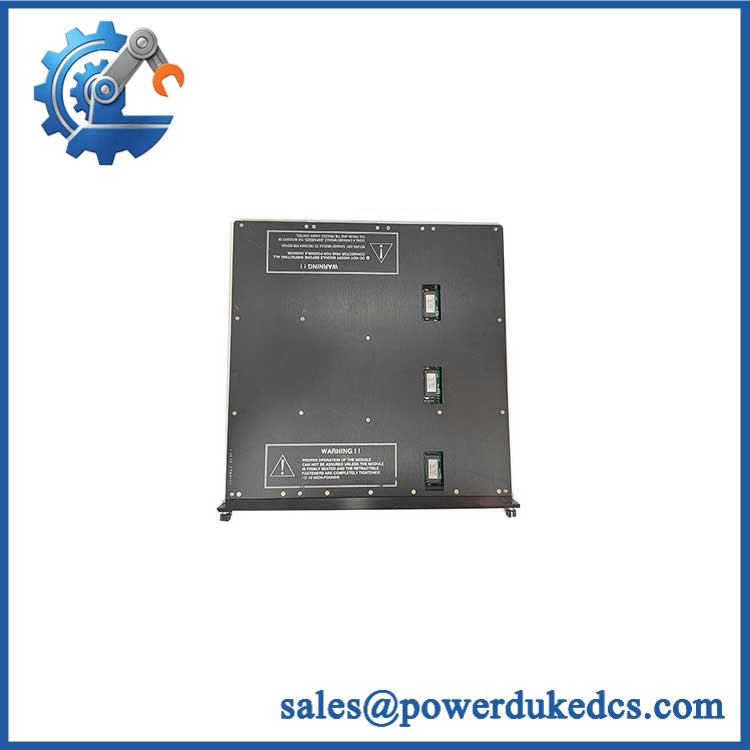
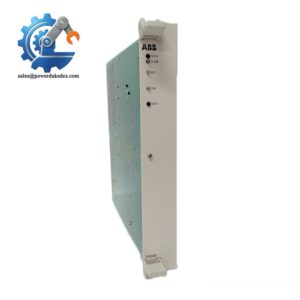
TRICONEX 3706A
Module 5: Migration, Compatibility & Installation Traps
Replacement Matrix
Replacement Classification: Drop-in Replacement Within the Matching Tricon 3706A Configuration
A like-for-like TRICONEX 3706A replacement is appropriate when the installed Tricon system uses the same 3706A thermocouple-input architecture, compatible external termination panel, chassis configuration, and approved application setup. The module is designed for 32 differential DC-coupled thermocouple inputs and requires the correct external termination arrangement.
3706A → 3708E: Hardware Modification Required. The 3708E provides 16 differential isolated inputs, while the 3706A provides 32 differential DC-coupled non-isolated inputs. The input count, isolation characteristics, and supported thermocouple set therefore differ.
3706A → 3704E: Hardware Modification Required. The 3704E is an analog-voltage input module rather than a thermocouple interface. Its signal conditioning and termination requirements are different.
3706A → 3700A: Hardware Modification Required. Model 3700A belongs to the analog-voltage input family and cannot directly reproduce the 3706A thermocouple acquisition function.
⚠️ Field Traps — Watch Out
1. Thermocouple type mismatch: The 3706A supports J, K, and T thermocouples. Both the physical sensor and the configured software channel must use the same type.
2. Non-isolated input architecture: The 32 inputs are differential and DC-coupled but are not individually galvanically isolated. Exceeding the specified common-mode range can affect module operation and the accuracy of other channels.
3. External termination panel: The 3706A requires a separate thermocouple termination panel and cable interface. Do not treat the electronic module alone as a complete field-replacement assembly.
4. Reference-junction temperature: Compensation is specified over 0°C to 60°C. Temperature gradients across the thermocouple termination hardware can introduce additional measurement error even when the electronic module itself is functioning normally.
5. Rapidly changing temperatures: Tricon documentation warns that rapidly or continuously changing inputs can produce temporary channel-to-channel comparison differences greater than 0.5% of full scale, potentially creating a diagnostic mis-compare. Applications involving fast thermal transients should account for this behavior.
Module 6: Quality Assurance SOP
Each TRICONEX 3706A should undergo a documented identification, thermocouple simulation, diagnostic, and TMR verification sequence before shipment.
- OEM identification visual inspection: Verify TRICONEX / Invensys markings, 3706A designation, serial number, hardware revision, tan color code, connector condition, and front-panel status indicators.
- Platform verification: Confirm compatibility with the customer’s Tricon v9–v11 architecture and record the associated thermocouple termination panel and cable assembly.
- Mechanical inspection: Examine the housing, PCB, connector interface, ejector hardware, mounting points, LEDs, and visible components for cracks, corrosion, contamination, or evidence of previous repair.
- Power verification: Install the module in an approved Tricon test chassis and verify stable initialization under the applicable system power conditions.
- Power-on self-test (POST): Confirm normal PASS, FAULT, and ACTIVE status behavior during startup.
- 32-channel simulation test: Apply calibrated thermocouple simulator or millivolt-source signals to all 32 channels and record the reported temperature values.
- Thermocouple-type verification: Test representative J, K, and T configurations and verify correct linearization for each selected sensor type.
- Reference-junction verification: Test representative cold-junction compensation conditions within the documented 0°C to 60°C range.
- Accuracy verification: Compare representative temperature readings with calibrated reference values using the applicable thermocouple-type accuracy table and correct termination conditions.
- Input-resistance verification: Where authorized, verify representative input behavior against the approximately 22 MΩ typical DC characteristic.
- Noise-rejection test: Apply controlled common-mode and normal-mode interference and confirm stable temperature reporting within the approved test limits.
- Common-mode verification: Test representative operation within the specified ±10 VDC maximum common-mode range without exposing the module to uncontrolled voltage.
- Input diagnostic test: Verify the documented diagnostic behavior using controlled simulated input changes and fault conditions.
- TMR verification: Confirm that all three input-processing channels receive consistent simulated thermocouple data and that the Tricon processors correctly perform comparison and voting functions.
- Hot-spare verification: Where required, test spare insertion and replacement behavior in an approved Tricon configuration, including the documented temporary input-freeze behavior.
- Extended stability test: Run representative J, K, and T inputs continuously while monitoring temperature values, diagnostics, TMR communication, supply stability, and module temperature.
- Final QC record: Retain complete part-number photographs, hardware revision, termination-panel reference, thermocouple simulation results, accuracy results, common-mode and noise-test data, TMR verification, hot-spare observations, and final QC approval.
The TRICONEX 3706A is a 32-point TMR thermocouple input module for Tricon v9–v11 systems. Its defining characteristics are 32 differential DC-coupled inputs, J/K/T thermocouple support, 50 ms maximum input update rate, 22 MΩ typical DC input resistance, ±10 VDC maximum common-mode range, 0–60°C reference-junction compensation, and less than 10 W logic power.
The critical replacement issue is the distinction between differential non-isolated 32-channel 3706A and isolated 16-channel 3708E architecture. Match the thermocouple type, termination panel, grounding arrangement, common-mode environment, TMR configuration, and application timing before releasing a 3706A spare to the field.



 Start Chat